
Islamic Quotes About Leadership. Leadership is the quality to manage and control a group of people or an organization. Being an Islamic leader can sometimes be a little tough, there are many standards one must meet in order to be an ideal Islamic leader.
An Islamic leader is a person who will lead man kind from the edge of destruction towards the right path of Allah (SWT). “Everything rises and falls on leadership.” quoted from Dr. John C. Maxwell’s bestselling book, The 21 Irrefutable Laws of Leadership. This explains wherever there is great leadership, success follows inevitably. Similarly if there is poor leadership, failure automatically follows. Prophet Muhammad (SAW) was one of the most significant people to ever walk on the face of this earth, he is a great example of an absolute leader who possessed all the qualities one must have to manage the people or followers impeccably.
What Are The Islamic Leadership Principles
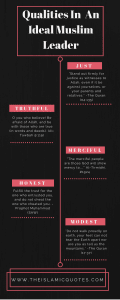
↓15 – Sincerity
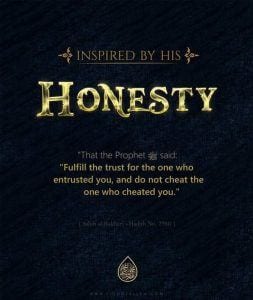
Islam teaches us to be sincere with all the fellow Muslims, it encourages us to be honest and fulfill the trust of those who have entrusted us. Here are inspirational Quotes From The Last Sermon Of Prophet Muhammad (SAW).
↓14 – Justice
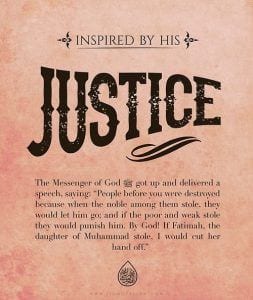
We should be fair and equitable towards everyone. No rich should have any superiority over the poor.
↓13 – Gentle Attitude
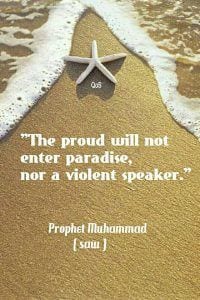
A person who is harsh towards others will not be a good example of an Islamic leader therefore, leaders should be gentle and polite in their speech and as Prophet Muhammad (SAW) has also stated that arrogance is a grave fault, as he said that no one with even an atom’s weight of arrogance in his heart will enter Paradise (Sahih Muslim 91).
↓12 – Tawakull
If a person has doubt on his abilities, he must trust Allah (SWT) as only He helps in accomplishing the goals.
↓11 – Islam Gives You Freedom
Leaders must not impose their decisions on their followers and should make them feel free. Followers should never feel that they are being ignored.
↓10 – Humbleness
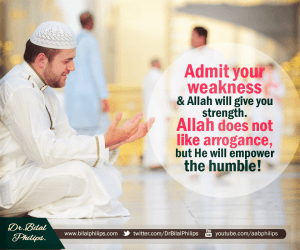
When it comes to facing difficulties, we must admit our weaknesses in order to gain strength from Allah (SWT). He empowers those who are humble and not the ones who are arrogant. Here are 40 Best Proud to be Muslim Quotes with Images.
↓9 – No Wastage
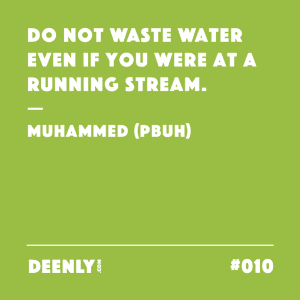
Islam teaches avoiding waste even in abundance: the Quran says Allah does not love the wasteful (7:31), and a narration reports the Prophet (SAW) telling a man not to waste water even when performing wudu at a flowing river (Sunan Ibn Majah 425, a report that scholars regard as weak in chain, though the principle against waste is well established). A leader must be careful with the resources entrusted to him.
↓8 – Try Your Best
Leaders should always encourage their followers to try their best in every aspect of their lives. Also, Allah (SWT) expects us to do our best.

↓7 – Islamic Leadership Principle
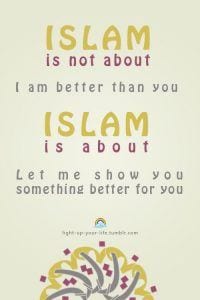
Leaders should work towards the benefit of the whole society rather than thinking that he is setting a perfect example for everyone to follow. Because this will make him arrogant and surely Allah (SWT) does not like arrogance.
Via
↓6 – Truthful
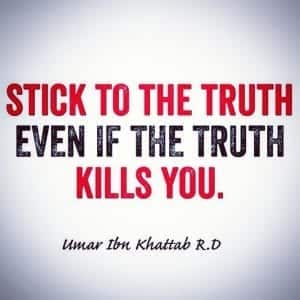
Islam teaches us to always remain truthful as it will save us from calamities and make a way out from every problem in our lives. Here are 50 Islamic Quotes About Lying with Images.
↓5 – Prophet Muhammad Leadership Quotes
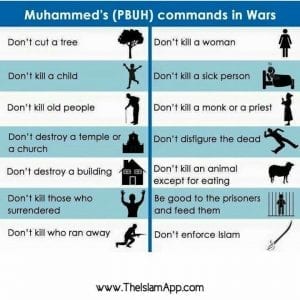
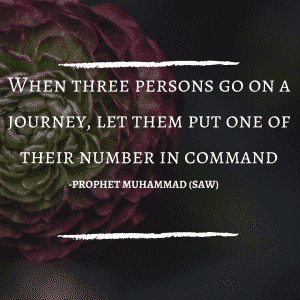
As a leader, Prophet Muhammad (SAW) used to put out some of the rules before any war.
↓4 – Leadership Hadith In Islam
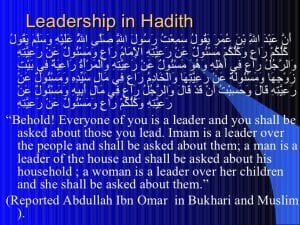
The following hadith (Sahih al-Bukhari 893 and Sahih Muslim 1829) teaches us that every leader is responsible for his ‘flock’. See also the manners of Prophet Muhammad (SAW). This means that everyone is a leader and he is responsible for the people who he leads.
↓3 – Leadership In Islam Hadith
↓2 – Leadership In Islam
Imam Ali, the fourth khalifah, is reported in Nahj al-Balagha (a collection compiled by al-Sharif al-Radi, whose attributions some Sunni scholars treat with caution) as saying the following about the qualities of a leader:
“O People! You know that it is not fitting that one who is greedy and parsimonious should attain rule and authority over the honour, lives and incomes of the Muslims, and the laws and ordinances enforced among them, and also leadership of them. Furthermore, he should not be ignorant and unaware of the law, lest in his ignorance he misleads the people. He must not be unjust and harsh, causing people to cease all traffic and dealings with him because of his oppressiveness. Nor must he fear states, so that he seeks the friendship of some and treats others with enmity. He must refrain from accepting bribes when he sits in judgement, so that the rights of men are trampled underfoot and the claimant does not receive his due. He must not leave the Sunnah of the Prophet and the law in abeyance, so that the community falls into misguidance and peril.”
-Nahjul Balagha, p.50, quoted in Imam Khomeini: Islam and Revolution: Writings and Declarations of Imam Khomeini; edited and annotated by Hamid Algar, Mizan Press, Berkeley, CA, US. 1981. p.67.
↓1 – An Example Of Good Leadership
The following account is narrated about Imam Ja’far al-Sadiq (d. 148 AH), a respected scholar of Madina and a descendant of the Prophet (SAW) through Husayn. It appears in later biographical collections and we could not trace a primary source, so treat it as a lesson-story rather than a verified report.
Once he got to know that there was a shortage of wheat in Madina and as soon as the citizens heard this news they had bought as much wheat as their money would allow. The people who bought a lot of wheat took care of it while the poor could not afford to stock wheat for themselves, they bought wheat on daily basis and in small quantities as the prices were going up every day. Imam Ja’far al-Sadiq called the in-charge of his house, named Muattab and asked him: “How much wheat do we have at present?”
Muattab replied: “Sir, we have enough to last us for several months.”
“Take it to the bazaar and offer all for sale to the people”, instructed the Imam.
“Oh! son of the Prophet! Wheat is very scarce in Madina. (If we sell our stock, perhaps it would be impossible to purchase later)” advised the care-taker.
”Do as I have said (Sell all our stock to the people).”, replied Imam.
Muattab, did as he was told and sold all the wheat. He reported the result to his master.
After that Imam Ja’far al-Sadiq bought wheat on daily basis just enough for the day. The Imam further told Muattab to use, from then on, half wheat and half barley for the bread of his household. Then he said:
“By the grace of Almighty I have the strength to provide my house with bread made from pure wheat. But I want Allah to see me living economically (just like other people around me).” Through this incident Imam Ja’far set a very high and righteous example of leadership for the people.
Frequently Asked Questions
What makes a good leader in Islam?
Sincerity, justice, trustworthiness, humility, consultation (shura) and accountability to Allah. The Prophet (SAW) said that every person is a shepherd responsible for his flock (Sahih al-Bukhari 893).
Is leadership a position of honour or a responsibility?
Primarily a responsibility. Authentic narrations warn that leadership will be a cause of regret on the Day of Judgement for those who do not fulfil its rights (Sahih Muslim 1825), so seeking it for status is discouraged.
What was the Prophet’s leadership style?
He led with mercy, consultation and by example. Read more about his manners and his Last Sermon.
Do leaders have to be obeyed in all matters?
Scholars agree obedience is owed in what is right, and not in disobedience to Allah (Sahih al-Bukhari 7144). Details of political rulings differ among scholars and schools, so ask a qualified scholar.
Can ordinary Muslims practise leadership?
Yes. Parents, teachers, managers and community members all lead someone. See our 40 hadith every Muslim should learn for foundational guidance.
Everything, whatever related to Islam is very beautiful…🕋🕋
Thanks for this beautiful article , i want to asked did you check all the references ?
Thank you for your feedback. We try our best to use authentic information with references. But if there’s is any information that you feel might be incorrect, do let us know so we can double-check it.
Thank you
Team TheIslamicQuotes.