
Rain in Islam: The sounds of rain and its tranquillity infusing beauty at times remind us of Allah’s grace. The life-giving nature of rain as a part of the water cycle and food for crops and vegetation remind us of Allah’s sustenance and gifts. Rain is one of the miracles of Allah and allows us to reflect and ponder over its beauty. There are places in the world where drought is endemic, and rain is extremely scarce.
Others where rain is all year round and is a source of constant flooding. Rain is versatile, changing, and adapting. It maintains the ecosystem’s flow and balance, and minor shifts in its nature and timing can have many effects. Rain for its various virtues and blessings is mentioned in the Qur’an and the Sunnah.
What Does Islam Say About Rain?
Many scholars mention that the angel Mikael (Michael) is entrusted with matters such as rain and vegetation, though the details come from later commentary rather than clearly authentic hadith, so we hold this knowledge with humility and say that Allah knows best.
7 – Islamic Quotes on Rain That Prove It Is a Blessing
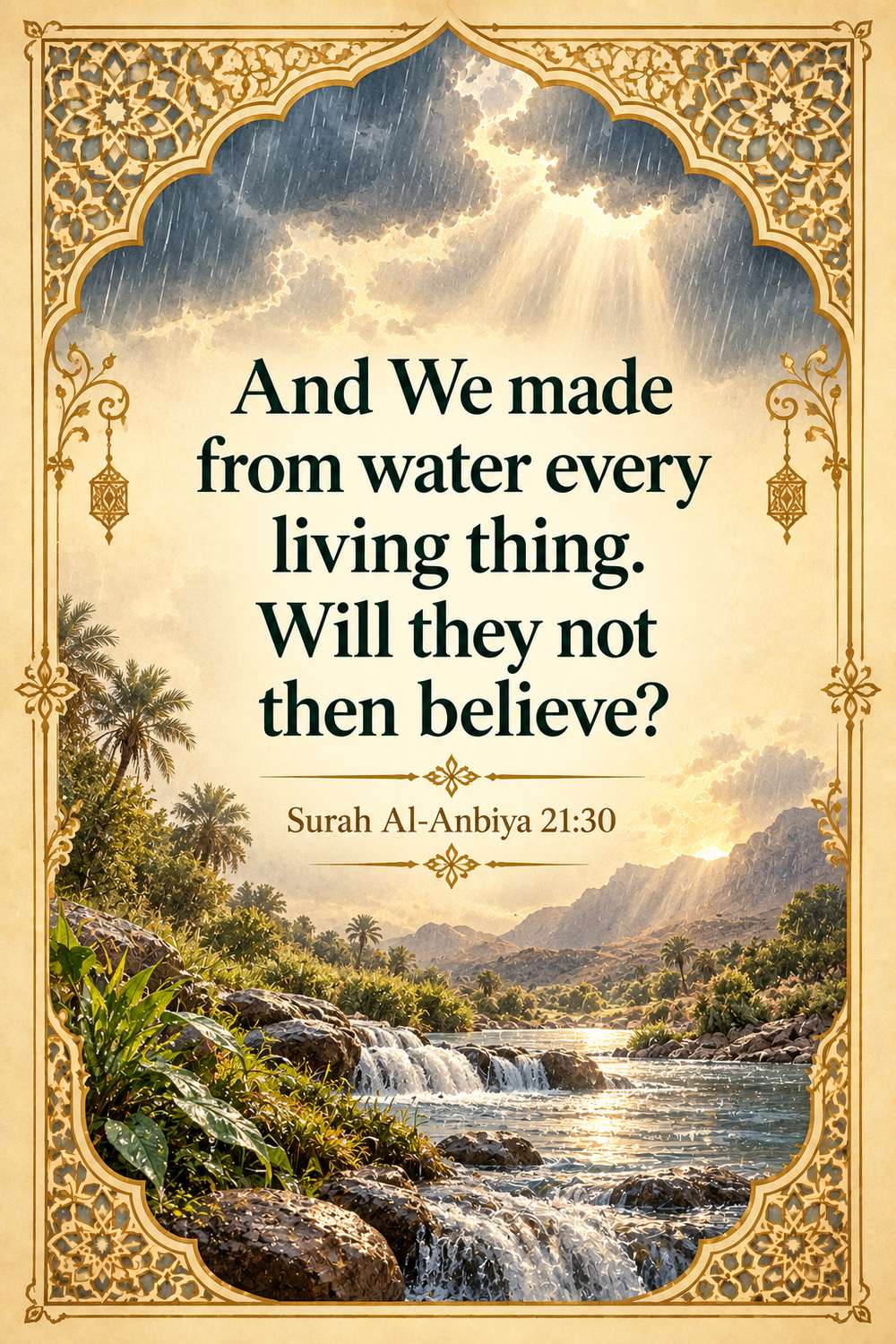
Rain is a blessing and the hour that it is falling is considered a time of mercy. Making dua and asking for forgiveness is a common practice when it is raining; see our collection of beautiful duas for recitation and these quotes on thanking Allah. This Qur’anic ayat shows the blessed nature of rain. It is important to all levels of forestry from plants and seeds to trees. These trees and plants form the basis of the ecosystem and the simplest form of life. After trees, rain is a source of water and sustenance for all animals the start and animation of all life and living. In the 30th verse of Al-Anbiya, the Qur’an says
Furthermore, the Qur’an also uses the words “giving life to the deadland”.
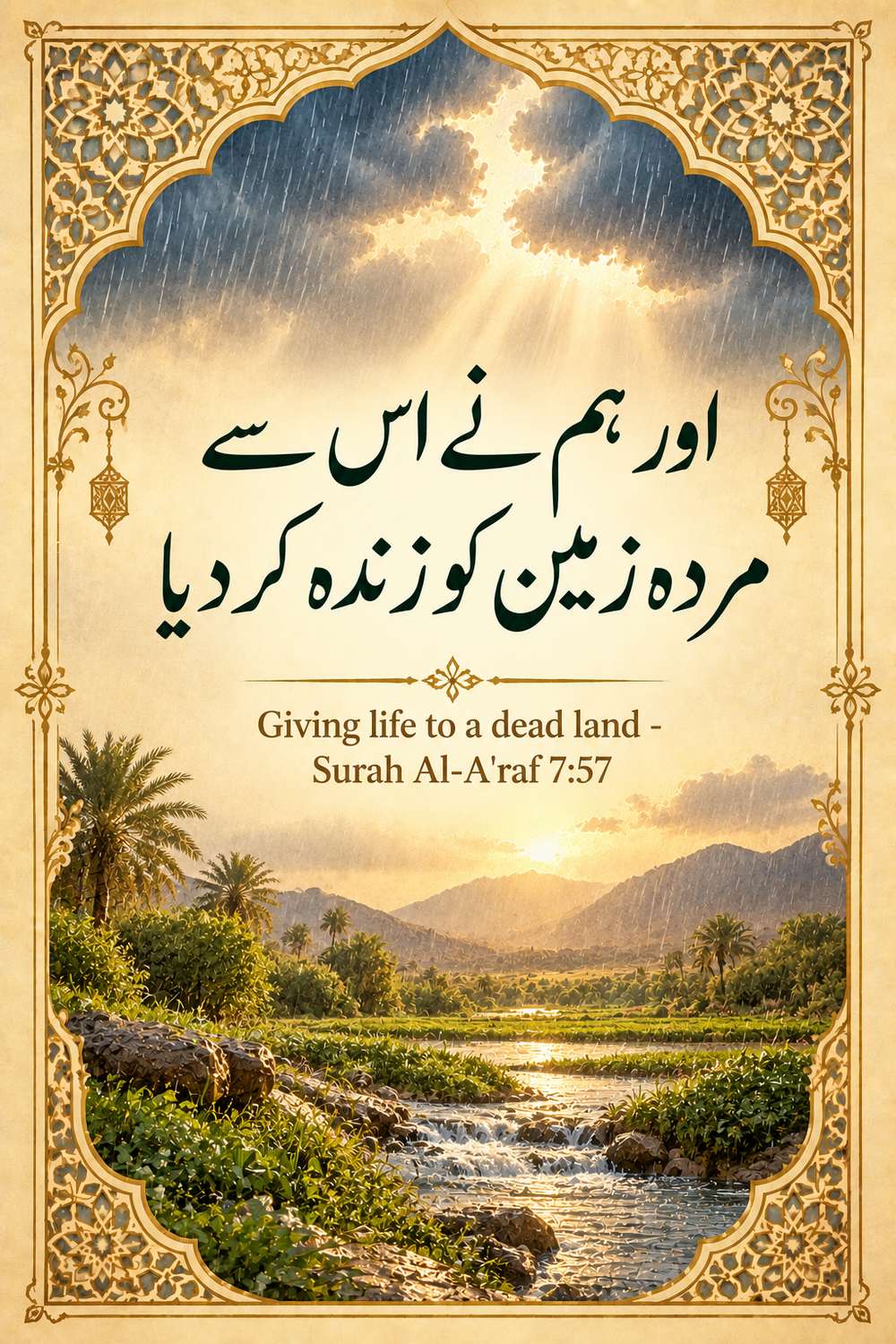
Rain softens dry soil and carries dissolved nutrients that help seeds sprout, which is the kind of revival the Quran points to. This is just one of the few ways we can reflect and appreciate the life-giving nature and blessings of rain.
6 – Mention of Rain In The Quran
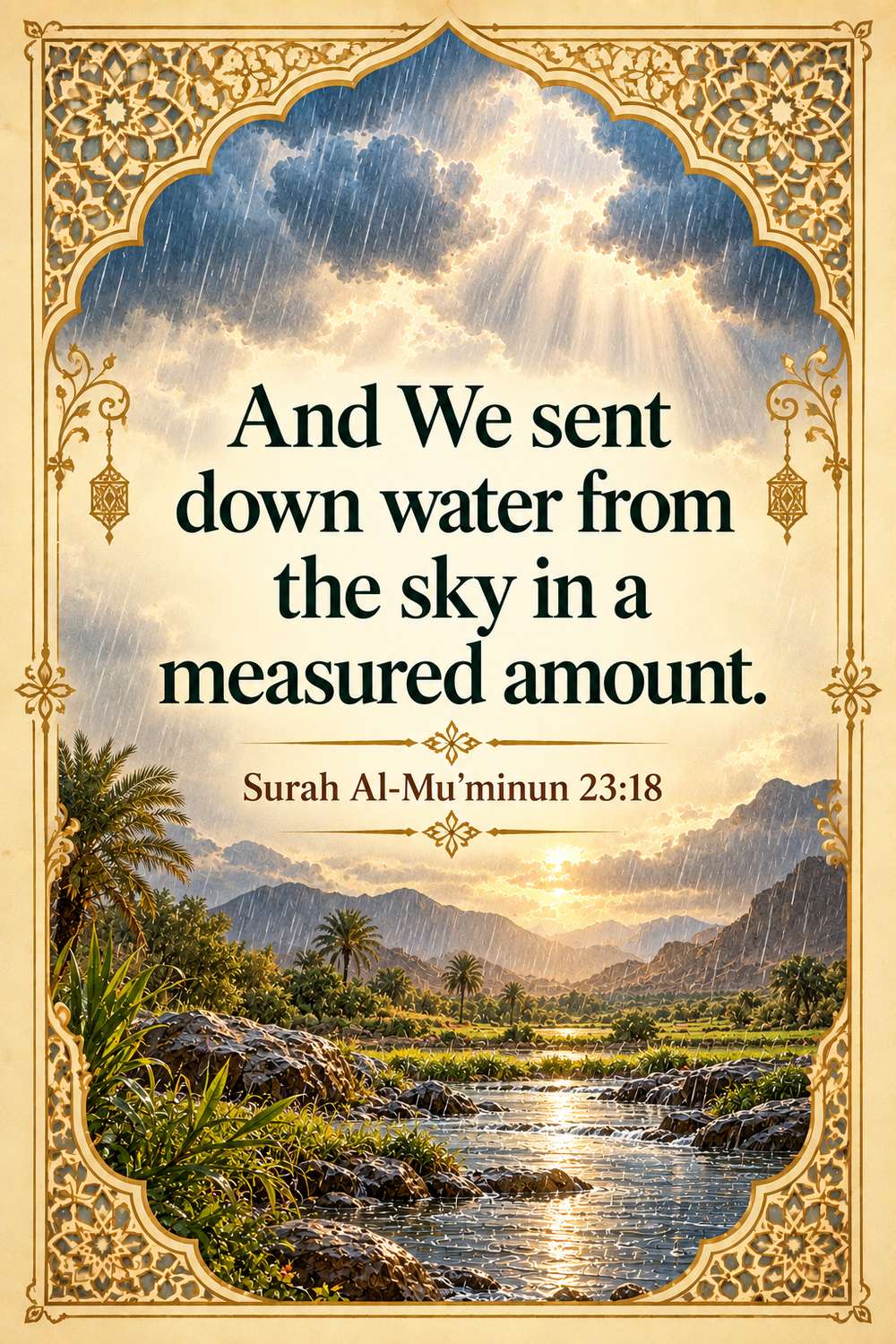
Here rain is described in the Qur’an in its ‘due measure’ and the balance that Allah creates and sustenance. Rain is the counter-balancing portion of the water cycle where lands that do not have access to direct water from the sea or rivers are provided with essential water. The measure mentioned in the Qur’an refers to the balance and equilibrium associated with the water cycle. Water evaporates and falls as rain in the exact proportion as needed.
Rain also falls in a gentle form that is beneficial to life, reminding us of Allah’s care, and Allah knows best the full wisdom behind it. Allah also uses this life cycle to remind us of how we will be brought back to life. That life and death are both from His signs.
5 – Miracle of Rain
Rain is also the source of the oceans, rivers and glaciers that we see today. Scientists are still debating how Earth got its water, with some research pointing to water-rich asteroids and comets, while rain, rivers and oceans later shaped the water cycle we know. Without this rain and subsequent water bodies, life on earth would have been difficult. The water-based ecosystem of today is what gives beauty to all living and non-living facets of earth.
Rain and related words (such as matar, ghayth and ma’) appear many times in the Quran. Flooding by rain was also the punishment for Nuh’s AS people. This rain, together with the springs of the earth, flooded the land until everyone except the Nuh AS and the passengers of the ark were drowned. When the flooding subsided and the believers on the ark descended, a new chapter began. The Quran says that Nuh’s offspring were the ones who remained (37:77), and many scholars therefore describe him as a second father of humanity; the exact number of those on the ark is not established in authentic sources.
The story of Nuh AS and his people, therefore, teaches us the dichotomy and fundamentally adaptive nature of rain. It serves both as death and a means of extermination, eroding the land and taking away nutrients. But also as a breather of new life, like a barren field or swollen river rejuvenated. You can learn more on this from our post on 5 Most Important Lessons from the Story of Prophet Nuh (AS).
4 – Sunnahs of Rain
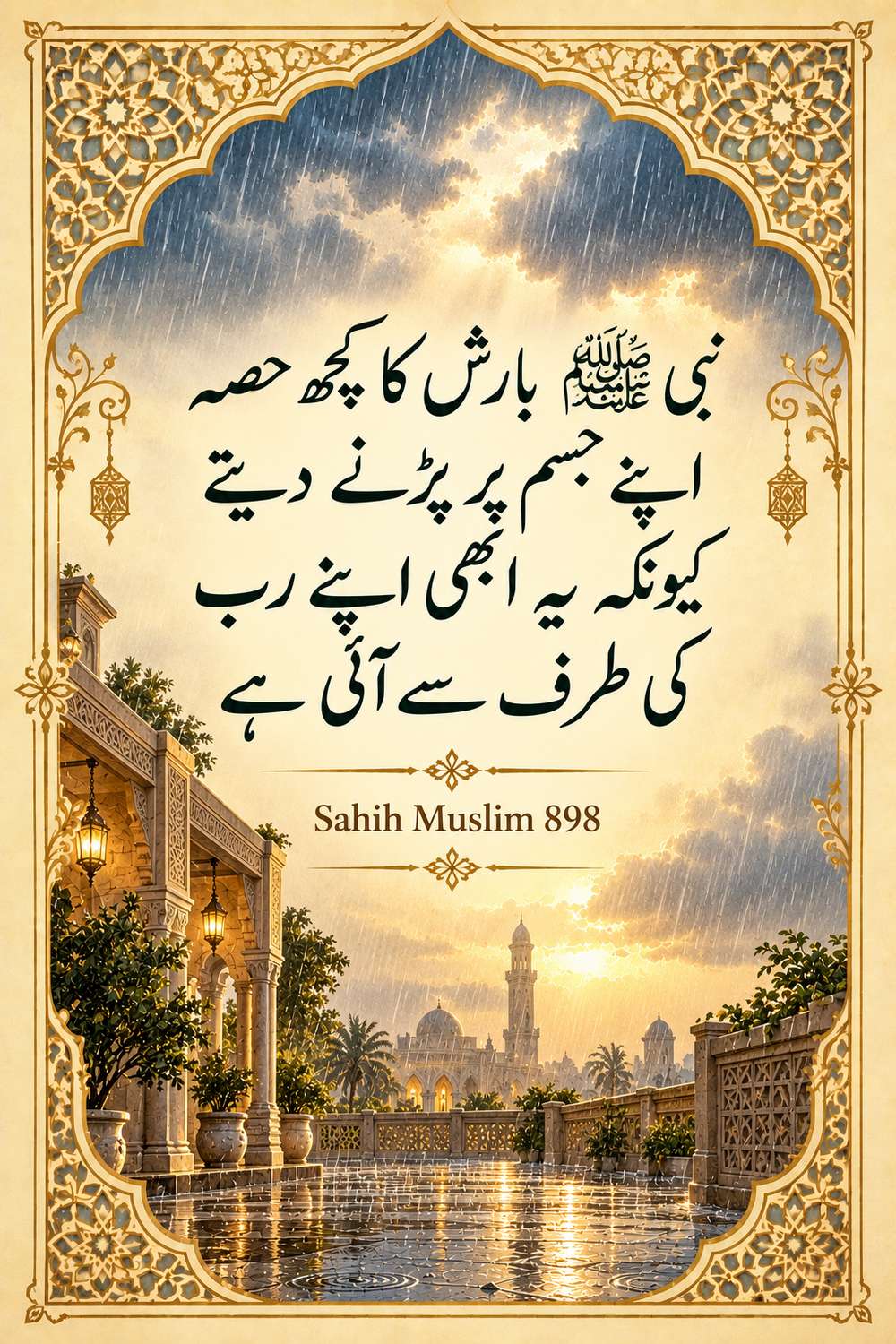
The Prophet PBUH had a habit of letting rainwater fall on his skin as rain is a blessing from Allah SWT. He would also thank Allah for the rain and ask Him for protection. According to a hadith,
A narration reported by al-Hakim says: “Two supplications are not rejected: the dua at the adhan and the dua under the rain.” Hadith scholars differ on its grading and some consider it weak, so rely on the established sunnah of making dua when rain falls, and take this narration as general encouragement.
This is beautifully explained by Mufti Menk in this video:
I would also recommend that you go through these Sunnahs of Eating and Drinking That All Muslims Should Follow.
3 – Dua for When It Rains
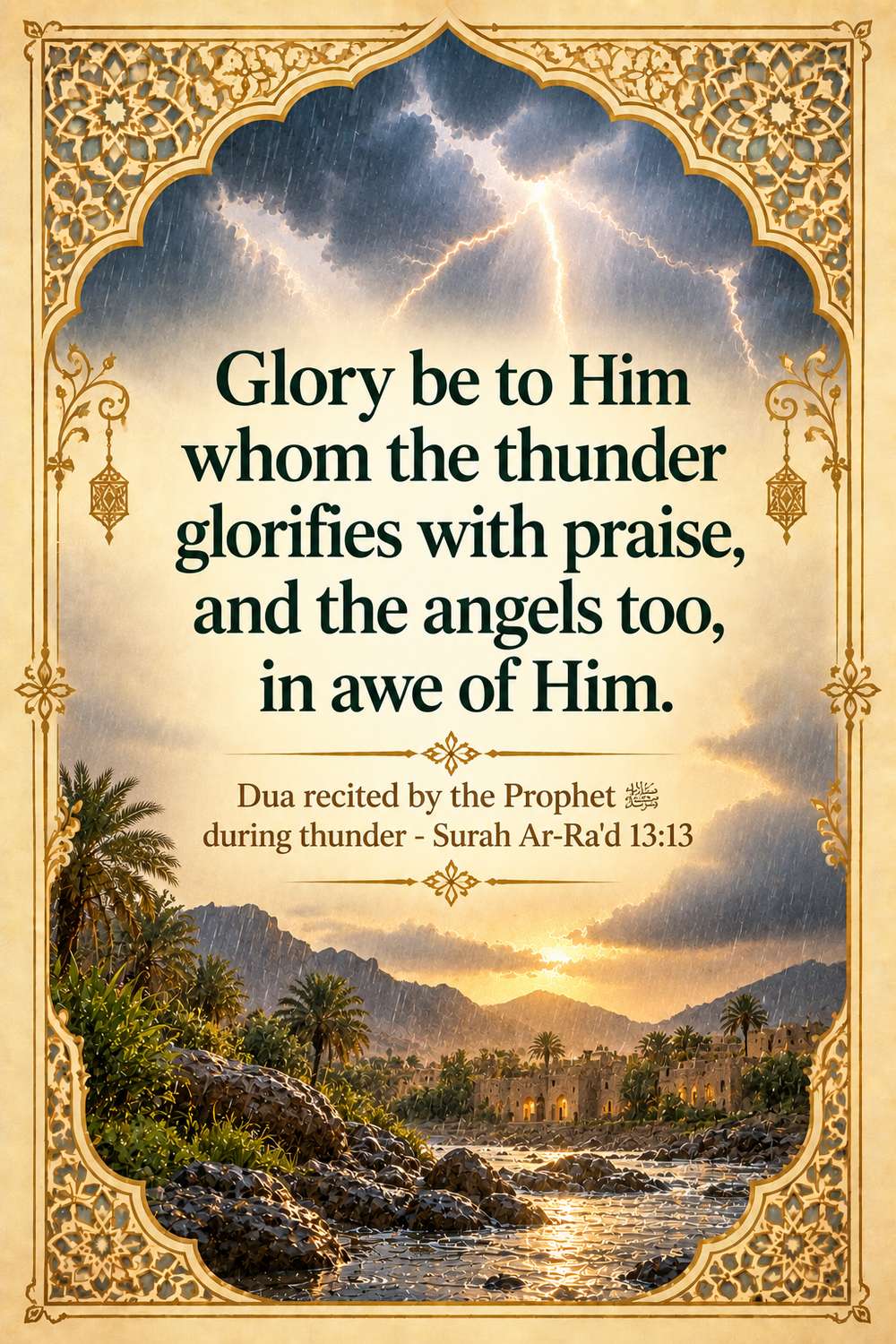
Narrations about what the Prophet PBUH said at thunder and lightning differ in strength. The Quran (13:13) tells us that thunder glorifies Allah with His praise, and so do the angels out of awe, so glorifying Allah is a fitting response. Aisha (RA) reported that when the sky was overcast and the wind strong, the Prophet PBUH would show concern until the rain came, fearing it might be a punishment (Sahih al-Bukhari 3206, Sahih Muslim 899).
2 – Dua to Make When It Stops Raining
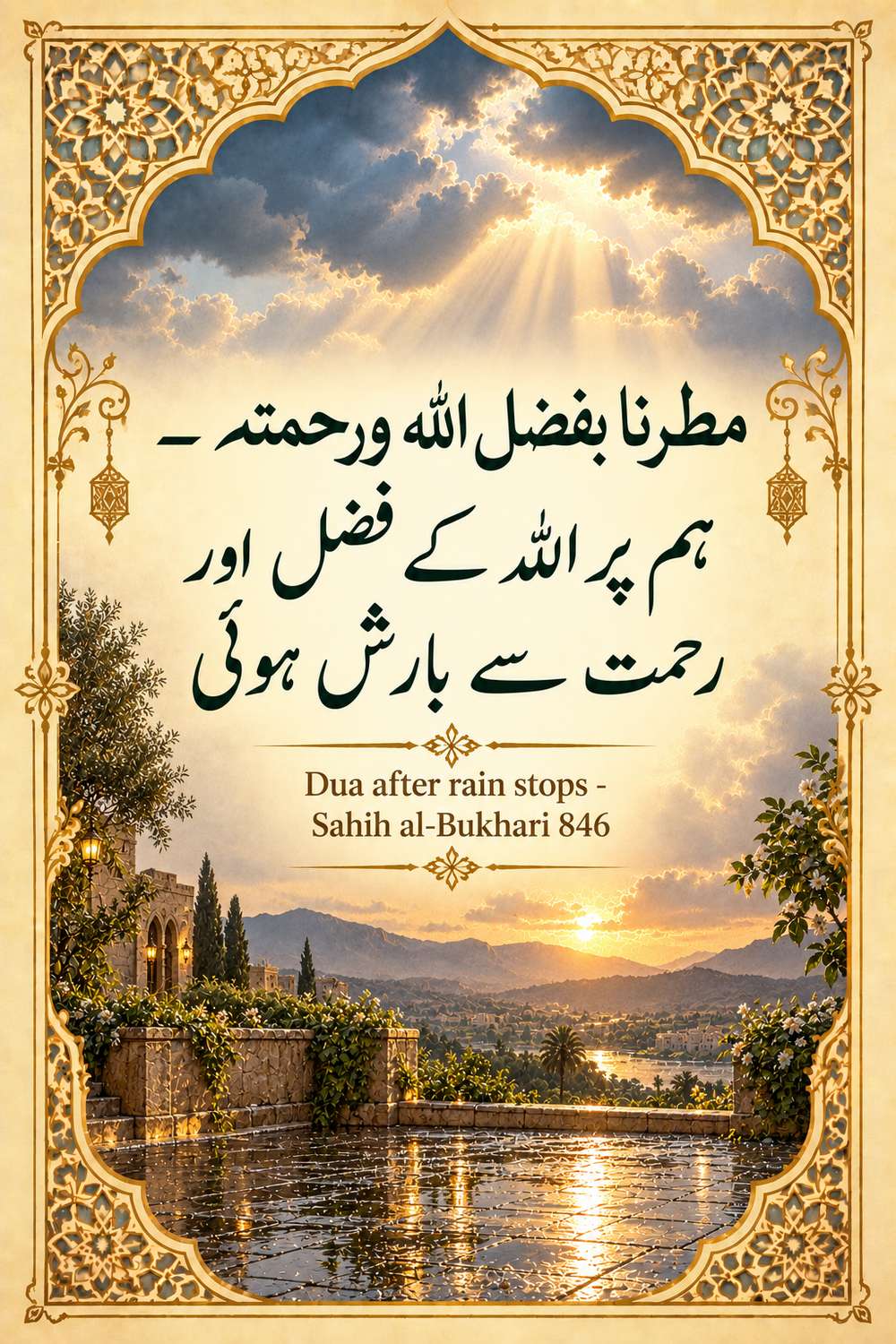
The Prophet PBUH instructed us to recite this dua after the rain ended. To proclaim rain as a bounty and mercy of Allah. He further iterates that this is the difference between a believer in Islam and a believer in stars and astrology. In previous times rains were predicted using constellation readings and other forms of astrology. Sacrifices and rituals were used to cause rain. This goes against the tenets of Islam as rain and other meteorological phenomena are only caused by Allah’s will. To give this power to inanimate objects would be shirk.
1 – Dua To Ask For Rain
The Prophet PBUH used to pray for rain and ask for Allah’s blessings. In the prayer for rain (istisqa) the Prophet PBUH raised his hands very high in supplication, so that the whiteness of his underarms could be seen (Sahih al-Bukhari 1031, Sahih Muslim 895).
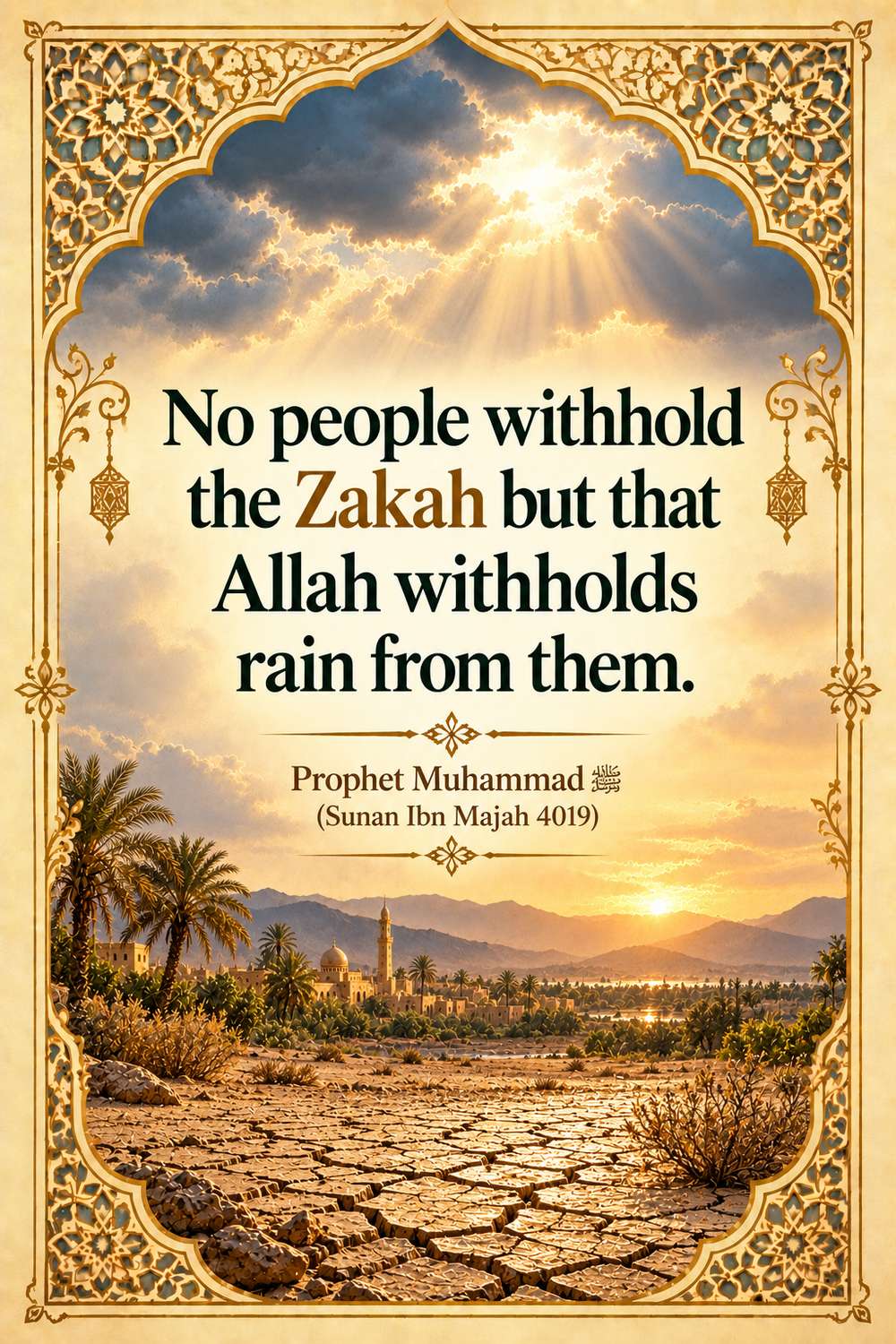
According to this hadith, holding back alms and greed means Allah holds back His mercy and bounty from you, signified by Him withholding rain from you. This means not giving charity adversely affects the whole community as rain is withheld from everyone. This is true in practice and common life as well. A society not built on the practice of generosity seizes to prosper. The action of one person’s greed or generosity translates to the whole community as well over time.
Frequently Asked Questions
Is rain a time when dua is accepted?
Scholars cite narrations that encourage making dua when rain falls, though the grading of some narrations differs. Making dua at such times is a good practice, and Allah answers in the way He knows best.
What do Muslims say when it rains?
The Prophet (peace be upon him) would say “Allahumma sayyiban nafi’an” (O Allah, make it a beneficial rain) (Sahih al-Bukhari 1032), and after the rain, “Mutirna bi fadlillahi wa rahmatih” (Sahih al-Bukhari 846). See our duas for recitation.
What is Salat al-Istisqa?
It is the prayer for rain performed in times of drought, with supplications and repentance. Its exact form differs between the schools, for example on whether it includes a sermon, so follow your local scholars.
Can we combine prayers in heavy rain?
Schools differ. Some allow joining Maghrib and Isha (and in some views Dhuhr and Asr) in heavy rain, while others restrict it. Ask a qualified scholar about your situation.
Is it wrong to say that stars or seasons cause rain?
The Prophet (peace be upon him) warned against attributing rain to stars as the real cause (Sahih al-Bukhari 846). Weather science describes the means Allah uses; the creator and controller of rain is Allah alone.