
How to Perform Wudu (Ablution). Wudu is one of the Islamic procedures for one’s purification. It is a cleaning method that mainly comprises of washing the face, arms, feet and wiping the head. It is a condition for the validity of prayer, and it helps a person stay mindful of Allah and away from sin. For the full bath required after major impurity, see our guide to ghusl in Islam.
Wudu acts as a spiritual protector for the one who performs it and can be helpful in getting forgiveness of minor sins. Prophet Muhammad (SAW) stated: “If a person makes wudu as it is ordered and performs prayers as they are ordered, his minor sins are forgiven.” The Prophet (SAW) also encouraged being careful in wudu, saying: “Whoever performs wudu well, his sins come out of his body, even from under his nails” (Muslim).
What Is The Correct Way Of Performing Wudu (Ablution)


↓ Step by Step Video Tutorial
↓ Make Niyah: Intention
The first and foremost thing to do before starting wudu is making Niyah (intention). It is an Islamic act of performing the task for the sake of Allah (SWT). The intention is made in the heart, and it is not necessary to say it aloud (it is a condition for the validity of wudu according to the Shafi’i, Maliki and Hanbali schools, and a sunnah according to the Hanafi school). After that, say “Bismillah” (in the name of Allah) before starting, which is a sunnah according to most scholars. Have a look at these 35+ Islamic Quotes On Paradise.
↓ Wash Your Hands
After making the intention to start your wudu by washing your hands. It is important to wash the hands three times and up to the wrist. Wash both hands, starting with the right, and make sure the water reaches between the fingers.

↓ Wash Your Mouth
This is done to bring out any leftover food that is in your mouth. With the help of your hand, take some water in your mouth, swish it thoroughly in your cheeks and some of it to the back of your throat and then go through it outwards. This act also has to be done three times.
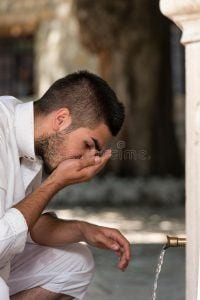
↓ Wash Your Nose
Again, with the help of your hands sniff some water into your nose three times. If you have a problem inhaling water into your nose, you can wet your fingers and clean the inner side of your nose with them. It is recommended to use the left hand for cleaning the nose.

↓ Wash Your Face
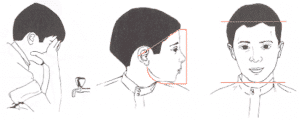
Now you are required to wash your face three times but you need to make sure that the water has covered all the areas on your face mainly from the top of the forehead to the chin and from the left ear to the right.
↓ Wash Your Arms
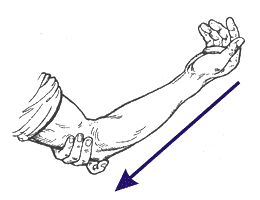
Wash your lower arms three times from the wrists to the elbows. Wash them thoroughly so that no part is left dry, make sure the water covers all parts properly. Don’t miss out these 15 Islamic Quotes About Leadership in Islam.
Via
↓ Wipe Your Head
This step is known as ‘masah’, it is used to clean the head. Wet your hands and wipe them on your head starting from your forehead and ending all the way to the nape. Make sure to use both of your hands in this step. The extent of the wiping differs between schools: Hanafis require wiping at least a quarter of the head, Shafi’is the minimum that can be called wiping (some hair), while Malikis and Hanbalis require wiping the whole head. Follow the school you usually follow, and ask a qualified scholar if unsure.

↓ Wash Your Ears
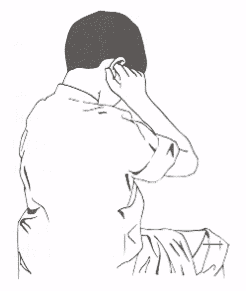
Now with your hands still wet from the previous step, wipe the insides of your ears with your index fingers and the outsides with your thumbs. The ears are wiped, not washed, and this is done once with the same water used for wiping the head.
↓ Wash Your Feet
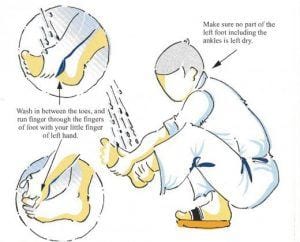
Wash your feet three times, starting with the right one. Make sure you clean your ankles and in between your toes. If you are wearing nail polish, take it off before starting, because it forms a layer that prevents water from reaching the nail, and wudu is not valid if water does not reach the skin or nails. (Henna stain, which does not form a layer, is not a problem.)
↓ Dua After Wudu
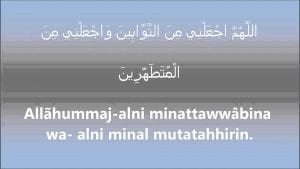
Once you are done with performing wudu, it is recommended (sunnah) to recite the dua below, as the Prophet (SAW) mentioned the reward of the gates of Jannah for it. You can find more duas in Islamic prayer quotes and duas. Prophet Muhammad (SAW) stated “Whoever of you performs Wudu carefully and then affirms: `Ash-hadu an la ilaha illallahu Wahdahu la sharika Lahu, wa ash-hadu anna Muhammadan `abduhu wa Rasuluhu [I testify that there so no true god except Allah Alone, Who has no partners and that Muhammad is His slave and Messenger],’ the eight gates of Jannah are opened for him. He may enter through whichever of these gates he desires (to enter).” [Muslim]. Here are 25 Most Powerful Islamic Duas Every Muslim Should Know.
Via
↓ Hadiths Regarding the Benefits Of Wudu
- Prophet Muhammad (SAW) said: “When a Muslim, or a believer, washes his face (in the course of Wudu), every sin which he committed with his eyes, will be washed away from his face with water, or with the last drop of water; when he washes his hands, every sin which is committed by his hands will be effaced from his hands with the water, or with the last drop of water; and when he washes his feet, every sin his feet committed will be washed away with the water, or with the last drop of water; until he finally emerges cleansed of all his sins.” [Muslim]
- Abu Hurairah (RA) reported that Prophet Muhammad (SAW) went to the Baqi cemetery and said, “May you be secured from punishment, O dwellers of abode of the believers! We, if Allah wills, will follow you. I wish we see my brothers.” The Companions said, “O Messenger of Allah! Are not we your brothers?” He said, “You are my Companions, but my brothers are those who have not come into the world yet.” They said; “O Messenger of Allah! How will you recognize those of your Ummah who are not born yet?” He said, “Say, if a man has white-footed horses with white foreheads among horses which are pure black, will he not recognize his own horses?” They said; “Certainly, O Messenger of Allah!” He said, “They (my followers) will come with bright faces and white limbs because of Wudu’; and I will arrive at the Haud (Al-Kauthar) ahead of them.” [Muslim]
- Imam Nawawi rahimahullah says, “Hardship and unpleasantness here stand for the uneasiness that one feels while performing Wudu’ in severe cold. To wait for the next Salat after offering a Salat is regarded as Ribat for the reason that by so doing, a person who is particular in offering Salat keeps himself constantly engaged in the obedience and worship of Allah to keep Satan away from him.”

Frequently Asked Questions
What are the obligatory acts (fard) of wudu?
All schools agree on washing the face, washing the arms up to and including the elbows, wiping the head, and washing the feet up to and including the ankles. The Shafi’i, Maliki and Hanbali schools also count the intention and (in the Shafi’i and Hanbali schools) the order, and some schools add other conditions. The Hanafi school counts four obligatory acts. Ask a qualified scholar for the details of your school.
What breaks wudu?
Waste from the private parts, passing wind, deep sleep, and loss of consciousness break wudu according to all schools. Schools differ on other matters, such as touching the private part or touching a person of the opposite sex, or eating camel meat; the Hanafi school, for example, does not consider touching the private part to break wudu, while the other schools generally do. Follow your school or ask a scholar.
Do I need to repeat wudu if I only have a small cut or bleeding?
The schools differ. The Hanafi school holds that flowing blood breaks wudu, while the Shafi’i and Maliki schools say it does not. Ask a qualified scholar if this applies to you.
Can I perform wudu with nail polish or make-up on?
Not if it forms a waterproof layer, as water must reach the nails and skin. Breathable products may be an option, but if in doubt, remove it first. Read about the full bath in our guide to ghusl in Islam.
How many times should each part be washed?
Washing once is obligatory and three times is the sunnah, as the Prophet (SAW) is reported to have washed the limbs once, twice and three times at different times (Bukhari). Do not be wasteful of water.