
The Quran and Ramadan: Ramadan is the ninth month of the Islamic calendar, when Muslims around the world fast from dawn to sunset. They stay away from food, drink and other worldly pleasures, and spend more time in worship.
Ramadan is the month meant to purify the heart and bring us closer to Allah (SWT). It is also the month of the Quran, because the Quran began to be revealed during it. Allah says: “The month of Ramadan in which the Quran was revealed as guidance for mankind” (Quran 2:185). That is why many Muslims try to complete the whole Quran at least once in this month. The aim is not only to finish it during Taraweeh, but to read it, understand it and live by it through the day. In this post, we share 10 practical tips to help you finish the Quran this Ramadan, including a simple daily page plan.
How to Finish Reciting Quran In Ramadan?
The best way to start is to make the intention before Ramadan arrives, not on the first night. Decide that you will begin and finish the Quran this month, then plan around it. Reciting the Quran brings Allah’s blessings, as we discussed in our article on Ahadith To Instill The Love Of Quran.
What Is The Reward For Completing The Quran In Ramadan?
The Prophet (peace be upon him) said that whoever recites a letter from the Book of Allah earns a good deed, and each good deed is multiplied by ten (Tirmidhi). Ramadan is a month when rewards are multiplied even more, which is why Muslims try to recite as much as they can. Allah knows best how He multiplies the reward, so focus on sincerity and steady recitation.
Can You Finish Quran Fast?
Everyone reads at their own pace. One juz usually takes between 30 minutes and 2 hours, depending on your fluency. Do not rush. If you read faster than you can recite correctly, you may mispronounce words, and the Quran should be recited slowly and clearly (Quran 73:4). It is okay if you cannot finish the whole Quran in the month, as long as you try your best.
↓ 10 – Start With Niyat
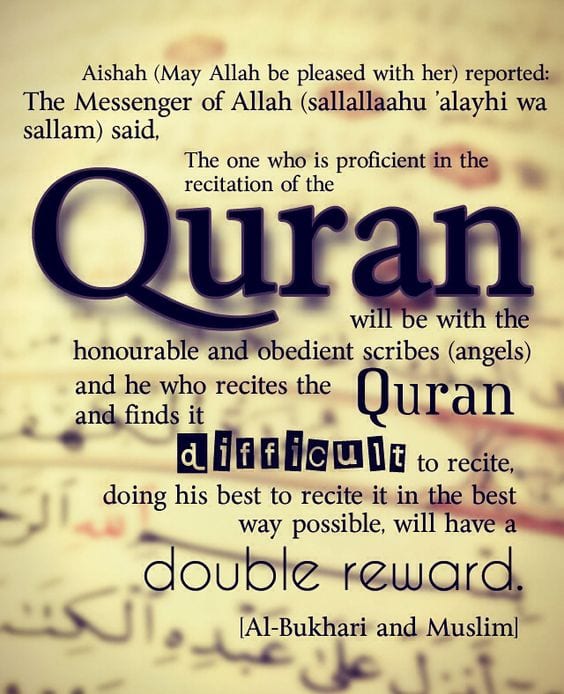
The Prophet (peace be upon him) taught that deeds are judged by intentions (Bukhari and Muslim). Before Ramadan begins, make a sincere intention to read the Quran for the sake of Allah, and ask Him to help you finish it. Renew that intention often, especially on days when your energy is low. A pure intention keeps you going when the excitement fades, and reciting the Quran will bring you peace and closeness to Allah.
↓ 9– Don’t Be Intimidated
Many people feel overwhelmed by the number of pages or the length of some surahs. Do not let that thought stop you. Break the task into small daily pieces, put your trust in Allah and keep trying. Allah says that He has made the Quran easy to remember (Quran 54:17). You may also like these 10 Most Beautiful Life Lessons from the Quran.

Via
↓ 8 – Set Objectives
Set a clear and realistic target, such as: “I will complete the Quran once this Ramadan.” Know your own stamina. If you plan two juz a day but can manage only one, adjust the plan instead of giving up. Islam teaches moderation, so choose a goal you can keep up every day for the whole month.
Via
↓ 7 – Read At Regular Timings
Our five daily prayers already give structure to the day, so use them. Pick a fixed time for the Quran, for example after Fajr or after Isha, until it becomes a habit. If your schedule is busy with work, kids or housework, read a few pages after each prayer instead. And if you struggle to pray regularly, see our post on How To Perform Salah (Prayer) Step by Step Guide.

↓ 6 – Make A Plan
Plan your recitation around your daily routine: work hours, rest time and family duties. Choose the time slots first, then fill them with pages.
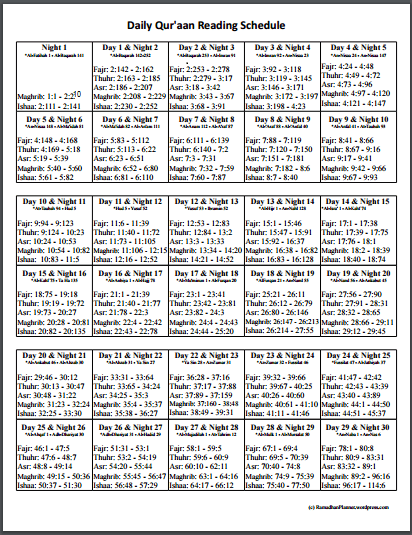
The simplest plan is one juz (part) per day. The standard Madani mushaf has 604 pages, so that is about 20 pages a day, or 4 pages after each of the five daily prayers. It feels easy once it becomes routine.
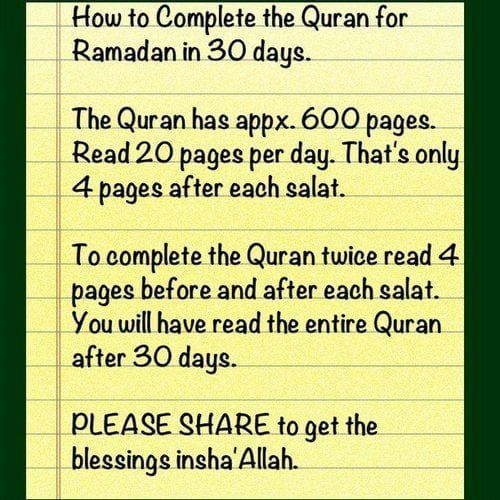
You can also make a Quran recitation chart for yourself like the one shown below:
↓ 5 – Comprehend the Quran
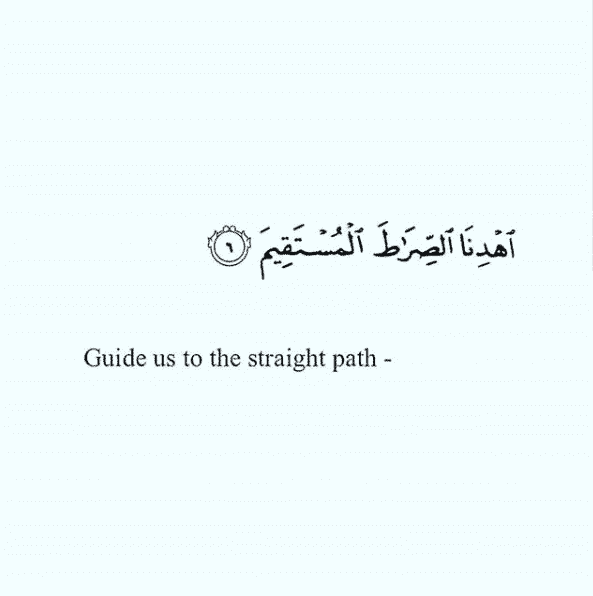
The Quran is guidance for all of humanity. Reciting it is rewarded, but understanding it changes the way we live. If you do not know Arabic, read a trusted translation or a short tafsir of the juz you recited that day. Knowing the theme and message of what you read makes the recitation more meaningful and helps you apply it in your life.
Via
↓ 4–Instruct Yourself On The Significance Of The Quran
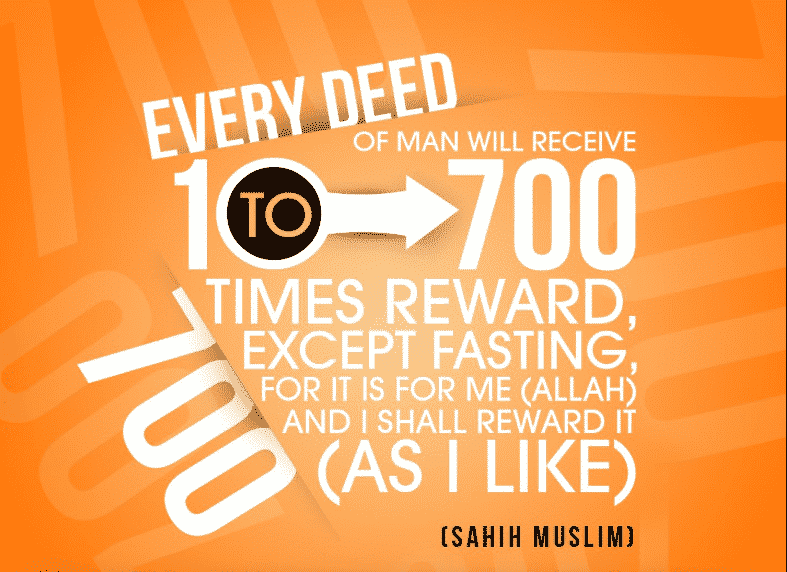
Write down the lessons you learn as you recite. Stick short notes on your mirror or somewhere you will see them every day. Allah multiplies the reward of good deeds from ten up to seven hundred times and more, and Ramadan is a special time for that. You can also listen to tafsir lectures from reliable scholars. The more time you give the Quran, the less time you have for things that pull you away from Allah.
↓ 3 – Make Quran Buddies
Find a Quran buddy, such as a parent, friend, sibling or spouse, who will remind you of your goals. Check in with each other daily, share what you learned, and encourage each other when one of you falls behind. Reciting together or comparing progress charts brings you closer to the Quran and to each other.

Via
↓ 2 –The Quran and Women
Allah has given women some exemptions during Ramadan: a woman does not fast or pray during her period or postnatal bleeding, and she makes up the missed fasts later. Do not worry about losing reward. Allah knows your situation, and there is plenty you can still do. Scholars differ on whether a woman can recite the Quran from memory or from a device during her period, and many allow it, so ask a scholar you trust. Either way, you can listen to recitation, read translations and tafsir, and make dhikr and dua.
Plan ahead by starting your recitation a few days before Ramadan, or by reading a little extra on the days you can, so that the missed days do not put you behind.

Via
↓ 1 – Eliminate Interference
Protect your Quran time. Put your phone on silent, sit in a quiet room where kids and others will not disturb you, and stay away from social media while you recite. Set up a small prayer corner before Ramadan starts, so that you have a ready place for recitation every day.
Via
Tools That Help You Finish the Quran in Ramadan
A few free tools make the daily plan easier. The Quran.com app and website offer translations in many languages and tafsir, and Tarteel can listen to your recitation and point out mistakes. For more options, see our list of the top Islamic apps every Muslim should have. A printed chart or a simple tick sheet on the wall works just as well.
Frequently Asked Questions
How many pages should I read daily to finish the Quran in Ramadan?
The standard Madani mushaf has 604 pages. Reading 20 pages a day finishes it in 30 days. That is one juz a day, or 4 pages after each of the five daily prayers. If Ramadan lasts 29 days, add about one extra page a day.
What if I fall behind in the middle of Ramadan?
Do not quit. Add two extra pages after Fajr and Isha for a few days, or use the weekend to catch up. A small steady habit is better than a big plan you abandon. The last ten nights are also a good time to catch up, since many people increase their recitation then.
Does listening to the Quran count if I cannot read Arabic?
Listening to the Quran is rewarded and helps you understand it, especially when you follow along with a translation. But try to recite yourself as well, even a little, because reciting is a deed in itself. If you cannot read Arabic yet, begin with a Noorani Qaida or a tajweed app and listen while you learn.
Is it better to finish the Quran quickly or to understand it?
Do not trade careful recitation for speed. Finishing once with attention and reflection is a better goal than racing through it. If you want to complete it more than once, treat that as an extra goal after your first reading.
Did the Prophet (peace be upon him) review the Quran in Ramadan?
Yes. It is reported that Jibril (peace be upon him) used to meet the Prophet every night in Ramadan and review the Quran with him (Bukhari). This is why reviewing and reciting the Quran in Ramadan is a beloved practice.