
Sunnah To Follow In Daily Life. Sunnah is the body of sayings and teachings of Holy Prophet Muhammad PBUH. To follow Sunnah is to act upon those sayings and teachings. Sunnah is the way to live life for a devout Muslim.
It not only helps us in this world, but it also helps in the hereafter as well. To follow Sunnah is obligatory on a Muslim. Whoever follows it, follows Allah SWT.

Prophet’s Sunnah For Everyday Life
↓ 1- Bismillah
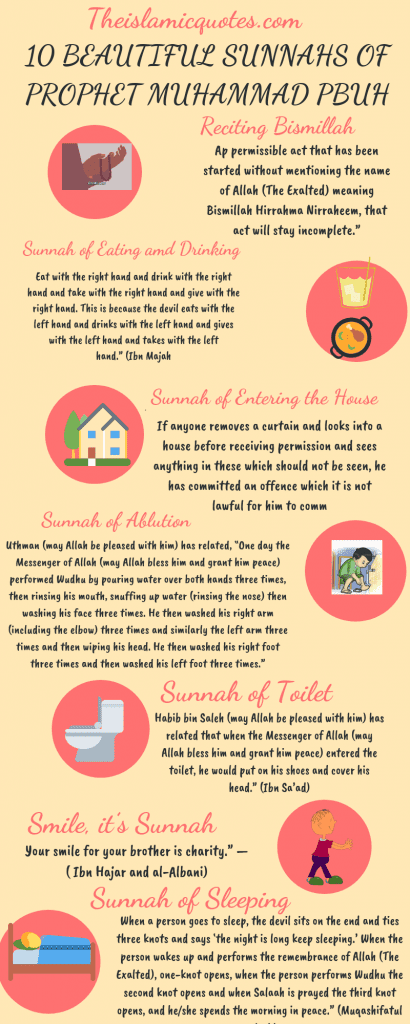
The Quran opens with Surah Fatiha which starts with Bismillah Hirrahman Nirraheem. Every Surah in Quran, but Surah Tawbah, start with Bismillah which puts emphasis in its recitation. Starting with Bismillah is a means of seeking Allah’s blessing and help in what we do.
Bismillah hir Rahman Nirraheem is the beginning of anything and everything. It is recited before eating, drinking or doing a permissible task. Prophet Muhammad PBUH taught us to begin our actions with Bismillah, such as eating, and he began his letters to kings and rulers with it. At the Treaty of Hudaybiyyah, the Prophet dictated “Bismillah ir-Rahman ir-Rahim”, but the Quraysh envoy objected and it was written as “Bismika Allahumma” instead (Sahih al-Bukhari and Sahih Muslim). When we recite the blessed words of Bismillah, we accept that we as humans are weak and need His help in every matter. Beginning with Allah’s name reminds us that every act depends on His help. For eating etiquettes, see Sunnahs of eating and drinking. Here are 10 Personality Traits Of Prophet Muhammad (SAW) Every Muslim Must Know.

↓ 2- The Sunnah Of Sleeping
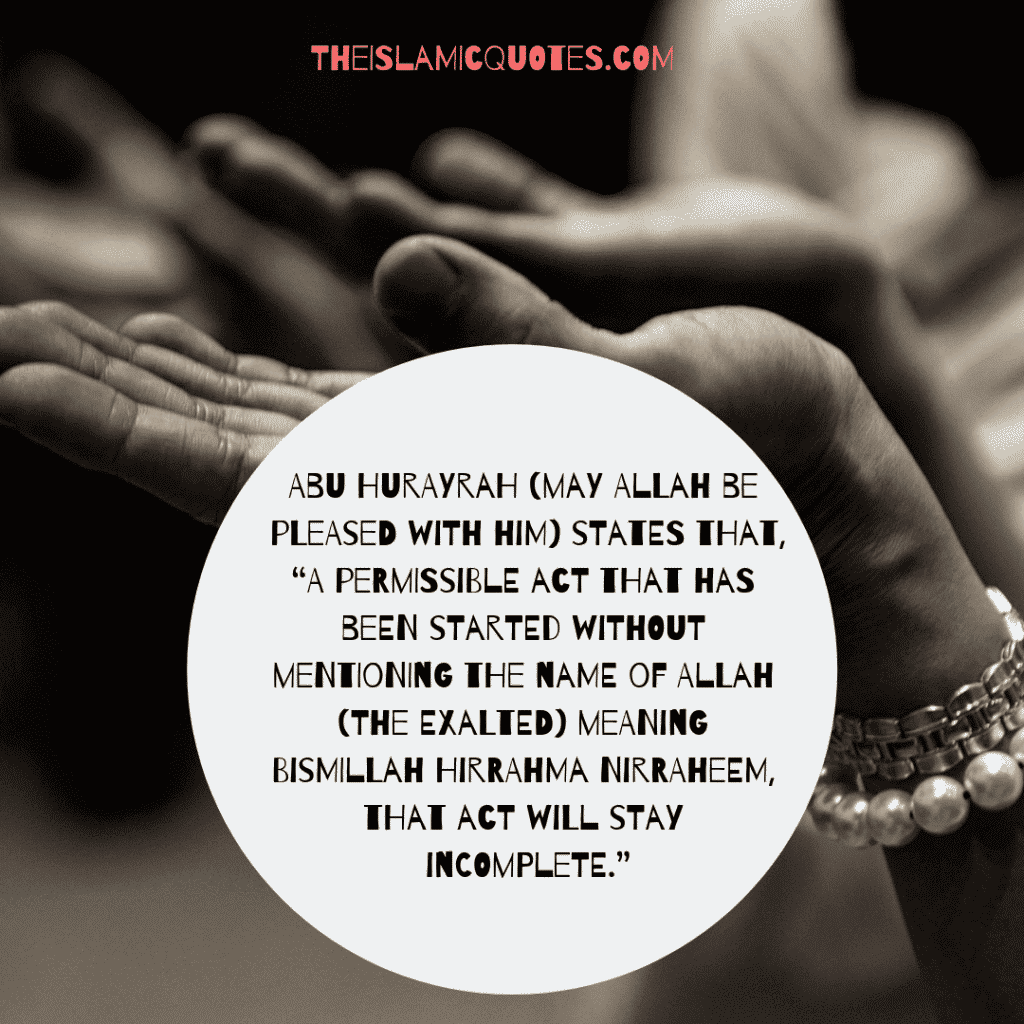
Sleeping is similar to death. We should seek Allah’s refugee and repent for our sins before going to sleep as we don’t know if we would be able to open our eyes to live one more day.
Prophet Muhammad PBUH would praise Allah SWT before sleeping. We should look up to his way of sleeping and act on his Sunnah.
Sleeping After Isha:
Prophet Muhammad PBUH disliked sleeping before Isha and talking idly after it (Sahih al-Bukhari), so it is Sunnah to pray Isha and then retire early so one can wake for Fajr or Tahajjud.
Wudhu Before Sleeping
It is advised to do wudhu before sleeping to stay in the state of purity. The Prophet PBUH told Al-Bara’ ibn ‘Azib to perform wudu as for prayer before lying down on his right side and then recite the bedtime dua (Sahih al-Bukhari and Sahih Muslim).
Dhikr of Allah before Sleeping
Prophet Muhammad PBUH would always recite duas and make dhikr of Allah SWT before sleeping. One report mentions that an angel and a devil come to a person at bedtime, and whoever remembers Allah before sleeping is protected through the night. Some of these narrations differ in strength, so rely on the well-established ones such as Ayat al-Kursi and the last verses of Surah Al-Baqarah (Sahih al-Bukhari).
Sleeping on the Right Side
Our Prophet Muhammad PBUH would always sleep on his right side, with the right hand under his right cheek. The Prophet PBUH disliked lying on the stomach, and told a man lying that way that it is a manner of lying that Allah dislikes (Abu Dawud, Ibn Majah).
Supplications before Sleep
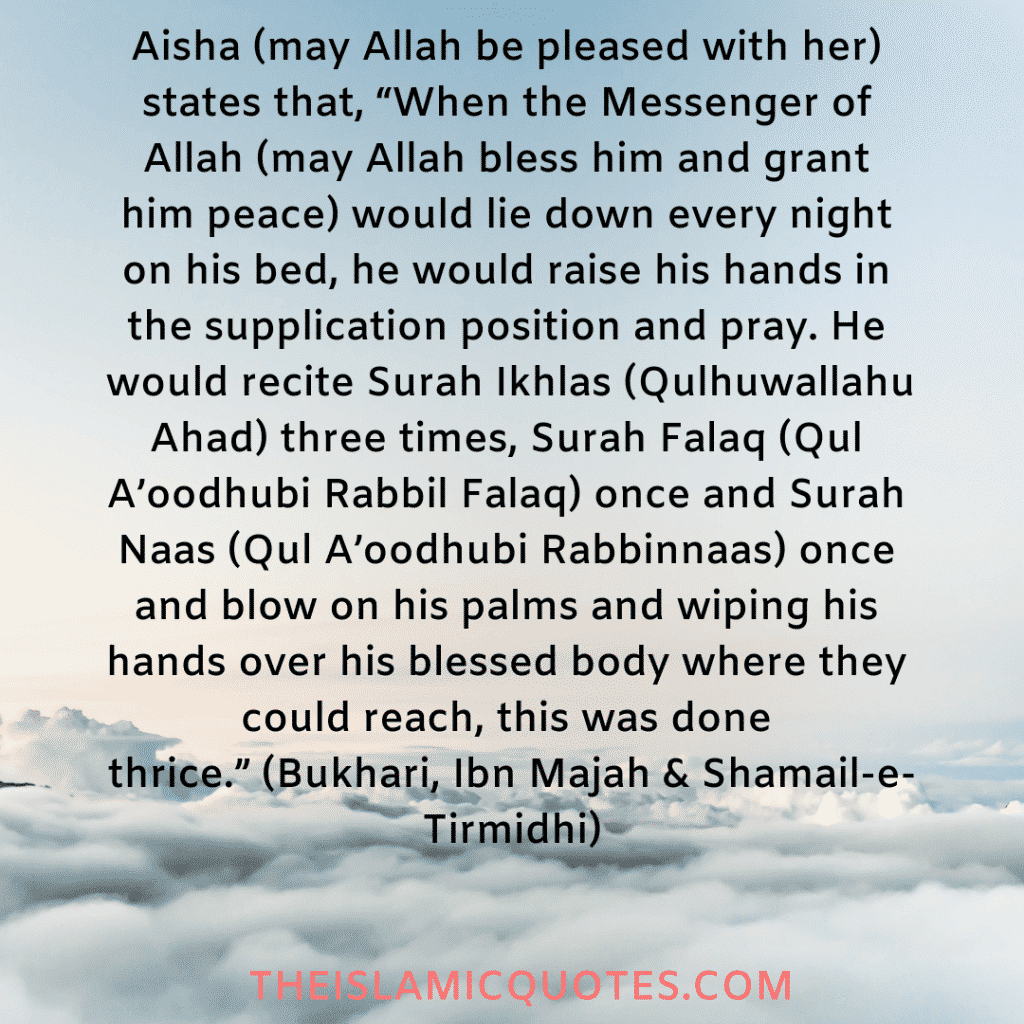
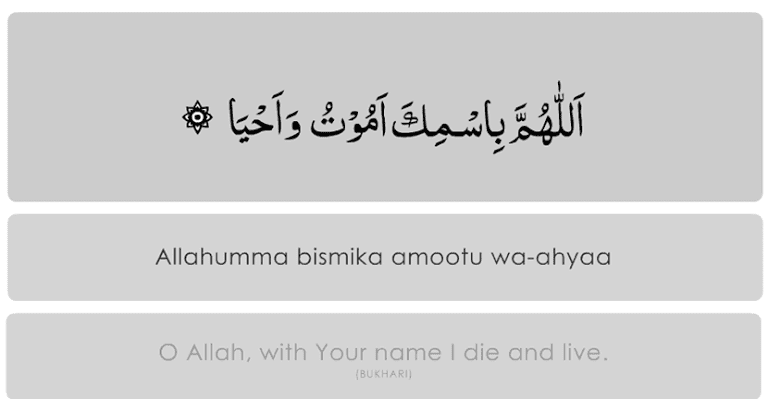
Our beloved Prophet Muhammad PBUH would never go to sleep without his routine supplications. He would recite Ayat ul Kursi and 3 kuls. He would also recite the Dua of sleeping
Via
↓ 3- The Sunnah of Waking Up
Waking up alive and well is a blessing from Allah SWT. Upon waking up, one should remember Allah, be thankful to Him for one more day to live and think about spending the day in the His remembrance and follow the Sunnah of Prophet Muhammad PBUH.
Rubbing the Palms on Face
Upon waking up, Prophet Muhammad PBUH would rub his eyes and face with his palm in order to decrease the effect of sleep.
Abulution and Miswak upon Waking Up
Upon waking up, the Prophet PBUH instructed us to blow water out of the nose three times, because Shaytan spends the night in the upper part of the nose (Sahih al-Bukhari and Sahih Muslim). Washing the hands before putting them into a vessel is also taught. Our Prophet Muhammad PBUH would use Miswak to brush his teeth.
Making the Bed
Keeping one’s bedding tidy is part of the cleanliness Islam encourages. The often-quoted line below about bedding and Shaytan is not reliably attributed to the Prophet PBUH, so please treat it as non-authoritative.
‘’The Messenger of Allah (may Allah bless him and grant him peace) has stated that, “Where there is bedding laid out upon which no-one is sleeping, then the Shaytan sleeps on it.”
Praying After Waking Up
It is Sunnah to pray to remember Allah and pray after waking up. The Prophet PBUH said that Shaytan ties three knots on the back of the head of a sleeper; if he wakes and remembers Allah one knot is undone, with wudu another, and with prayer the last, and he wakes up energetic and in good spirit (Sahih al-Bukhari and Sahih Muslim).

Supplication of Waking up

↓ 4- The Sunnah of Abulution
Abulution is to cleanse oneself physically before offering Salah. It not only cleanses one physically but also spiritually. Abulution is the way to gain rewards from Allah SWT. Whoever performs ablution in the right way, following the Sunnah, His body parts will shine on the day of judgment.
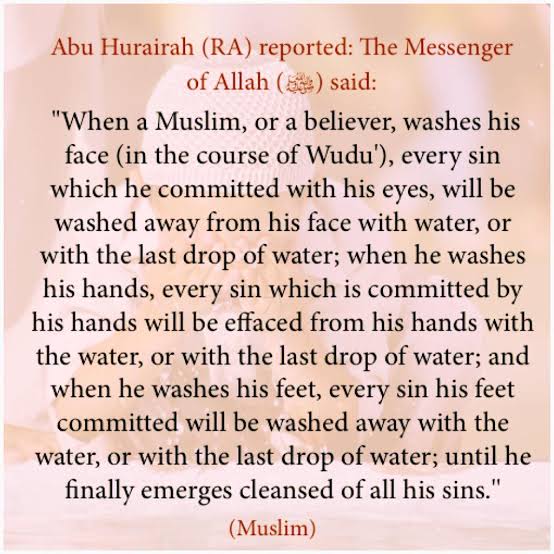
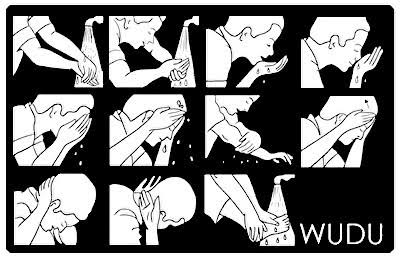
The obligatory parts of wudu are stated in the Quran (5:6): washing the face, washing the arms up to the elbows, wiping the head, and washing the feet up to the ankles. Schools add further obligations (for example, the Shafi’i school requires intention and order, and the Maliki school requires rubbing and continuity), and rinsing the mouth and nose is Sunnah for the Hanafi and Shafi’i schools but obligatory for the Hanbali school. See how to perform wudu. The steps people commonly follow include
1) Washing the hands first
2) Washing the face including mouth and nose
3) Washing the hands will elbow
4) Wiping the head with wet hands
5) Washing the feet till ankles
Sunnah of Abulution :
1) Reciting Bismillah. Abd-Allah ibn Mas’ud narrated that according to Prophet Muhammad,
The Prophet PBUH said, “There is no wudu for one who does not mention the name of Allah upon it” (Abu Dawud, Ibn Majah). Scholars differ on the strength of this report: the Hanafi, Maliki and Shafi’i schools regard saying Bismillah as Sunnah, while some Hanbali scholars regard it as obligatory.
2) To wash the hands ‘three times’ before starting wudu, as reported in the Sunnah of the Prophet PBUH.
2) Using Miswak to cleanse the mouth before reciting Allah’s praises.
3) Washing one’s face ‘three times’, gargling ‘three times’ and blowing water inside the nose ‘three times’
4) Washing hands till elbow ‘three times’
5) Doing Massah (Wiping one’s head) with wet hands and wiping the fingers.
6) Washing the feet till ankles three times and rubbing between the fingers according to Sunnah.
Al-Mustaurid bin Shaddad Stated,
“I saw the Messenger of Allah (may Allah bless him and grant him peace) rubbing between his toes with his little finger when he performed ablution.” (Tirmidhi)
↓ 5- Sunnah of Eating and Drinking
Our Deen has described each and everything for our convenience. Prophet Muhammad PBUH has told eating and drinking habits which are to be followed by us as Muslims. Do have a look at these 50+ Inspirational Quotes of Prophet Muhammad (P.B.U.H) & Sayings.
Eating Habits
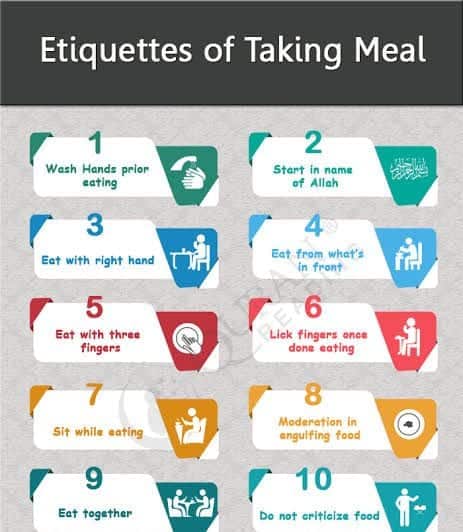
1) Bismillah or supplication of starting eating should be recited first
‘’He who does not recite ‘Bismillah’ before eating, that food becomes lawful for the devil.” (Muslim)
2) Food should be eaten with the right hand as it’s the Sunnah of Prophet Muhammad PBUH
‘’Eat with the right hand and drink with the right hand and take with the right hand and give with the right hand. This is because the devil eats with the left hand and drinks with the left hand and gives with the left hand and takes with the left hand.” (Ibn Majah)
3) Sit down to eat calmly and do not eat in a hurry
4) The food should be chewed properly
5) One shouldn’t point out flaws or pass bad comments about the food.
6) The food should be taken from the closest side of the bowl.
7) One shouldn’t blow over the food
8) If a morsel falls on the ground, it is Sunnah to pick it up, clean and eat it
9) Alhamdulillah should be recited after eating the food
10) Hands should be washed thoroughly before and after eating the food
Drinking Habits
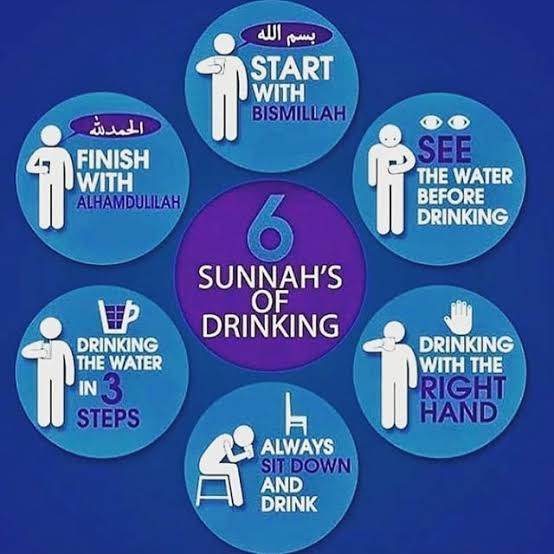
1) One should drink from his right hand
2) One should sit and drink. According to a Hadith;
“Do not drink water standing up, if you do it by mistake and you remember then vomit it out.” (Muslim)
3) Drink water in three breaths. (Note on item 2: most scholars regard drinking while standing as disliked rather than forbidden, since it is also reported that the Prophet PBUH drank standing at times; sitting is preferred.)
4) Start drinking water by reciting ‘Bismillah.’ And finish it with ‘Allhamdulillah’
↓ 6- The Sunnah of Leaving and Entering the House
There are ways that should be followed while entering or leaving the house and we as Muslims should make them a part of our lives.
1) Recite the following Dua while entering the house
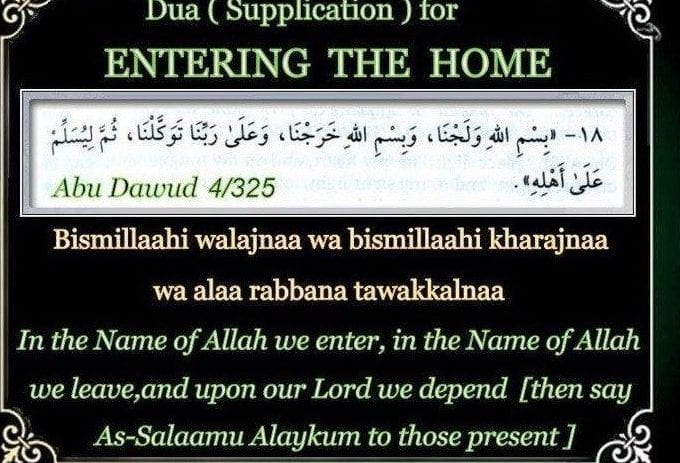
2) Saying Salam to those who are already present in the house
3) if you’re going to someone’s house, three knocks should be made at the door.
4) One shouldn’t slam or shut the door loudly
5) Entering the house gently. Our prophet would enter the house in such a gentle manner if someone is asleep so that he doesn’t wake up
6) Announcing the presence to those who are already inside the house.
7) Using Miswak upon entering your house as it’s Sunnah.
8) Seeking permission while entering the house or any room
9) One shouldn’t peek from the hole or remove the veil. He should stand at the right or left side. According to a Hadith
’’Whosoever before gaining permission moves the veil and looks into the house, he has done such a thing which was not permissible’’
10) Reciting the following Dua while leaving the house
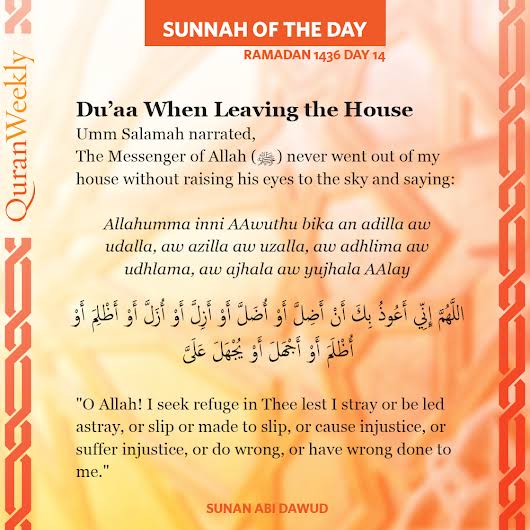
↓ 7- Sunnah of Entering and Leaving Bathroom
Our Prophet Muhammad PBUH has also described manners for using the toilet. Which should be followed as a Muslim. The Sunnah of using a toilet is as follows
1) One should enter with his left foot
2) The following Dua should he recited while entering
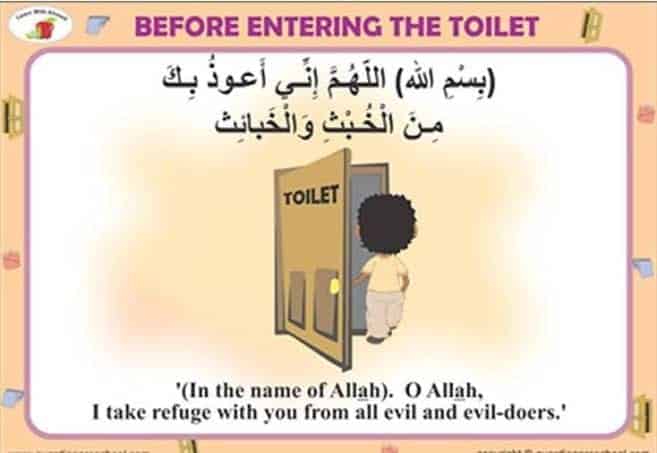
3) Scholars consider it Sunnah to be modest and to avoid speaking while relieving oneself (the report about covering the head and wearing shoes is weak in chain)
4) Anything which has Allah’s name inscribed on it shouldn’t be taken to the toilet
5) Only the left hand should be used to clean cleanse oneself after relieving
6) Cleanse oneself with water; scholars differ on whether stones or tissue alone are sufficient, with most allowing them if they clean properly (see Islamic toilet etiquette)
7) One should not face the Qiblah or turn one’s back to it while relieving oneself in the open (Sahih al-Bukhari and Sahih Muslim); scholars differ on whether this applies inside built toilets
8) A person should leave the toilet with right foot in the front.
↓ 8- Wear a Pleasant Smile
Smiling is a beautiful sunnah of Prophet Muhammad PBUH. He would always smile and welcome people in the circle of Islam with his beautiful and blessed smile. A warm smile also tends to lift the mood of both people. Here are Top 12 Islamic History Books Every Muslim Must Read.
Our prophet Muhammad PBUH considered smiling at other Muslim brothers a charity.

↓ 9- Using Miswak
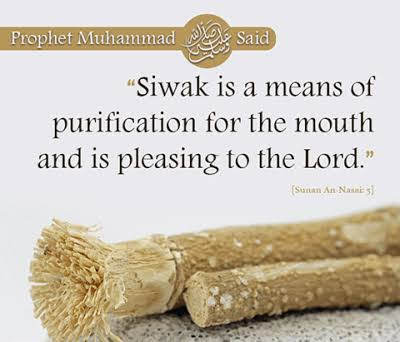
Miswak is a twig or a stick used to clean one’s mouth. Our Prophet Muhammad PBUH would use Miswak every day. It’s his Sunnah to use it after waking up, during wudu. He would come to the home and use Miswak. The Prophet PBUH said, “Were it not that I would burden my ummah, I would have commanded them to use the siwak with every wudu” (Ahmad, with a similar report in Bukhari and Muslim). Using it while fasting is allowed in the Hanafi and Maliki schools at any time; Shafi’i scholars dislike it after midday (zawal), so follow your school. See also hadiths on health and hygiene.
↓ 10- Visiting the Sick
Visiting the sick is very encouraged in Islam. Prophet Muhammad PBUH would visit sick and give blessings to him. According to Prophet Muhammad, one of the five duties of a Muslim is to visit a sick. It is sunnah that one can even visit a Kaafir for his Iyyadah. But the time period should be brief so that the sick does not get disturbed.

Frequently Asked Questions
Is it obligatory to follow every Sunnah?
Following the Prophet (PBUH) is required of every Muslim (Quran 3:31), but scholars classify his actions differently: some are obligatory, some recommended (Sunnah) and some habits of his time and place. Ask a qualified scholar if unsure how a particular act is classified.
What dua should I say before eating?
Say “Bismillah”. If you forget, say “Bismillahi awwalahu wa akhirahu” when you remember (Abu Dawud, Tirmidhi). Afterwards, say “Alhamdulillah”. See Sunnahs of eating and drinking.
Is it haram to drink water while standing?
Most scholars say it is disliked rather than forbidden, because reports exist of both prohibition and of the Prophet (PBUH) drinking standing. Sitting is better.
Which foot do I use to enter and leave the toilet?
Enter with the left foot and leave with the right, saying the supplications taught in the Sunnah. See Islamic toilet etiquette.
Should I make wudu before sleeping?
Yes, it is a recommended Sunnah, as taught in the hadith of al-Bara’ ibn ‘Azib in Bukhari and Muslim. It is not an obligation. Read how to perform wudu.
Assalam alekum Sajjal
I would like to use the picture showing steps of wudu in one of the possible scientific publications.Please permit me to do so
Walaikum Salam,
We do not own the rights to that image hence we are not in a position to allow/disallow this. You can try looking for the original source of the image.
Kind regards,
Team TheIslamicQuotes.
Fatiha ka tarika In Hindi : अस्सलामु अलैकुम वरहमतुल्लाह वबरकाताहु मेरे प्यारे मुस्लिम भाइयों और बहनो हम आज आपलोगो के लिए fatiha ka tarika…
Thank you for your feedback
Kind regards,
Team TheIslamicQuotes.
Assalamaikum warhamatulallah wabarakatu I have copy in a note book but not everything is that okay
Aslamu alaikum