
What is shirk in Islam? Shirk a deadly infection that appears to be a hindrance to the successful path of life and Islam. It’s a term from Arabic that means “polytheism.”
OR
Linguistically, the Arabic term ‘Shirk’ comes from the root word SHARAKA, which implies ‘to share or append, not singular or one.’ It is the total opposite of unity (Tauheed). Shirk specifically refers to worshipping Allah with a partner or thinking that the true source of power, damage, or benefits comes from someone other than Allah.
OR
Shirk is defined as “associating a partner with Allah in His Being (Zaat), characteristics (Sifat), deeds, commandments, or names” in the Islamic language. Mushrik or Polytheist is the name given to someone who commits shirk.
OR
Shirk is the gravest of sins. Allah says that He does not forgive shirk if a person dies upon it without repenting, while He may forgive lesser sins as He wills (Quran 4:48). Anyone who sincerely repents before death, however, is forgiven. It is the gravest sin because it is a full breach of Allah’s right to be worshipped alone. Therefore, the Quran frequently urges people to believe in Allah’s oneness and forbids them from practicing shirk, which involves associating others with His Being or Attributes.
What’s the Meaning of Shirk in Islam?

Shirk believes in something that only Allah can do, can be done by someone or something else. Therefore, if shirk is done by explicitly worshiping anyone or anything other than Allah, it is called “Greater Shirk.”
Lesser shirk, on the other hand, is a lesser act that leads toward shirk without taking a person out of Islam, such as showing off in worship (riya) or swearing by other than Allah; it is sometimes called “hidden shirk” (Musnad Ahmad).
Allah declares Himself to be the Provider in the Quran. He is the one who bestows all types of benefits on us for us to survive and stay alive. If someone believes that someone or something else is supplying him these blessings; for example, if he believes that money, his boss, his acquaintance, or his family members are supplying them the blessings or anything, then this belief is known as “shirk.”
What are the Types Of Shirk?
There are three different forms of shirk. Shirk ul Roboobiyyah, Shirk ul Ibadah, and Shirk ul Asmaa are all examples of shirk.
18 – Shirk-ur- Roboobiyyah
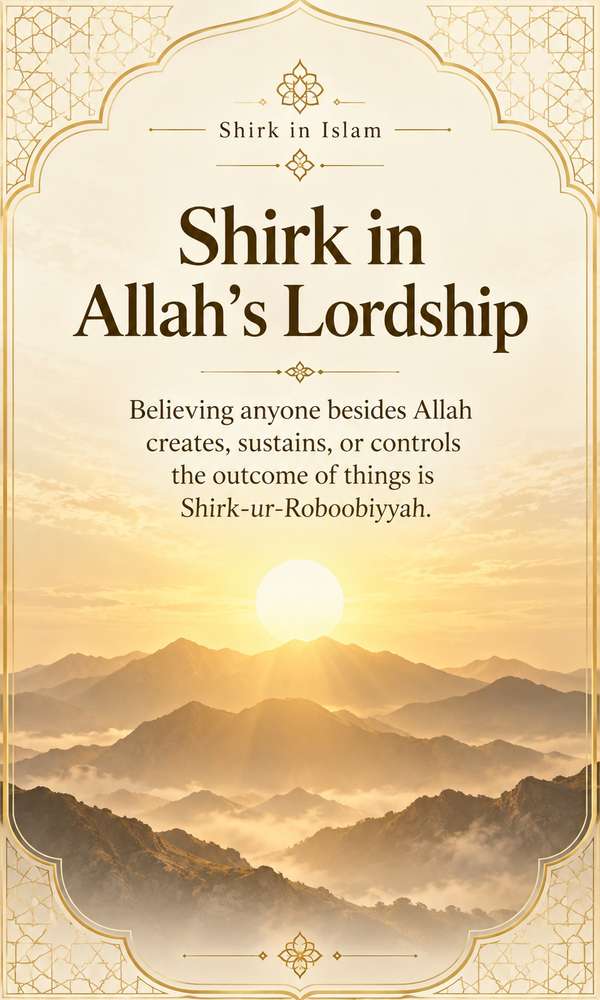
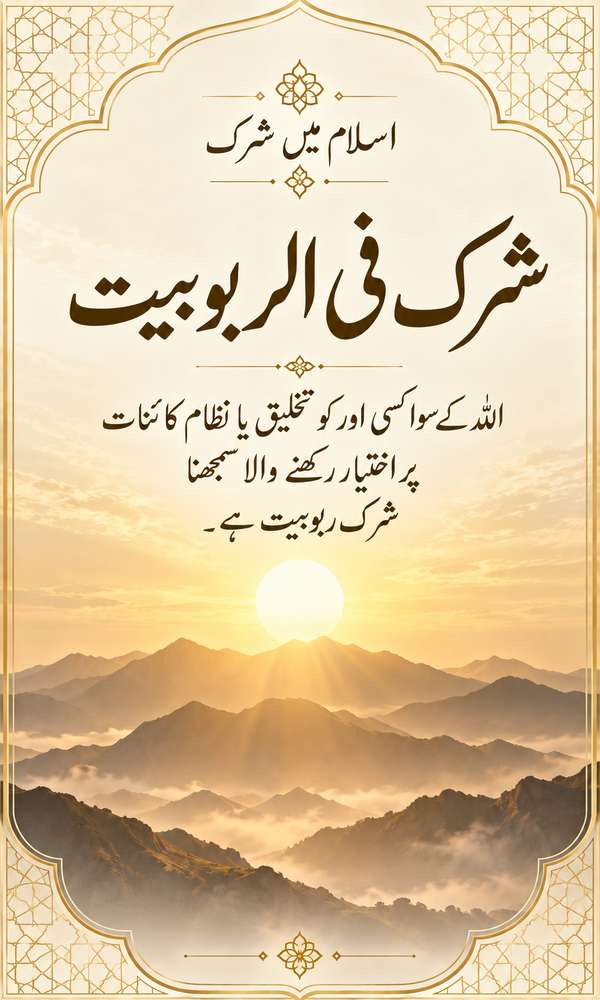
Shirk in Tawḥīd is to accept that anyone besides Allah creates or shares control over his humanity. This conviction implies that somebody other than Allah can make great things happen or keep awful things from happening.
17 – Shirk- in- Ibadah
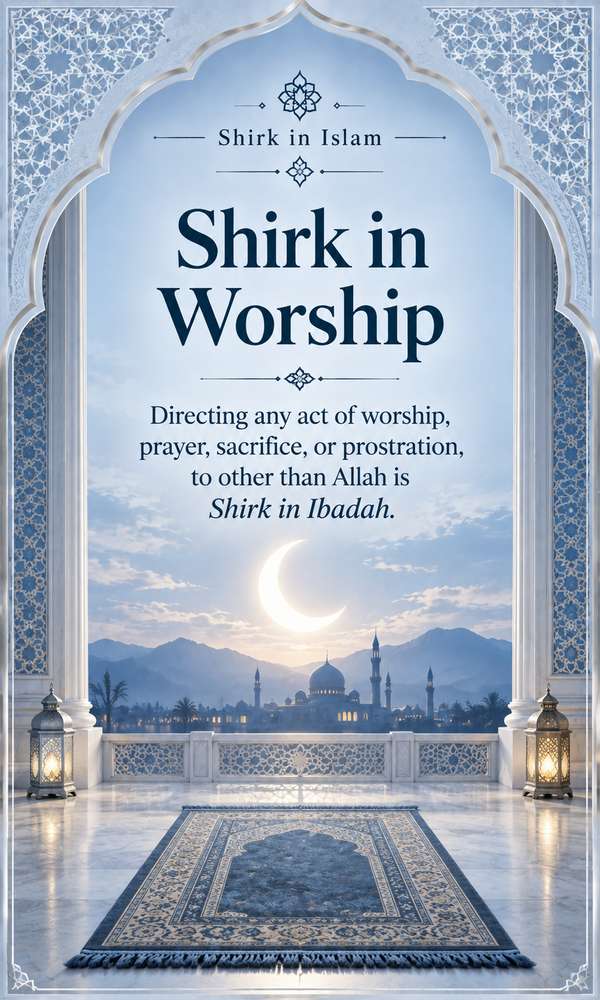
There are several types of shirk in the act of Ibadah or worship.
Islam forbids the worship of humans, animals, and idols. Sadly, some Muslims worship saints or visit tombs to seek assistance. They do tawaaf around the graves and offer sacrifices in the name of the deceased. Shirk in al-‘Ibadah consisted of two parts.
16 – Ash-Shirk Al-Asghar (Minor shirk)
The Shirk Al-Asghar is the minor shirk. It is often hidden and easy to fall into without noticing, which is why the Prophet ﷺ warned about it (Musnad Ahmad). It does not take a person out of the fold of Islam, but it is a grave sin from which one must repent.
15 – Ash-Shirk al-Akbar (Major Shirk)
Tawḥīd in worship is a definitive and firm foundation that any Muslims have never contradicted, and all the orders hold a common see almost it. This frame of shirk happens when any act of worship is directed to someone other than Allah. It speaks to the foremost self-evident way of idolatry, which Allah particularly sent prophets to call humankind away from.
14 – Shirk in Al-Asmaa Was-Sifat:
This type of shirk includes two things one is the common practice of giving Allah the attributes of His own creation, and the other thing is the act of giving created beings Allah’s names and attributes.
13 – Shirk by Humanization:
In this category of shirk, Allah is given the shape and qualities of human creatures and creatures. However, due to man’s prevalence over creatures, the human shape is more commonly utilized by misguided worshipers to speak to God in creation.
Subsequently, the Maker picture is frequently painted, shaped, or carved within the shape of human creatures having the physical highlights of those who revere them.
You should also go through these Islamic Quotes on Haqooq ul Ibad & Its Significance
12 – Shirk by Deification:
This category of shirk relates to cases where humans or things are given or claim Allah’s names or His properties.
Examples Of Shirk:
11 – Believing In Another God:
The Trinity, a central Christian doctrine, holds that God is three persons in one. Islam rejects this and affirms the absolute oneness of Allah (Quran 112:1-4). The doctrine is described as follows:
- God the Father
- God the Son, identified with Jesus
- God the Holy Spirit
There were also Greeks who believed in several Gods, such as God of Thunder, God of the Gods, and God of Rain.
10 – Ar-Riya
Ar Riya is acting fake by performing prayer to impress others. For example, someone may pray in front of others only to understand that they are devout Muslims. You should not do this because a person must have a pure heart for Allah and no one else.
9 – Wearing Charms And Fortune Telling
Some individuals shield themselves against Jinn by wearing charms and casting spells. They believe that by doing so, the Jinn will refrain from hurting them. Many individuals, for example, employ the blue eye to keep the Jinn away. Instead, they should be praying, reading the Qur’an, or offering Du’aa to Allah.
Wearing amulets or charms in the belief that they protect by themselves is shirk (Musnad Ahmad), and for protection from the evil eye see nazar in Islam. Visiting fortune tellers and believing them is also strongly condemned: the Prophet ﷺ said that the prayer of one who goes to a fortune teller and asks him is not accepted for forty nights (Sahih Muslim), and believing what he says is disbelief in what was revealed to Muhammad ﷺ (Musnad Ahmad). Reading horoscopes as a guide to life falls under the same warning.
8 – Swearing
Minor shirk is also swearing by someone other than Allah. For example, when Abdullah Ibn Omar witnessed a man swearing by his father and another swearing by Al-Kabah, Prophet Mohammed said:

7 – Saints And Peers
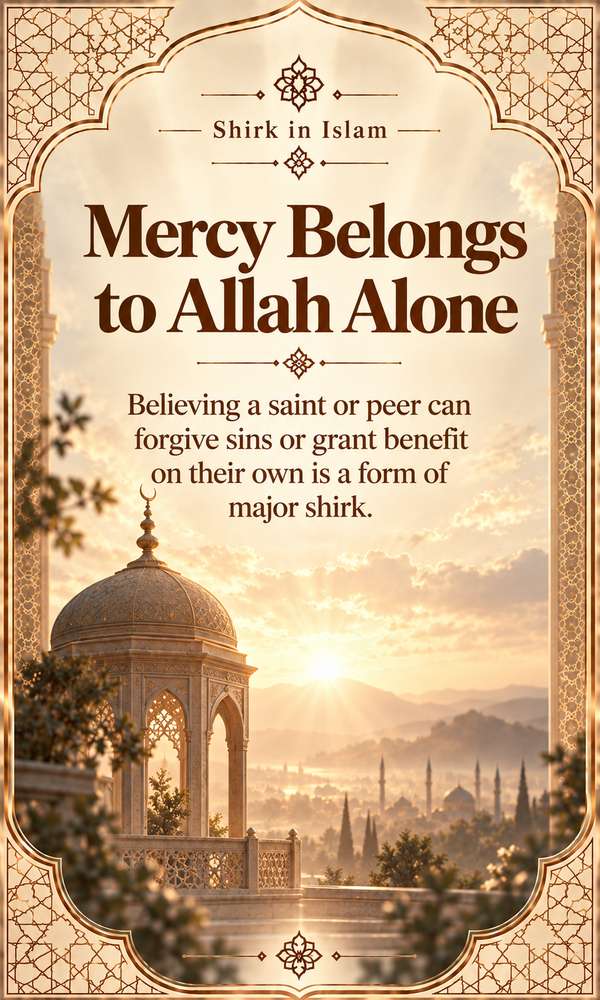
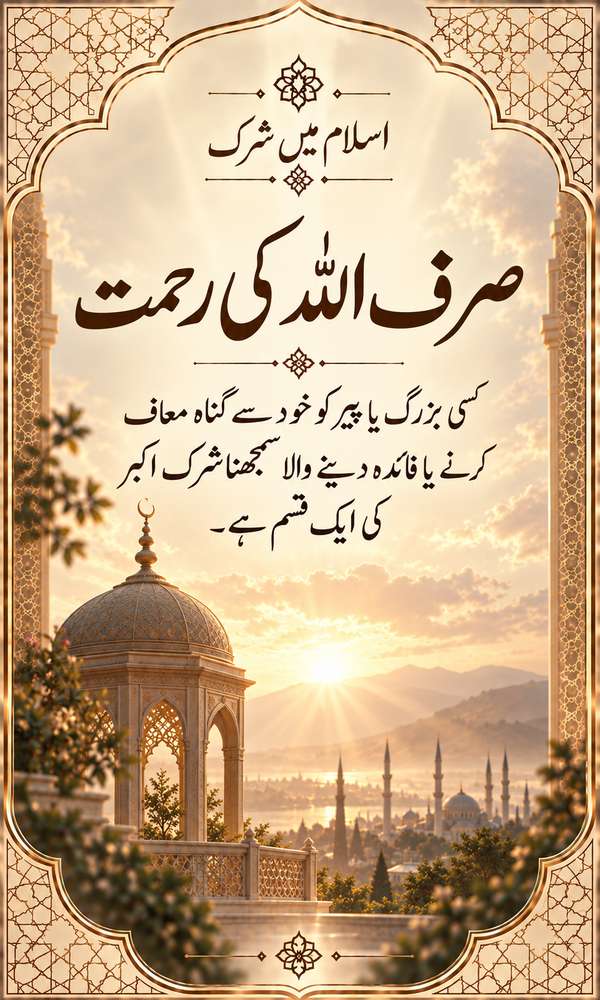
Some individuals think that people other than Allah can bestow mercy, forgive sins, overlook evil actions, and bestow benefits. These individuals are sometimes referred to as peers, saints, or awlyaa, and their devotees may even invoke them. This is a kind of significant shirk in which you ascribe to someone other than Allah anything that only Allah has, such as Lordship, the only right to worship, and divine names and qualities. Only Allah can provide kindness, forgiveness, and benefits.
6 – Obeying Someone Other Than Allah
Shirk-at-Taa’a is a form of significant shirk in which one obeys any authority despite Allah’s command. A state that prohibits the wearing of the hijab or the growing of a beard is an example.
The Prophet ﷺ said, “There is no obedience to any creature in disobedience to the Creator” (Musnad Ahmad). Obedience to rulers or others is only in what is good.

5 – Shirk of Making Someone Your Idol
People start adoring, looking up to, and appreciating singers and actresses due to countless TV shows nurturing pop stars, stimulating song lyrics, and films. Shirk-al-mahabbah indicates that you show others than Allah the affection that is due to Him alone. This form of shirk also entails either liking or hating people whom Allah loves.
‘He is my idol!’ may appear harmless, yet it is a major issue in the Ummah when Muslims choose to listen to music rather than pray, and when they like and imitate musicians and performers who defy Allah!

4 – Shirk of Giving Credit to Others
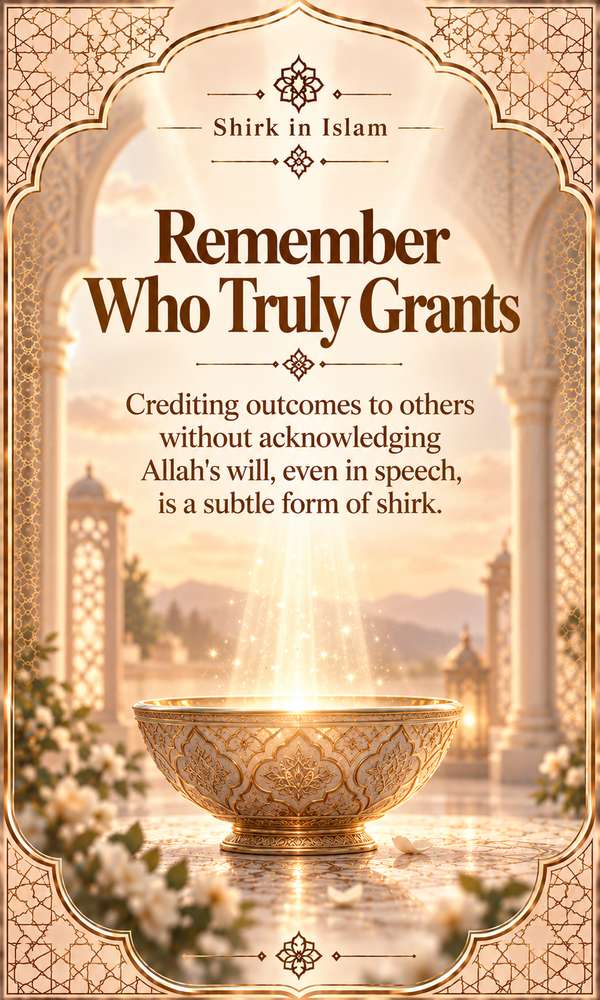
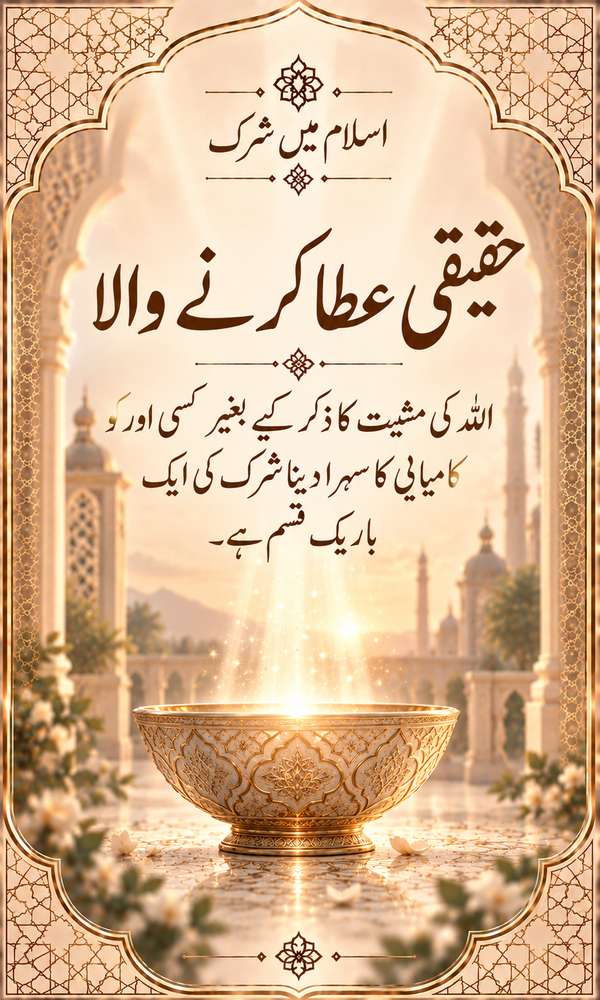
Another typical blunder is to say, “If it hadn’t been for him, I wouldn’t have become her.” ‘Had it not been for the dogs, we would have been robbed as well,’ or ‘this would not have occurred if it hadn’t been for Allah and you,’ you don’t even mention Allah in the first and you gather the Creator and the creature in an affair in the second two.
Rather, say, ‘As Allah wills or Insha’Allah, and then you will,’ or ‘Had it not been for Allah, then it would have been for you.’ It becomes big shirk if you genuinely believe above with your heart! However, if you did not intend it and it just came out of your mouth, it’s a sort of minor shirk for which you must repent.
3 – Shirk In The Light Of The Quran
Shirk is the opposite of Faith. They both are different things. Similar to how the brightness of day and the blackness of night cannot coexist, shirk and faith can never coexist under the roof of Islam.
All the great Prophets opposed shirk. Sages and saints have also warned against the dangers of shirk; for example, when Sayyiduna Luqman, the wise, counseled his son as stated in the Quran.

The Quran depicts the end of a polytheist as a person, who falls from a great height, and the birds shred his flesh into small pieces, or the wind separates his parts and scatters them into a faraway valley, and this is the most terrible and harshest kind of death.

Similarly, a person who associates companions with Allah after believing in Him descends from the heights of faith into the valley of unbelief. Then, like the birds that consume his flesh and fly away in different directions, his greedy impulses scatter his concentration, and the evil whispers blow him away like the wind, casting him into the valley of doubt. That is how a polytheist ends up in the worst of situations.
2 – Hadith on Shirk
When shirk is addressed in sharee’ah literature, academics have established rules to differentiate major shirk from minor shirk. The following are some of the guidelines:
When the Holy Prophet (pbuh) explicitly indicates that this conduct is minor shirk, as in al-Musnad (27742) when Mahmoud ibn Labeed stated that Holy Prophet said

When the word shirk is used without the definite article al- in the Qur’an and Sunnah writings, this means that it refers to minor shirk.
The Sahaabah’s deduce the intention of work shirk from the sharee’ah writings. The Sahaabah’s understand the weight since they are the most informed of the people regarding Allah’s religion and the Lawgiver’s meaning. For example,
Abu Dawood (3910) narrated from Ibn Mas’ood that the Prophet (peace and blessings of Allah be upon him) said three times, “Tiyarah (superstitious belief in omens) is shirk, tiyarah is shirk,” and there is no one among us who will not have some of it. But, still, Allah will rid him of it through tawakkul.
According to renowned hadith scholars, the phrase “there is no one among us…” is those of Ibn Mas’ood. Because he could not have said, “There is no one among us…” referring to major shirk, this shows that Ibn Mas’ood (may Allah be pleased with him) recognized that this was minor shirk. Furthermore, major shirk cannot be removed by tawakkul; rather, repentance is required.
Holy Prophet stated:

1 – Beautiful Dua for Protection from Shirk
You’ve probably seen the frightening presence of shirk in many everyday circumstances and want to know how to defend yourself, right? A vital prayer was revealed to us by the Prophet. Memorize it, tell others about it and also go through these Best Times to Make Dua For Highest Chances of Acceptance.

Frequently Asked Questions
Is shirk forgiven if a person repents?
Yes. Allah does not forgive shirk if a person dies upon it, but He forgives the one who sincerely repents before death (Quran 4:48 and 39:53). See our guide to duas to ask Allah for forgiveness.
What is the difference between major and minor shirk?
Major shirk, such as directing worship to anyone besides Allah, takes a person out of Islam. Minor shirk, such as showing off in worship (riya), does not, but it is a serious sin that must be avoided and repented from.
Is wearing an evil eye charm or amulet shirk?
Scholars warn that relying on amulets or charms for protection is a form of shirk, as protection comes from Allah alone. Seek refuge in Allah through the Quran and the authentic duas. Read more on the evil eye in Islam.
Is it shirk to ask a pious person to make dua for me?
Asking a living, righteous person to pray for you is permissible. Calling upon the dead or anyone other than Allah to fulfil needs is what scholars warn against. Ask a qualified scholar about specific practices in your community.
How can I protect myself from shirk?
Learn tawhid, make sincere intentions, avoid showing off, and regularly seek Allah’s protection. Read about the 99 names of Allah to strengthen your understanding of His oneness.