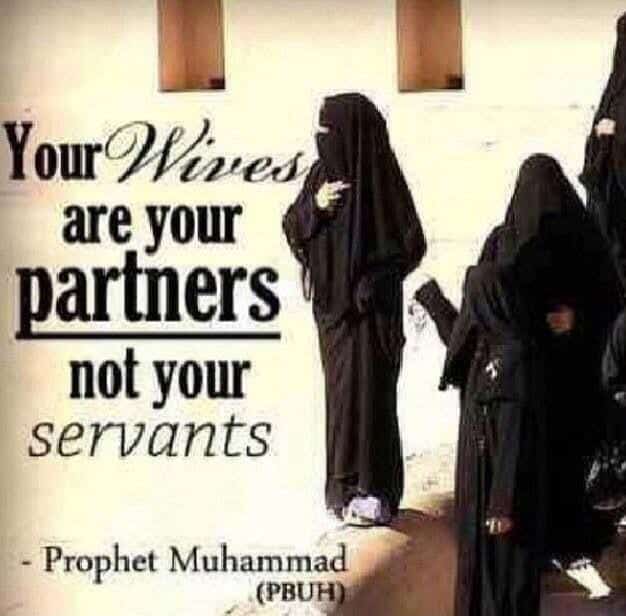
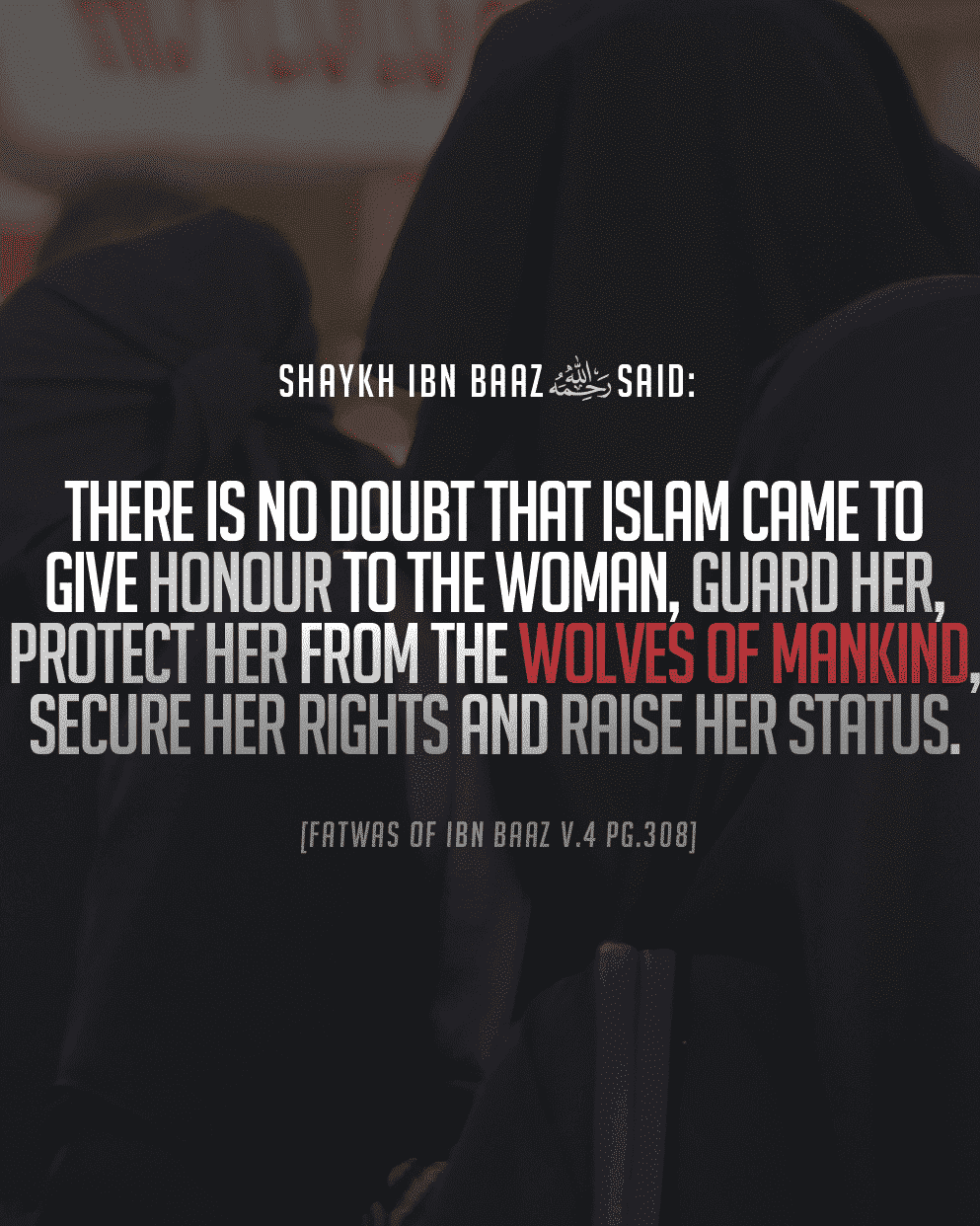
Islamic Quotes about Women : what is the status of women in islam ? what rights does islam gives to women ? in this article we will see in detail what Quran , Hadith , Prophet Muhammad (PBUH) said about women and her status .
What Quran Says about Women – Status of Women in Islam
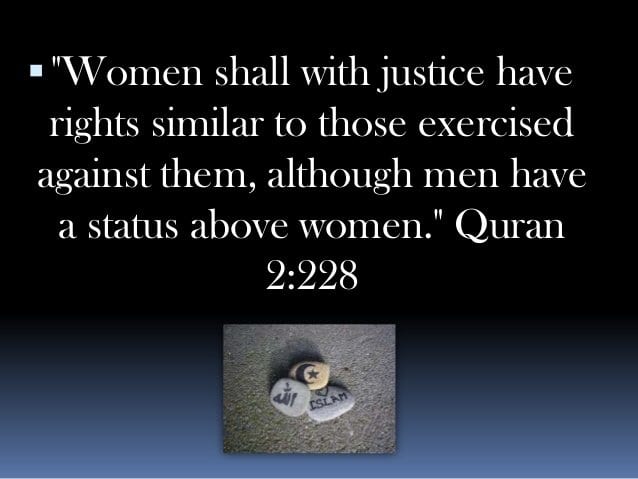
And for women are rights over men similar to those of men over women.
(Qur’an, 2: 228)
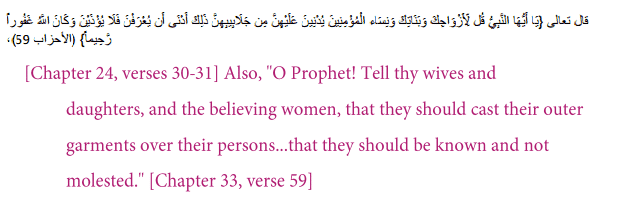
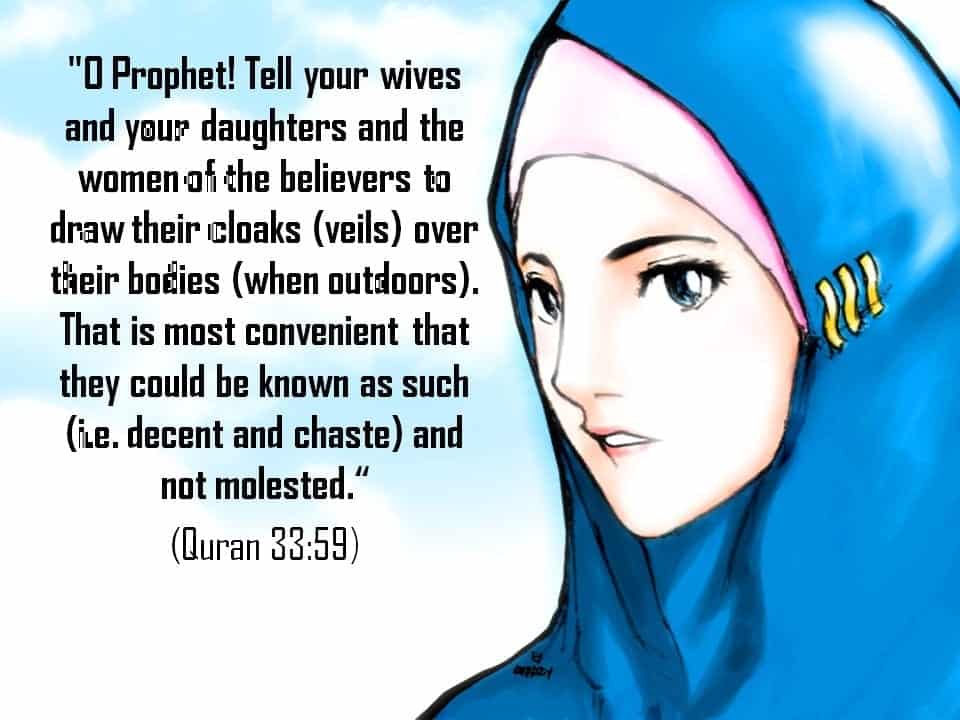
Say to the believing men that they should lower their gaze and guard their modesty: that will make for greater purity for them: and Allah is well acquainted with all that they do. And say to the believing women that they should lower their gaze and guard their modesty; that they should not display their beauty and ornaments except what (ordinarily) appear thereof; that they should draw their veils over their bosoms.”
(Qur’an, 24: 30-1)
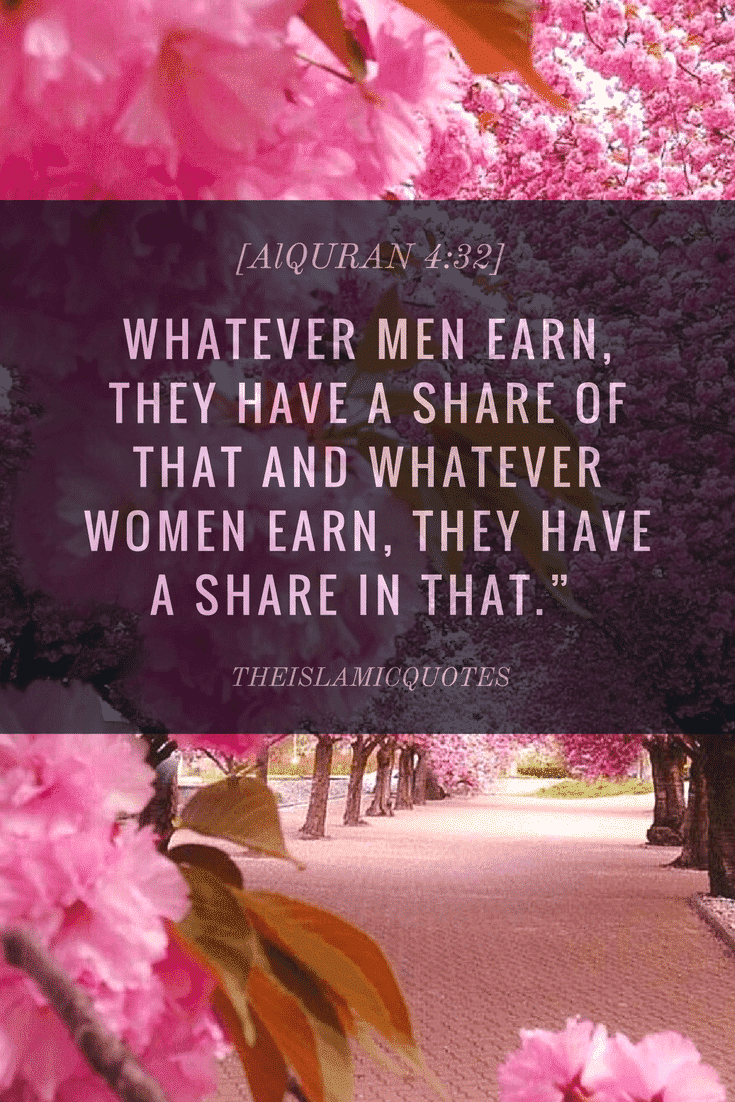
Whatever men earn, they have a share of that and whatever women earn, they have a share in that.
(Quran 4:32)
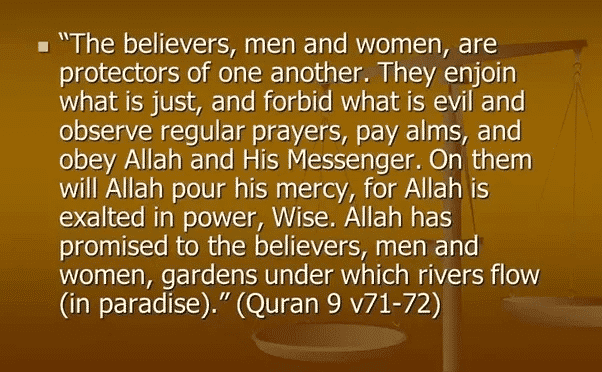
For Muslim men and women, for believing men and women, for devout men and women, for true men and women, for men and women who are patient and constant, for men and women who humble themselves, for men and women who give in charity, for men and women who fast, for men and women who guard their chastity, and for men and women who engage much in Allah’s praise, for them has Allah prepared forgiveness and great reward.”
(Quran 33:35)
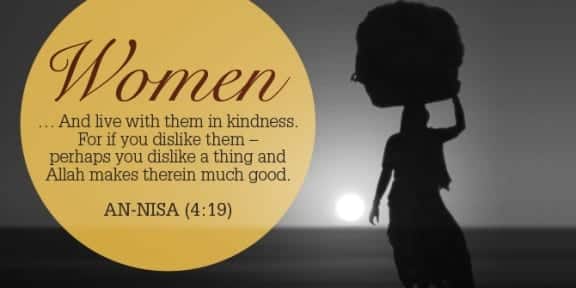
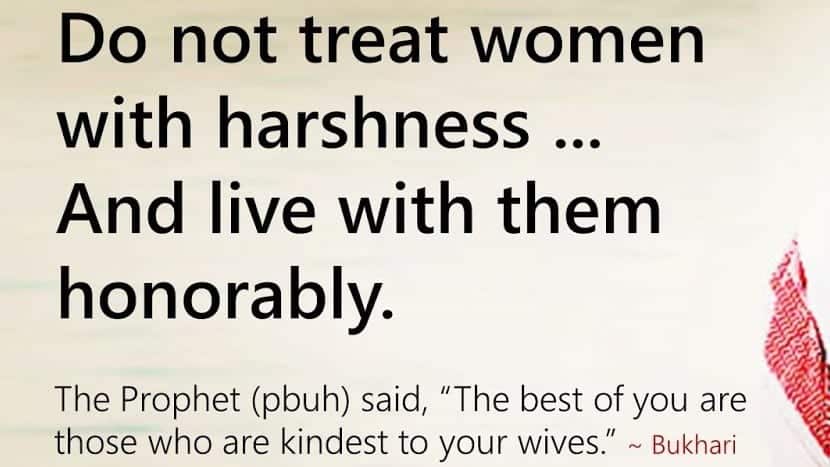
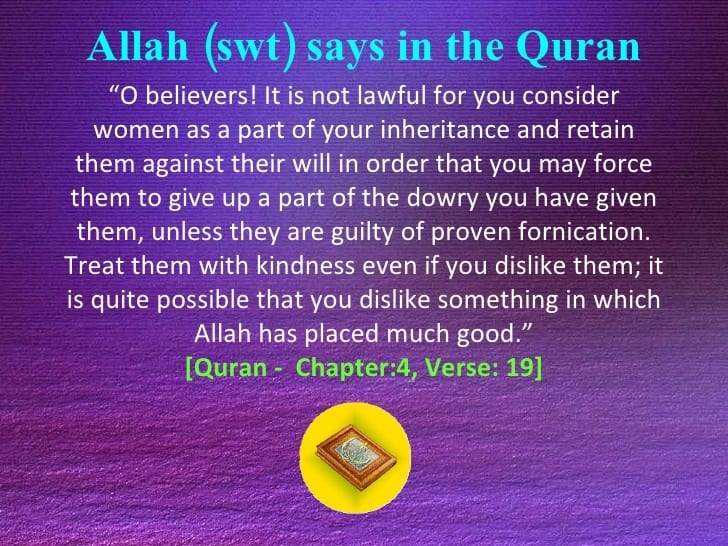
O you who believe! You are forbidden to inherit women against their will. Nor should you treat them with harshness, that you may take away part of the dowry you have given them – except when they have become guilty of open lewdness. On the contrary live with them on a footing of kindness and equity. If you take a dislike to them, it may be that you dislike something and Allah will bring about through it a great deal of good.
(Quran 4:19)
O mankind! Reverence your Guardian-Lord, who created you from a single person, created, of like nature, his mate, and from this pair scattered (like seeds) countless men and women. Reverence Allah, through Whom you demand your mutual (rights), and reverence the wombs (that bore you); for Allah ever watches over you.
(Quran 4:1)
Therefore the righteous women are devoutly obedient, and guard in (the husband’s) absence what God would have them guard.”
(Quran, 4:34). Scholars differ in how they interpret this verse and its context, so refer to a reliable tafsir or a qualified scholar. For dowry rights see haq mehr in Islam.
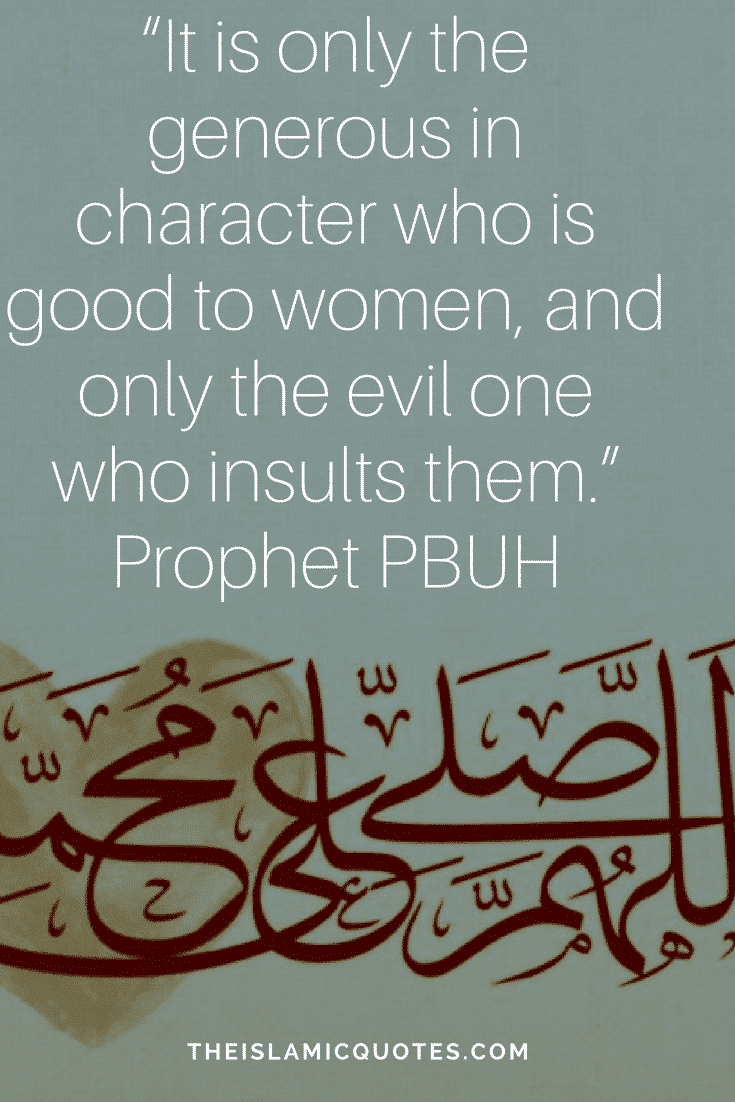
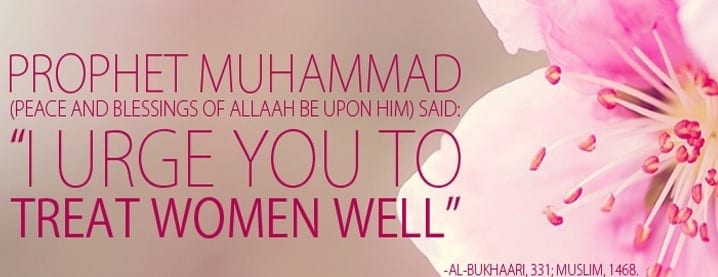
“Observe your duty to Allah in respect to the women, and treat them well”
“Verily, women are the twin halves of men”
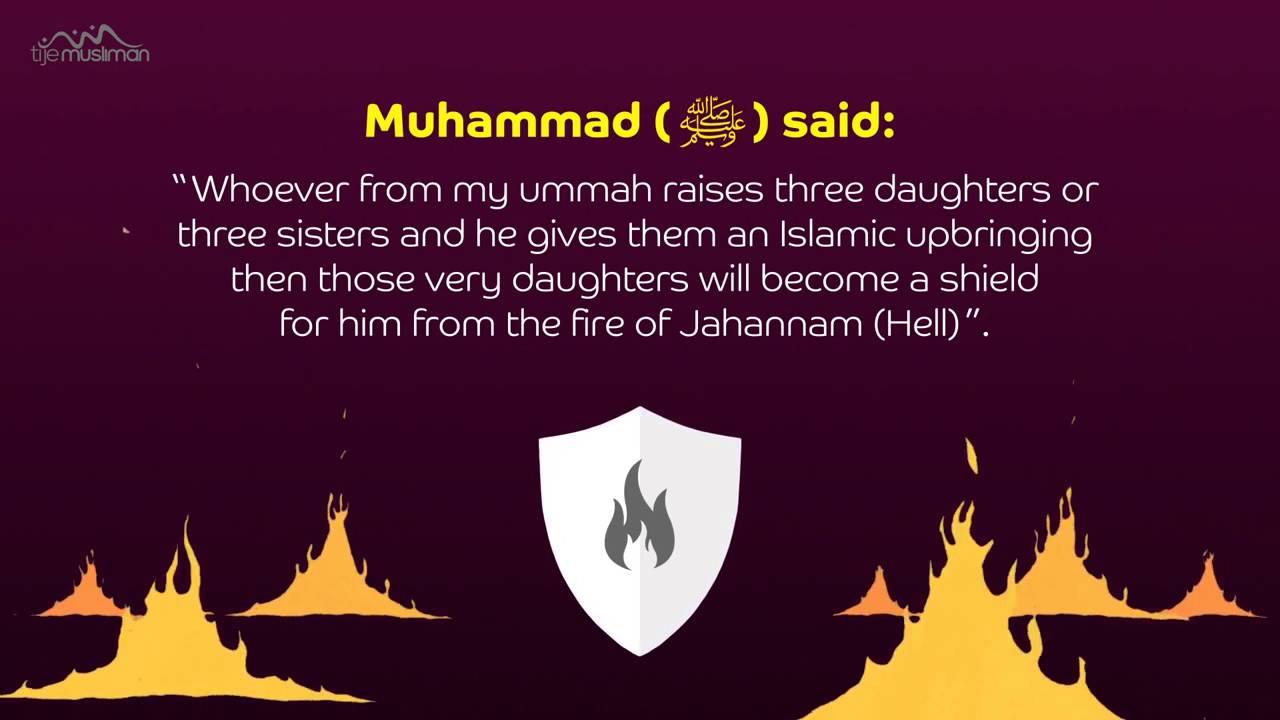
“Whoever raises two daughters until they reach maturity will come on the Day of Resurrection together with me, like these two fingers (Sahih Muslim 2631)”
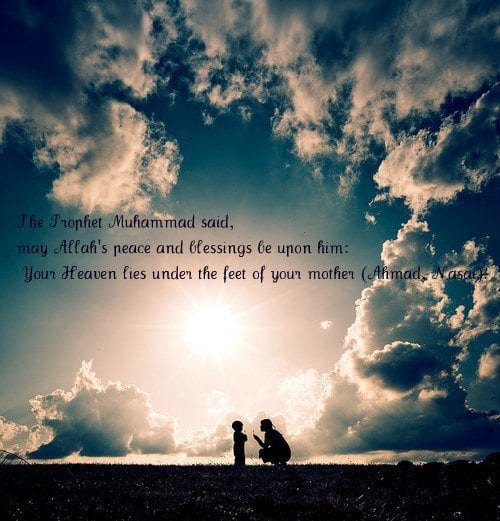
“Paradise is at the feet of mothers” (a narration found in Sunan an-Nasa’i 3104 and other collections; scholars differ on its grading, but the meaning, that serving one’s mother is a path to Paradise, is supported by authentic hadith such as Sahih al-Bukhari 5971). See Islamic quotes on parents.
Ibn ‘Umar Narrated :
Allah’s Apostle said: “Do not prevent women (wives, mothers, daughters, sisters, etc) from (praying at) mosques. Yet, their prayer at home is better (for them).
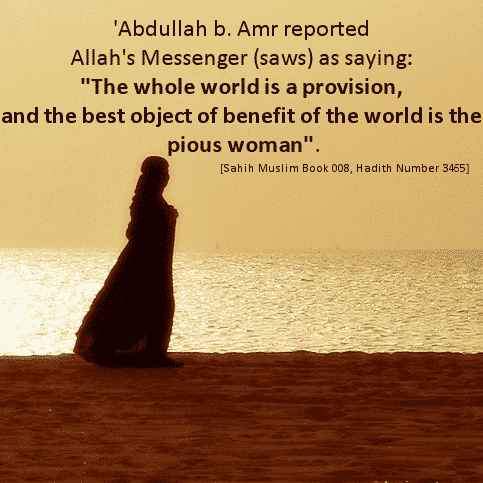
The world and all things in the world are precious but the most precious thing in the world is a virtuous woman. He once told the future khalifah, ‘Umar: “Shall I not inform you about the best treasure a man can hoard? It is a virtuous wife who pleases him whenever he looks towards her, and who guards herself when he is absent from her.” (Sunan Abi Dawud 1664, a report whose chain some scholars criticise.)
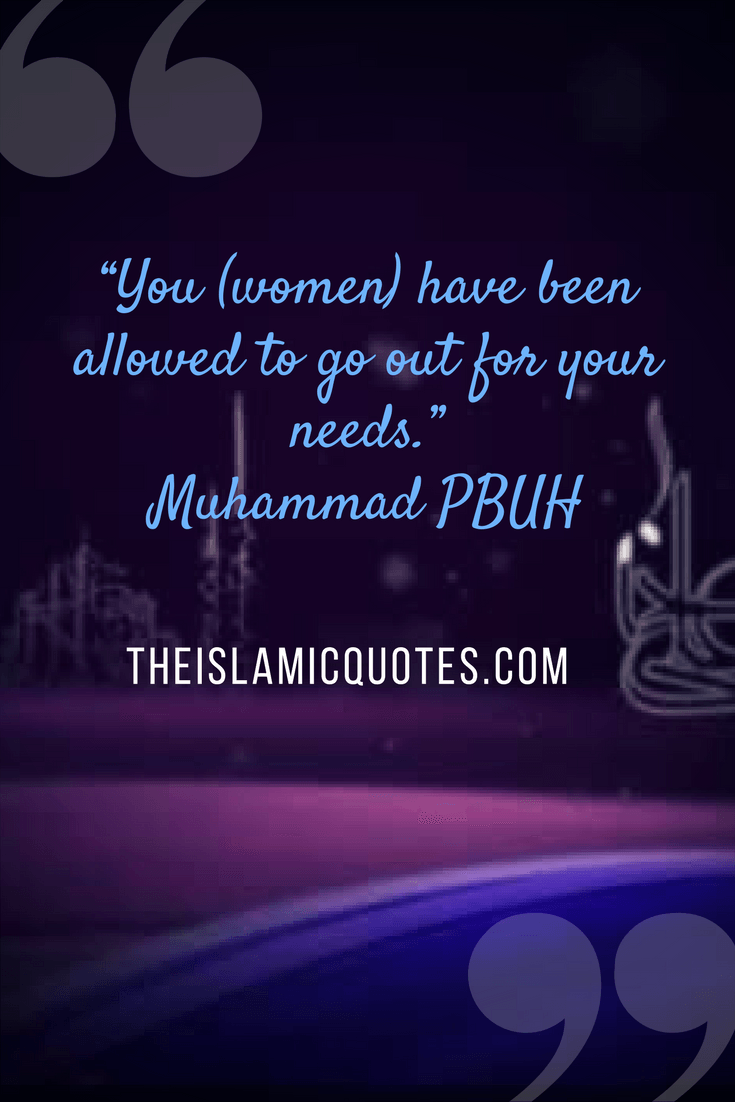
Aisha Narrated : Allah’s Apostle said: “You (women) have been allowed to go out for your needs.”
Ibn Mas’ud Narrated :
Allah’s Apostle said: “The woman is ‘awrah (to be guarded); when she goes out, Satan looks at her with interest. She is closest to the Face of her Lord when she is in the depth of her home. (Jami at-Tirmidhi 1173; scholars have graded it differently and read it in the context of modesty, not as a ban on women going out, which other authentic hadith permit.)”
Anas bin Malik Narrated :
The Prophet passed by a woman who was sitting and weeping beside a grave and said to her, “Fear Allah and be patient.”
Anas Narrated :
“A woman came to the Prophet offering herself to him in marriage, saying, “Have you got any interest in me (i.e. would you like to marry me?)” Anas’ daughter said, “How shameless that woman was!” On that Anas said, “She is better than you for, she presented herself to Allah’s Apostle (for marriage).”
Thawban Narrated :
Allah’s Apostle said, “Any woman who asks divorce from her husband without a reason, the smell of Paradise is prohibited for her.”
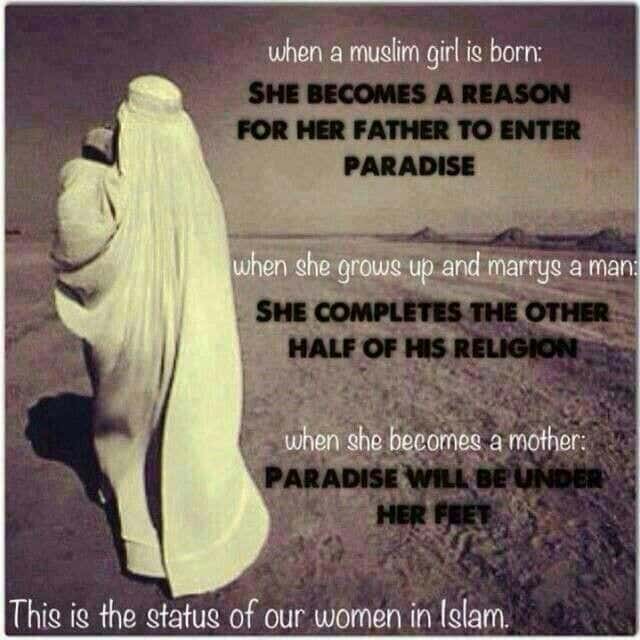
Islam raised the status of women and made honouring mothers a path to Paradise. On modesty, see our post on hijab quotes.
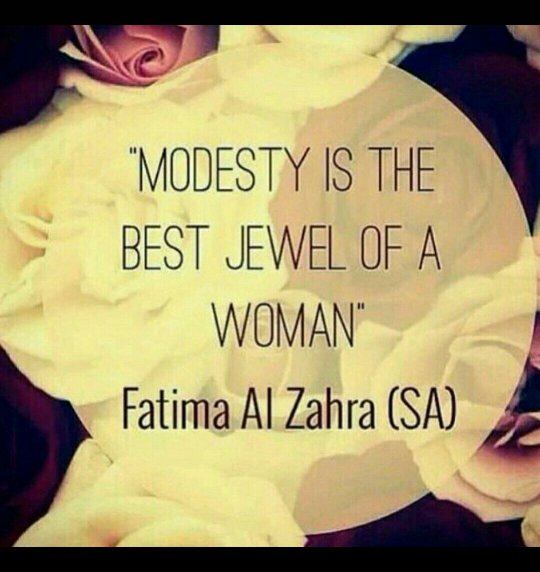
Modesty (haya) is a defining quality in Islam: the Prophet (peace be upon him) said, “Modesty is part of faith” (Sahih al-Bukhari 24, Sahih Muslim 36).
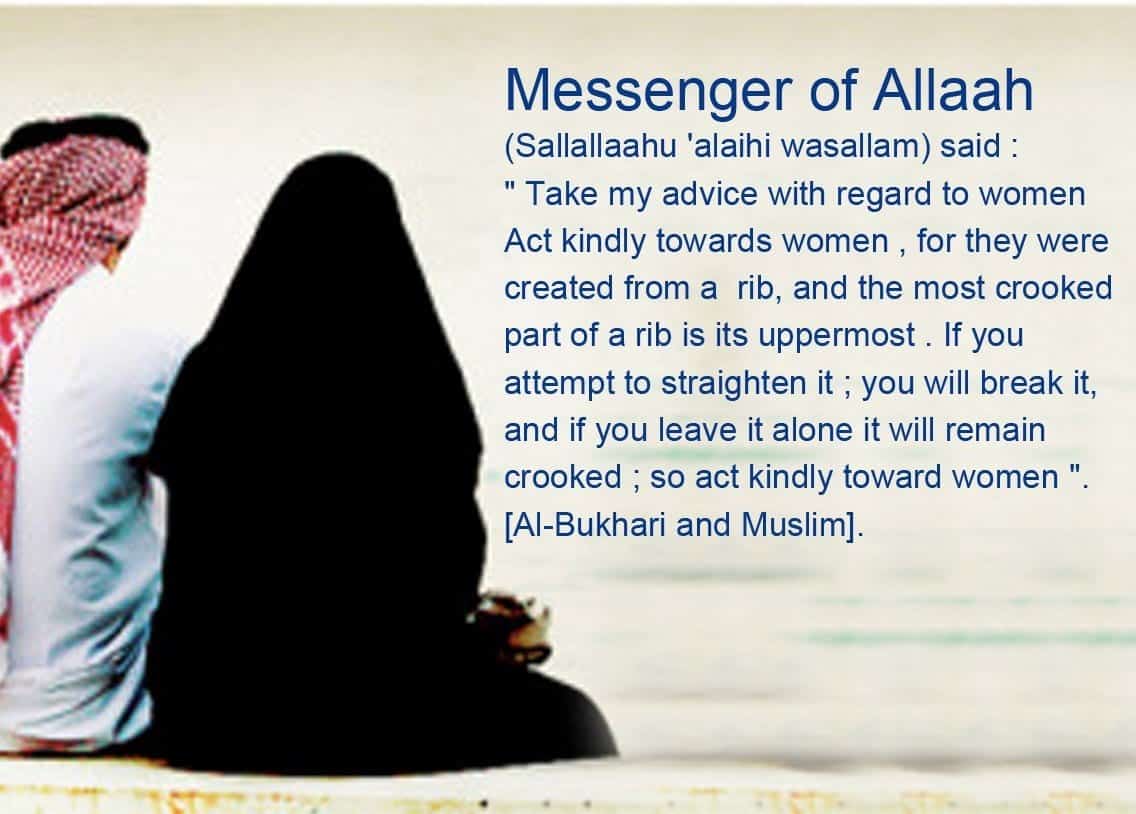
The Prophet (peace be upon him) also told the men who were driving the camels carrying his wives to go gently, saying, “Be gentle with the glass vessels” (Sahih al-Bukhari 6161), a lesson in treating women with kindness and gentleness.
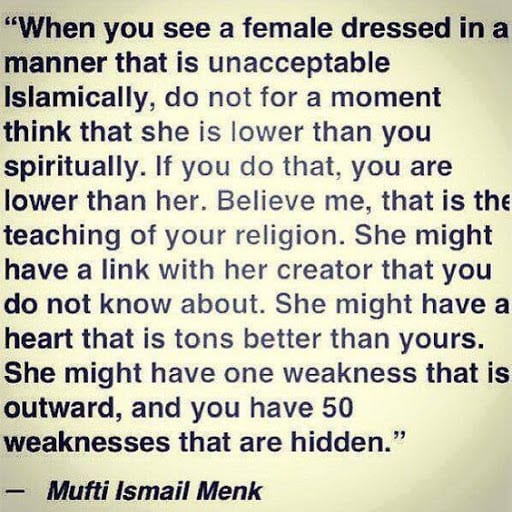
↓ 6 – Do not Judge Women Based on Their Appearances
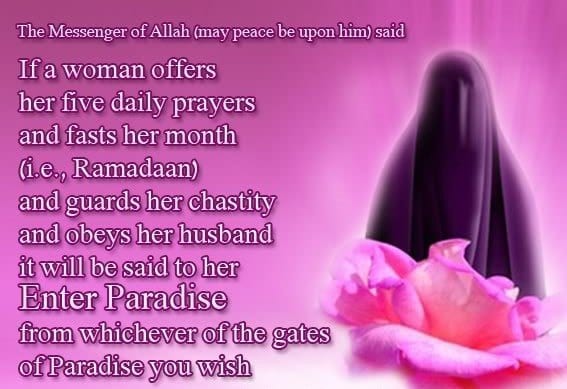
↓ 5- Loyal to Husbands
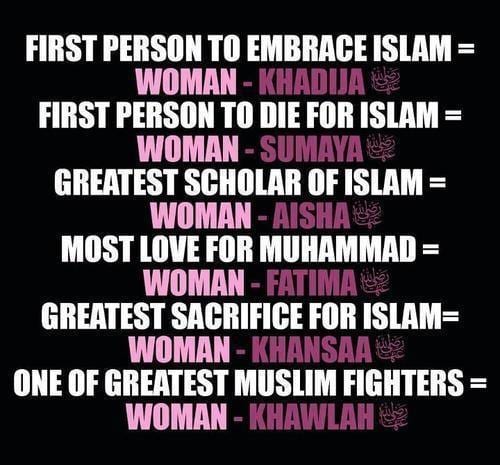
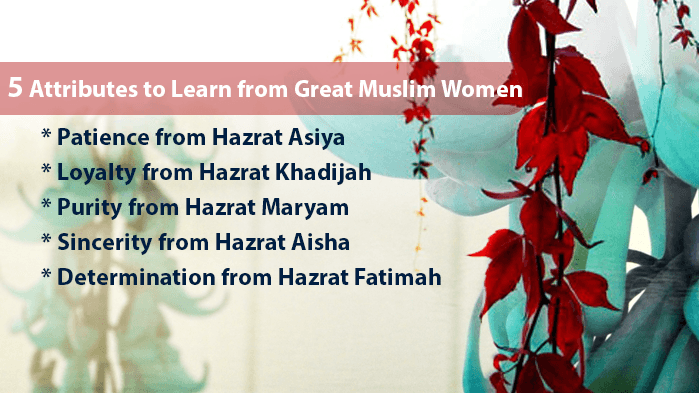
↓ 4- Great Muslim Women
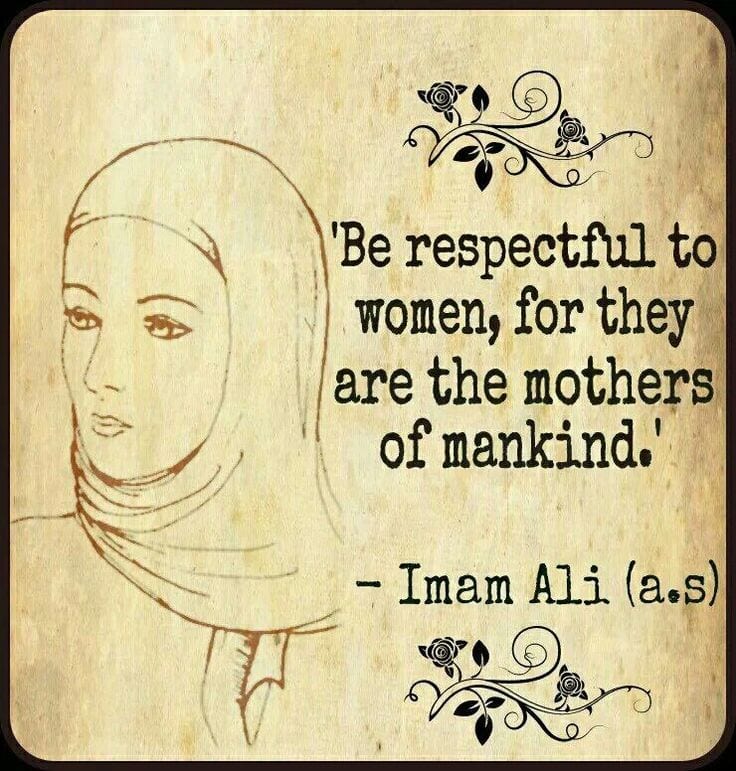
↓ 3- Mothers of Mankind
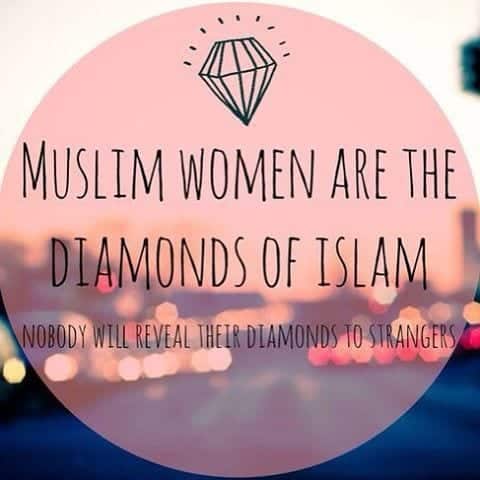
↓ 2- They are Diamonds
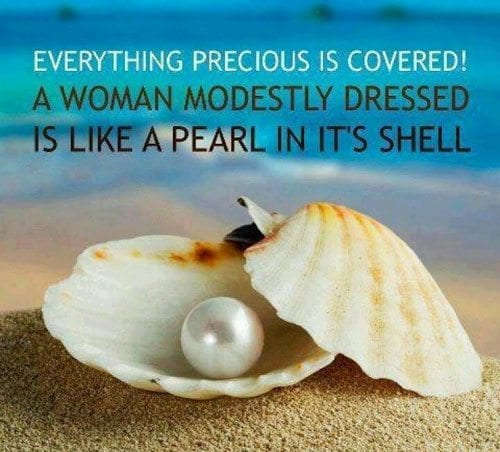
↓ 1- They cover the beauty
Frequently Asked Questions
What is the status of women in Islam?
The Quran addresses men and women as moral equals before Allah (33:35) and grants women rights to own property, earn, inherit and consent to marriage. Roles and responsibilities within the family are explained somewhat differently by different scholars and schools.
Do women have the right to inherit in Islam?
Yes, the Quran (4:7, 4:11-12) gives women fixed shares of inheritance. The shares depend on the relationship to the deceased, and details are worked out in the schools of inheritance law, so consult a qualified scholar for a specific estate.
Is dowry (mahr) the woman’s right?
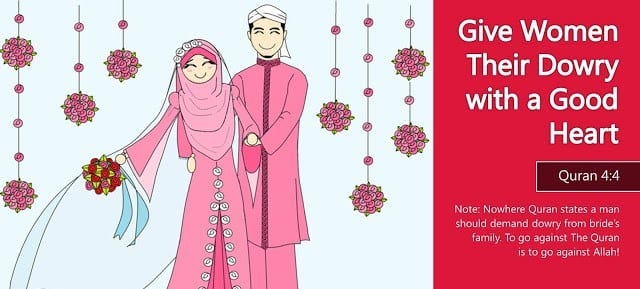
Yes. Mahr is given to the bride and belongs to her (Quran 4:4). Read about haq mehr in Islam.
Can women go to the mosque?
The Prophet (peace be upon him) said not to prevent women from the mosques (Sahih al-Bukhari 900, Sahih Muslim 442). Scholars also note that praying at home is more rewarding for them but not required. Practices and local rules vary.
Is a woman required to wear hijab?
Scholars across the schools agree that modest dress is required for Muslim women, but differ on the exact details, such as whether the face is covered. Read Islamic quotes about hijab and ask a qualified scholar for personal guidance.