Contraceptive Methods in Islam. Contraception or birth control is the method that is to prevent a couple from having children or prevent pregnancy. Couples all over the world plan their families according to their ongoing circumstances. Some countries stress on this method to control the growing population of their country. In some cultures, birth control is not encouraged because they consider it to be religiously and morally unpleasant.
Couples who cannot have children may also want to read about adoption in Islam.
So we’ll talk today in detail about the types of contraceptive methods that Islamic scholars have allowed for Muslims and the reasons behind not allowing other methods.
What are the Islamic Birth Control Methods for Muslims?
Let’s start with a quick look at what the famous Islamic Zakir Naik has to say on the question that “Is family planning allowed in Islam?”
↓ 5 – Quran & Hadith On Family Planning
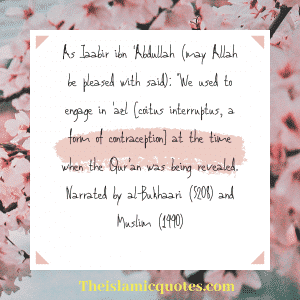
There does not exist any Quranic verse or hadith that directly talk about contraception or family planning. However, according to one tradition, the companions of the Prophet reported that they used to practice ‘azl, which is the interruption of intercourse to avoid ejaculation. The Prophet knew about this and he did not forbid them, which was considered by most as his permission/acceptance of the practice (Sahih Muslim Book 8 Hadith 3388). According to another tradition, he said regarding ‘azl: It is better for you not to do so, for if any soul (till the Day of Resurrection) is predestined to exist, it will exist.” – Sahih al-Bukhari Book 59 Hadith 459.
↓ 4 – Contraception in Islam
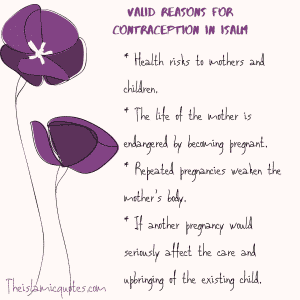
Islam is the religion of wisdom and Peace. It touches each and every problem and matters that a Muslim has to face in his life. Most scholars hold that temporary birth control is permissible when both spouses agree and the method does not harm them, though some regard it as disliked without a reason. Opinions differ between schools and contemporary fatwa bodies, so couples should consult a qualified scholar and their doctor. Contraception is different from abortion. Once a pregnancy is established, abortion is a serious matter and scholars differ on the details: the Maliki school generally forbids it after conception, while the Hanafi school allows it for a valid reason before the soul is breathed in (about 120 days), and Shafi’i and Hanbali scholars have views ranging from allowing it in the first 40 days to forbidding it. After 120 days it is permitted only to save the mother’s life. Killing children out of fear of poverty is strongly condemned in the Quran (6:151, 17:31). You should also have a look at these Beautiful Tips For Married Muslims.
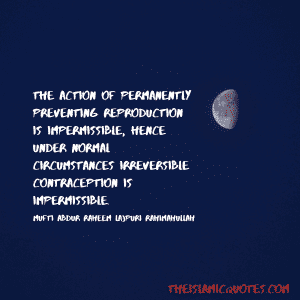
IRREVERSIBLE CONTRACEPTION includes permanent methods (sterilization) that remove the ability to have children for life. It can be performed on both male (Vasectomy) and females (Tubectomy.)
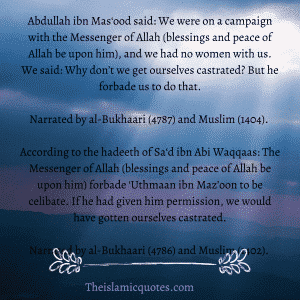
Islam doesn’t favor this type of contraception as it permanently destroys the ability to produce children and once it’s done, it can’t be reversed. Most contemporary scholars and fiqh councils therefore consider it impermissible without a genuine medical necessity. Castration is clearly prohibited.
As this irreversible contraception is forbidden, according to scholars, under some critical medical circumstances this can be done with the consultations of fuqaha due to absolute necessity.
REVERSIBLE CONTRACEPTION includes those methods that are temporary and a person will be able to reproduce after a period of time. Most scholars allow these with mutual consent and a sound reason such as health or spacing births; some consider using them without any reason disliked. Reducing births out of fear of poverty is discouraged.
Contraceptive methods should always be practiced with the consent of both spouses.
↓ 2 – Reversible Contraceptive Methods Approved in Islam
1)Coitus interruptus/withdrawal method (῾azl)
The coitus Interruptus or withdrawal method is the pull-out method in which the male spouse has to pull out his reproductive organ before ejaculation. This is also known as interrupting intercourse and was also practiced in the times of Prophet Muhammad PBUH.
This contraceptive method is permissible in Islam as stated by scholars but it also requires mutual agreement between the spouses.
2)The rhythm method
The rhythm method, also known as the calendar method, is that contraceptive technique in which the female spouse has to chart her mensural cycle to avoid intercourse on her days of ovulation. This is the least reliable method of birth control but can be used to avoid untimely pregnancies.
This method is also accepted in Islam and is not considered harmful for any of the spouses.
3) Barrier Method
The barrier method consists of male and female condoms that stop the procedure of fertilization by blocking the route of a sperm to reach the egg. The most accepted is the male condom which is made up of thin latex rubber and contains a lubricant and spermicide that help in destroying the sperm. This method is dependent on a male’s reproductive organs and is also permissible in Islam. A female condom works in a similar way; many scholars permit it as well under the same conditions of mutual consent and no harm.
4) Contraceptive Pills Contraceptive Pill is the oral contraceptive method and is taken daily to change the hormones inside a body to prevent the occurrence of fertilization. Hormones are the regulatory substances that control the functioning of an organism. Most of the pills contain a balance of estrogen and progesterone to stop the egg to release during monthly cycles that is ovulation. If a woman does not ovulate, she will not be able to conceive as there will be no egg to fertilize. Sometimes these pills thicken the mucus of cervix in order to make it almost impossible for a sperm to enter the uterus. These pills also stop the occurrence of fertilization by affecting the lining of the uterus to stop the egg from attaching itself to the wall.
This method is permissible in Islam provided there’s no harm to the health of a female spouse.
5) Contraceptive Injections
Contraceptive Injections are such injections that contain progestin similar to the natural progesterone that is produced in a woman’s ovaries. These injections are of two types; Depo-Provera which is given every three months to stop the occurrence of ovulation for twelve weeks. The other type is Noristerat which prevents fertilization for nearly eight weeks.
These injections are injected into the muscle and are accepted in Islam as well.
6) Implant
Contraceptive Implant is the method in which a small rod similar to the size of a matchstick is inserted under the skin of the upper arm. This rod releases progestogen hormone, similar to the natural progesterone, which helps in preventing the body to release an egg every month. It also affects the lining of the uterus and thickens the mucus of the cervix to prevent ovulation.
This method is permissible in Islam provided there’s no harm to the health of either spouse and both of them agree to this method of contraception.
7) Progestogen-only Pill (POP)
Progestogen-only pills are those pills that contain only progestogen hormone without any estrogen. It works as an inhibitor to prevent pregnancy from happening by affecting the lining of the womb or making the cervix mucus thick enough for the
8) Birth Control Patches
Contraceptive patches or birth control patches are very small square patches that one sticks to the skin to prevent pregnancy. This patch releases synthetic estrogen and progestogen into the bloodstream through the skin which prevents ovulation that stops the egg to be released. If there’s an egg that has been released is stopped by this contraceptive method to be attached to the wall of the uterus.
This method is also accepted in Islam and one should consult the doctor for any harmful side effects. We also recommend that you go through these Islamic Parenting Tips & Quotes On How To Raise Children.
↓ 1 – Contraceptive Methods That Are Disliked in Islam
Methods that require a device to be inserted by a doctor are viewed differently by scholars. Some discourage them mainly because of concerns about exposing the private parts and, for IUDs, about whether they may prevent a fertilised egg from implanting; others permit them with a medical need and a female doctor where possible. The methods are as follows
Intra-Uterine Devices
The IUD is a T shaped device used to prevent pregnancy; some are made of copper and others release hormones. This device is inserted into one’s uterus by a specialist
Intra-Uterine System
The intrauterine system is also a T shaped device that is placed into the uterus of a woman that releases progestogen similar to the progesterone hormone released in the ovaries of a woman.
Diaphragm
The diaphragm, made up of rubber, is a small dome-shaped cup placed on to cervix to prevent pregnancy. This bowl stops the sperm from entering the uterus.
The Contraceptive Vaginal Ring:
This contraceptive ring is w flexible plastic ring inserted into the female through her private part which releases estrogen and progestogen into her bloodstream which prevents pregnancy.
Rulings on these methods differ among scholars and fatwa councils, so couples should seek a ruling from a qualified scholar together with medical advice. For more on married life, read marriage in Islam tips and Islamic parenting.
Frequently Asked Questions
Is birth control allowed in Islam?
Most scholars permit temporary methods with the agreement of both spouses and when there is no harm, with some regarding it as disliked without a reason. Views differ by school and fatwa body, so ask a qualified scholar about your situation.
Do both spouses need to agree?
Yes. Scholars stress mutual consent, since having children is a right of both husband and wife. Many held that withdrawal (‘azl) requires the wife’s permission.
Is sterilization such as vasectomy or tubal ligation permissible?
Most contemporary scholars say no, except where there is a genuine medical necessity confirmed by a trustworthy doctor. Consult a scholar before deciding.
Is abortion considered the same as contraception?
No. Contraception prevents conception, while abortion ends an established pregnancy. Schools differ on the stage up to which abortion may be allowed for a valid reason, but all agree it is a grave matter after the soul is breathed in, except to save the mother’s life.
Is it wrong to limit children because of money worries?
The Quran condemns killing children out of fear of poverty (17:31) and reminds us that Allah is the provider. Spacing births for health reasons is viewed differently from avoiding children from distrust of provision. See marriage in Islam tips.