
Islamic duas to control anger: Navigating this chaotic world can be quite a taxing job, which often results in a range of negative emotions like anger, hatred, jealousy and loneliness. Some examples include anxiety regarding an impending task or frustration over something that is beyond our control.
Either way, in moments like these, all one wants is for someone to hold our hand and help us think straight. If you’ve ever felt this way, let us tell you that you’re not alone in struggling with such negative emotions.
Feelings of anger, hatred, and envy are normal but shouldn’t be dwelled on. It is essential to understand the emotion but stop oneself from acting on it to avoid repercussions. Allah (SWT) mentions, in Surah Maryam, the incident of Prophet Ibrahim (AS). Prophet Ibrahim’s (AS) father said, “I will surely stone you, so avoid me a prolonged time.” He responded, “Peace be upon you.” Even in moments of anger, the Prophet chose to forgive and utter blessings.
How to Control Anger in Islam?
Jealousy, malice, and ill-temper are all highly-destructive emotions that not only destroy one’s peace of mind but also repel loved ones. Hence, we must prevent getting consumed by such emotions at all costs. Cultivating kindness and regular istighfar helps soften the heart. The Messenger of Allah says, “Whoever curbs his anger, while being able to act, Allah will fill his heart with certainty of faith.”
We must remember; acting on our impulses will only delight Shaitan but displease Allah (SWT). Thus, following the Holy Prophet’s traditions (PBUH) and managing unhealthy emotions is the right way forward. Moreover, Allah (SWT) has sent us the Holy Book with solutions to all our problems. Therefore, what’s better than a Quranic cure for anger?
Most importantly, Allah, The Most Beneficient, The Most Merciful, has promised rewards for one that controls his/her temper. In another Hadith, the Messenger of Allah (SAW) has mentioned, “No one has swallowed back anything more excellent in the sight of God, who is Great and Glorious, than anger, seeking to please God.” (Ibn Majah)

↓ 7. Dua to control anger
As mentioned above, when in doubt about how to act, one should look towards Prophet Muhammad’s (PBUH) traditions. Despite facing several hardships, he was known to control his temper. He would express his emotions through milder words or would keep silent.
Once, a man asked Prophet Muhammad (SAW) for advice. The Prophet (PBUH) replied, “do not get angry.” Each time the man asked, the Prophet (PBUH) said the same, “do not get angry.” This hadith shows that Islam emphasizes being calm and not letting our emotions get the best of us. Thus, if you are looking to suppress your feelings, this is a great prayer to overcome anger.
Having patience/sabr is also an important step towards controlling anger which is why I recommend that you go through these Beautiful Islamic Quotes on Sabr & Patience.
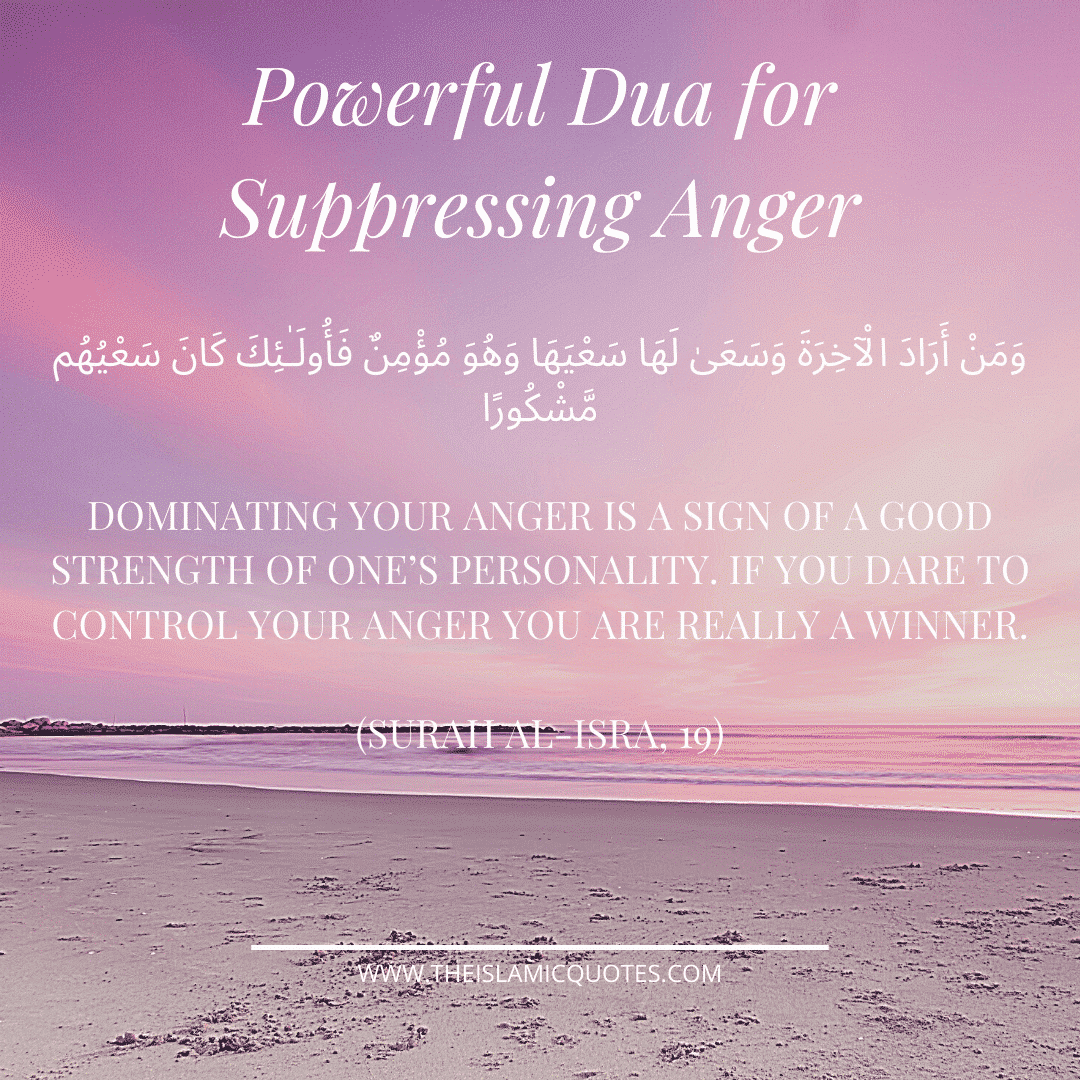
↓ 6. For patience
It is quite easy to get into a rage and act out; however, such behavior displeases Allah (SWT). Therefore, the only way one can deal with overwhelming emotions is through the display of patience.
Allah (SWT) promises rewards without account for the patient one. We must remind ourselves of the good that our Lord has promised us in return for our patience and for remaining silent while angry. One way to do so is to recite:
إِنَّ اللّهَ مَعَ الصَّابِرِينَ
“Surely, Allah is with those that are patient.”
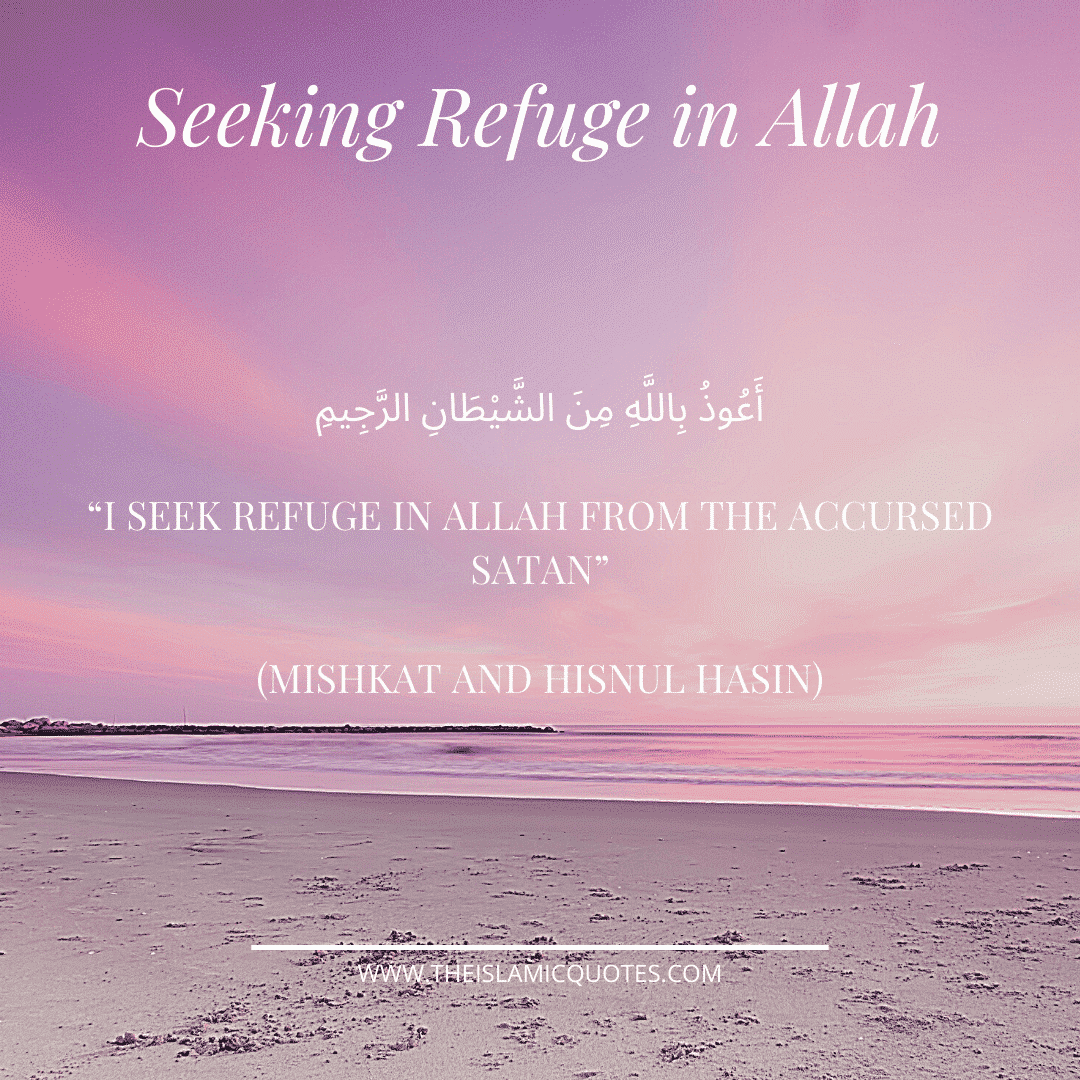
↓ 5. Seeking refuge in Allah
You must recite this short dua at several intervals throughout the day. Doing so will help control your anger and ill-feelings and protect you against the evil whisperings of Shaitan.
It is narrated that Prophet Muhammad (PBUH) said that when a person recites “A’uzu Billah” when angry, his anger will depart. Here are some authentic Duas to Ask Allah for Forgiveness of Sins.
↓ 4. How to clean your heart from jealousy
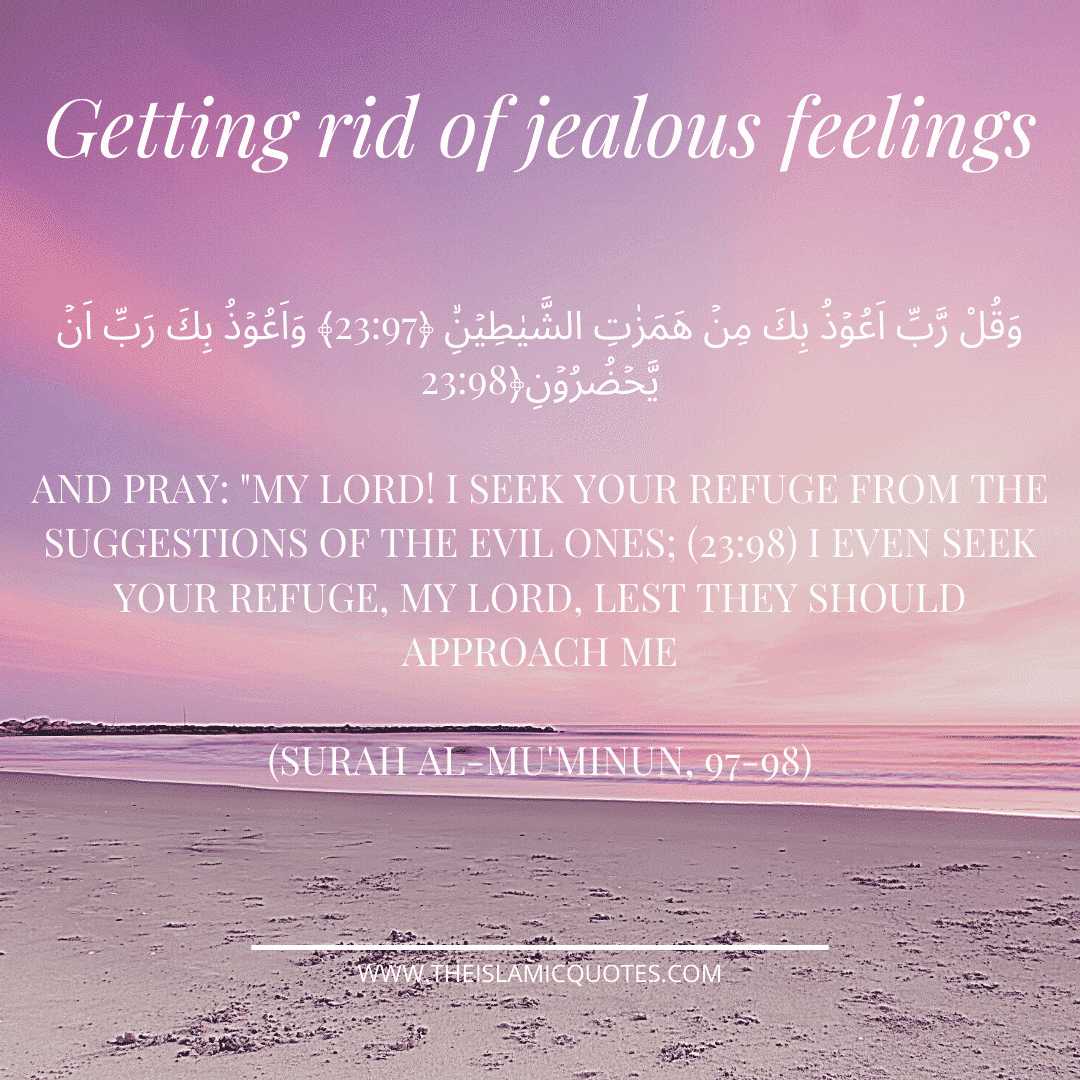
The Arabic term for Jealousy is Hasad. There are plenty of resources that indicate the harmful effects of jealousy. In Islam, humans are allowed to practice competition; however, it is not permissible to compete while wishing bad for others. Hasad is Haram and is compared to sickness. In Surah Al-Mu’minun, Allah (SWT) has provided us with a dua to recite to seek refuge from evil suggestions and cleanse our hearts from feelings of jealousy and envy.
↓ 3. Prayer to control temper
Ill-temper is a fire that destroys one’s well-being. When in anger, most people resort to abuses and other ill terms that reflect their inner states. However, such behavior does not resolve problems and can instead be quite humiliating. It is advised that when one comes in rage, he should keep silent as it restricts one from uttering harsh words. The Holy Prophet (PBUH) also recommended changing positions to diffuse anger.
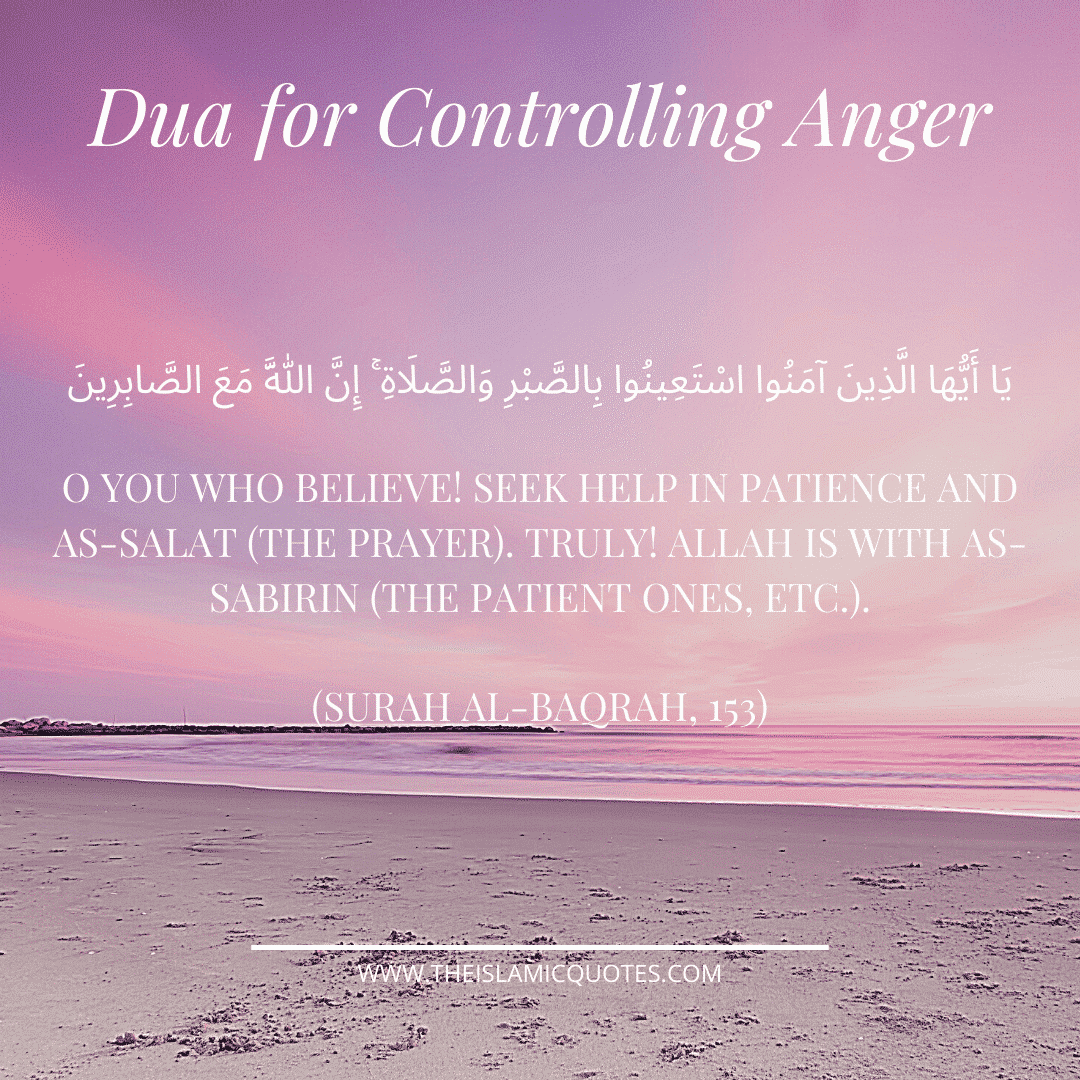
As we all know, whatever happens in our lives or around us is decreed by Allah (SWT), and we can not change it. However, being patient in the face of such obstacles will lead us to a life where we are most satisfied. Praying to Allah (SWT) will enable us to endure stressors and challenges with utmost patience and perseverance and be closer to our Lord’s bounties.
When in a state of anger, we recommend you to perform ablution and recite the following dua for patience.
↓ 2. Dua for Protection from Jealousy
Jealousy or envy isn’t only a sin but is considered the “disease of the soul.” In this state, one wishes for the deprivation of another’s blessings. Such feelings of jealousy often given birth to other grave sins like hypocrisy, slandering, and backbiting. Envy is among the traps of Shaitan, and scholars have repeatedly warned against it.
If you suffer from jealousy, you must purge the feelings from your heart by praying to Almighty Allah. It is important to remember that jealousy often goes hand in hand with resentment and anger. For this reason, one must continually attempt to control such emotions before the feelings sweep you away. It is narrated in Abu Dawud that the Prophet (PBUH) said envy devours good deeds as fire devours wood, although hadith scholars regard the chain of this narration as weak. The warning against envy is nonetheless well supported by other texts, such as the Quran (113:5).
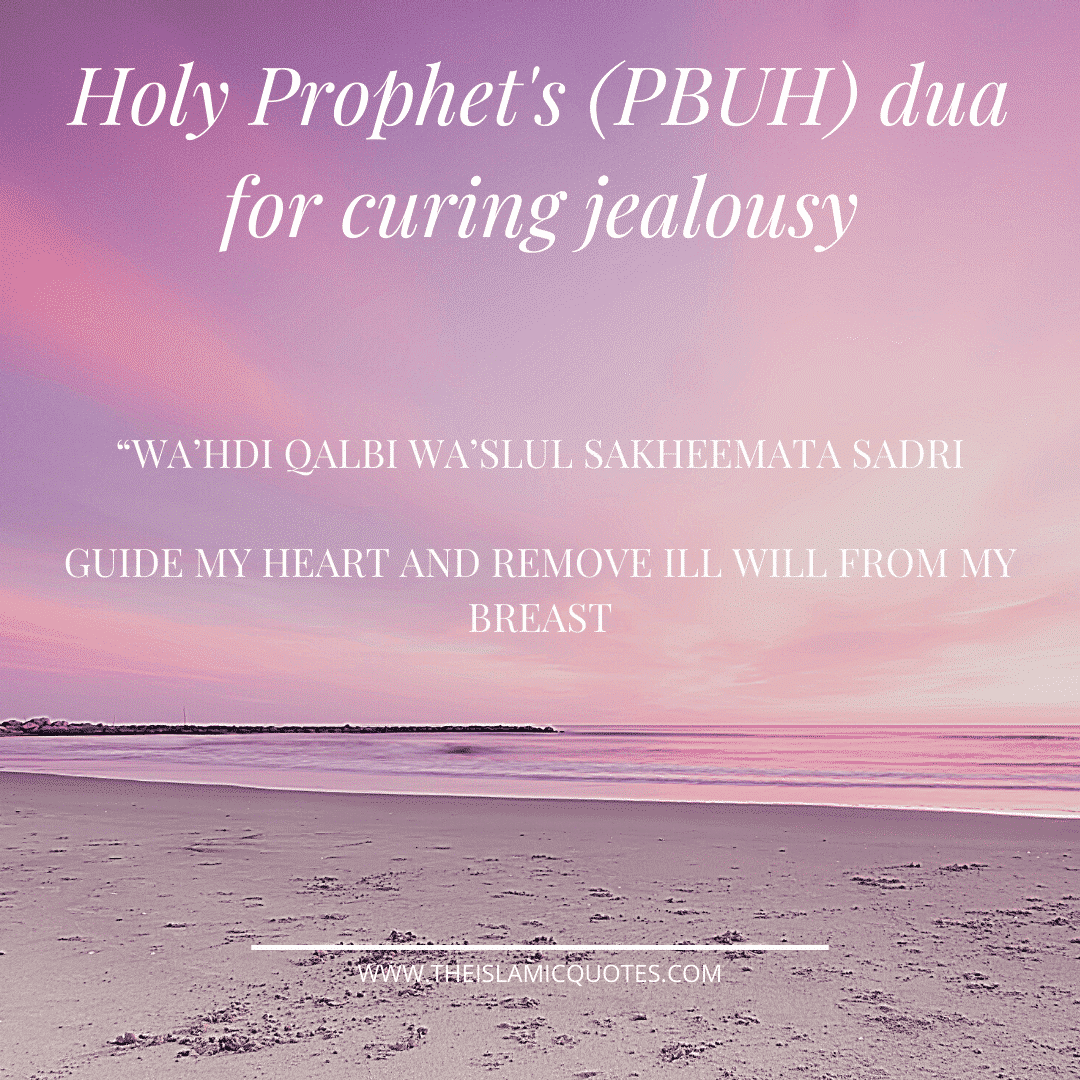
If your negative emotions are causing you stress and depression, I highly recommend that you make these Islamic Ways To Deal With Depression, Stress & Anxiety a part of your life. And if you are searching for how to get rid of jealousy in Islam, recite the following prayer to purify your heart.
↓ 1. Dua to Remove Hatred
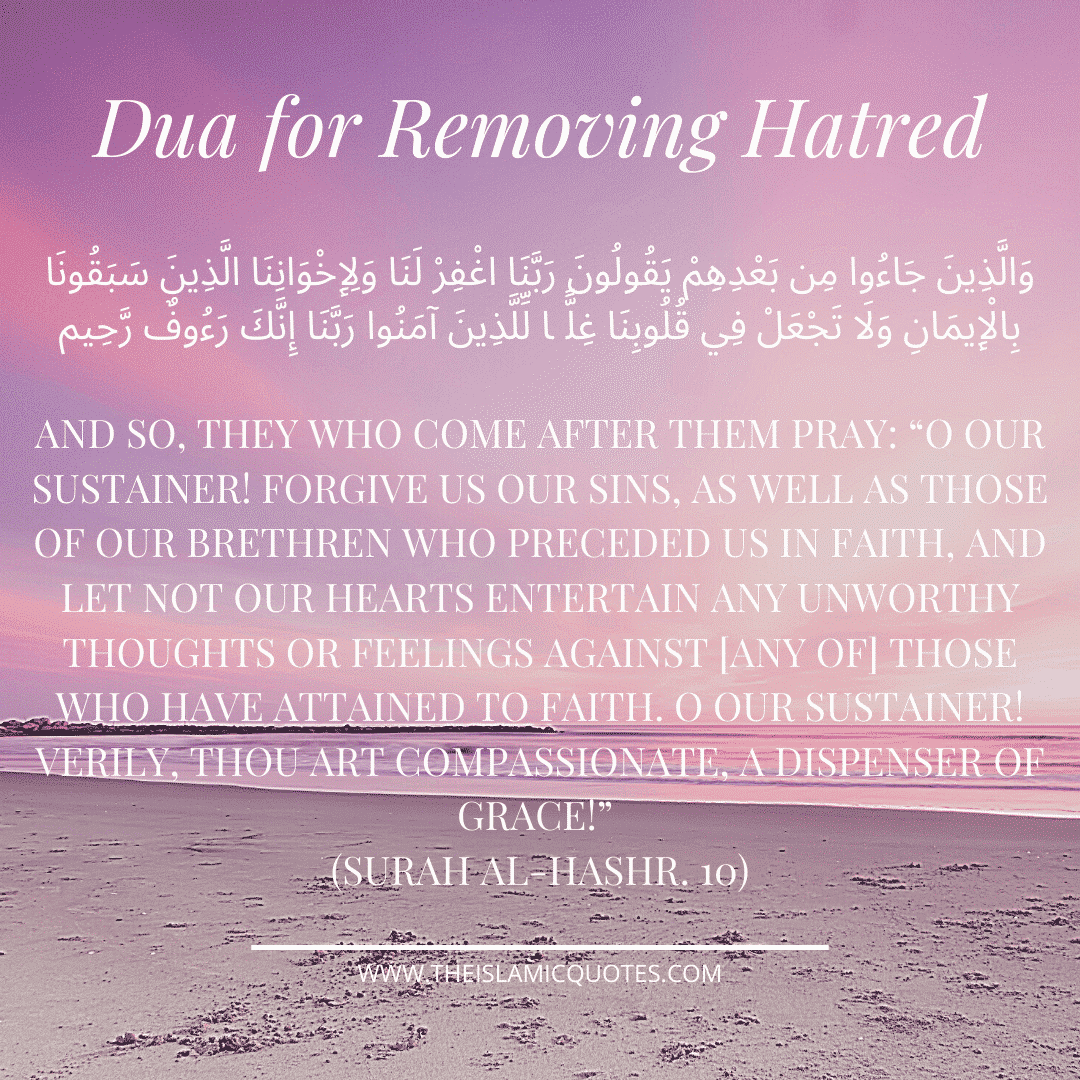
During Prophet Muhammad’s (PBUH) time, the Aws and Khazraj tribes had deep enmity and hatred. During the Battle of Bu’ath, there was a face-off between the two tribes, and the Aws defeated the Khazraj. However, after the tribes embraced Islam, there came strong feelings of brotherhood for each other. It was only possible due to Allah (SWT). Islam spreads the message of unity, peace, and respect. We must always pray for harmony and love, especially when reconciling between people and eradicating hatred.
In one hadith, Allah’s Messenger (SAW) says,
“Do not hate one another, do not envy one another, do not turn away from one another. Be, O slaves of Allah, brothers. It is not permissible for a Muslim to forsake his brother for more than three days.”
(Narrated by Abu Hurairah)
Frequently Asked Questions
What did the Prophet advise when angry?
He advised a man repeatedly, “Do not get angry” (Bukhari). Other reports recommend seeking refuge in Allah from Shaitan, staying silent, and changing position (sitting or lying down). Some scholars also mention making wudu.
Is anger itself a sin in Islam?
Feeling anger is human. What matters is how we act on it. Controlling it, forgiving and responding with patience are praised in the Quran (3:134).
Is jealousy (hasad) forbidden?
Wishing that another person lose a blessing is blameworthy and warned against. Scholars distinguish it from ghibtah, wishing for a similar blessing without wishing harm on others, which is permissible. See also quotes on sabr and patience.
Can duas replace professional help for anger or stress?
No. Dua and worship are a source of strength, but if anger or anxiety seriously affects your life, speaking to a trusted counselor or mental health professional is encouraged in Islam alongside dua.
How can I remove hatred from my heart?
Make dua for a clean heart (Quran 59:10), seek reconciliation, pray for the person, and avoid backbiting. For personal situations, ask a qualified scholar or counselor.