
Duas for beauty: The contemporary culture exaggerates physical attractiveness and beauty standards, which often pushes young minds to struggle with self-worth and self-image. Undoubtedly, Islam is one religion that lays immense emphasis on beautifying not only the body but also the heart and soul.
Holy Prophet (PBUH) used to take good care of his hygiene and recommend people look after their hair and overall appearance.
Ibn Abbas is reported to have said, “I love to beautify myself for my wife, in the same way, that I like to embellish myself for me, because Allah says: And they have rights equivalent to their duties, in accordance with propriety.” (Al-Mughni, 5, 220)
In this Hadith, it is evident that one must look after their appearance from time to time, given that the setting is lawful. For women, the Sunnah is using items like henna, musk, and kohl.
What are some Duas for Beauty?
Although physical appearance is important to many, as Muslims, we must not forget that:
“Nothing is heavier on the believer’s Scale on the Day of Judgement than good character.” (Jami at-Tirmidhi, Book 27, Hadith 108)
Humans are naturally inclined towards all things beautiful: be it people or objects. However, we must not forget that this beauty wouldn’t be possible without Our Creator – The Supreme and Most Powerful. Thus, beauty should not be limited to physical attractiveness, but rather should also comprise character and deeds.
You can achieve this by constantly steering towards the right direction and remembering that we are accountable to Allah (SWT). Instead of wasting our time on unnecessary matters, we should instead focus on the bigger purpose in life. Therefore, as the manners of the Prophet teach us, besides reciting dua for beauty and attraction, we must also pray to Almighty Allah to beautify our character and soul.
↓ 6. Effective dua for beauty
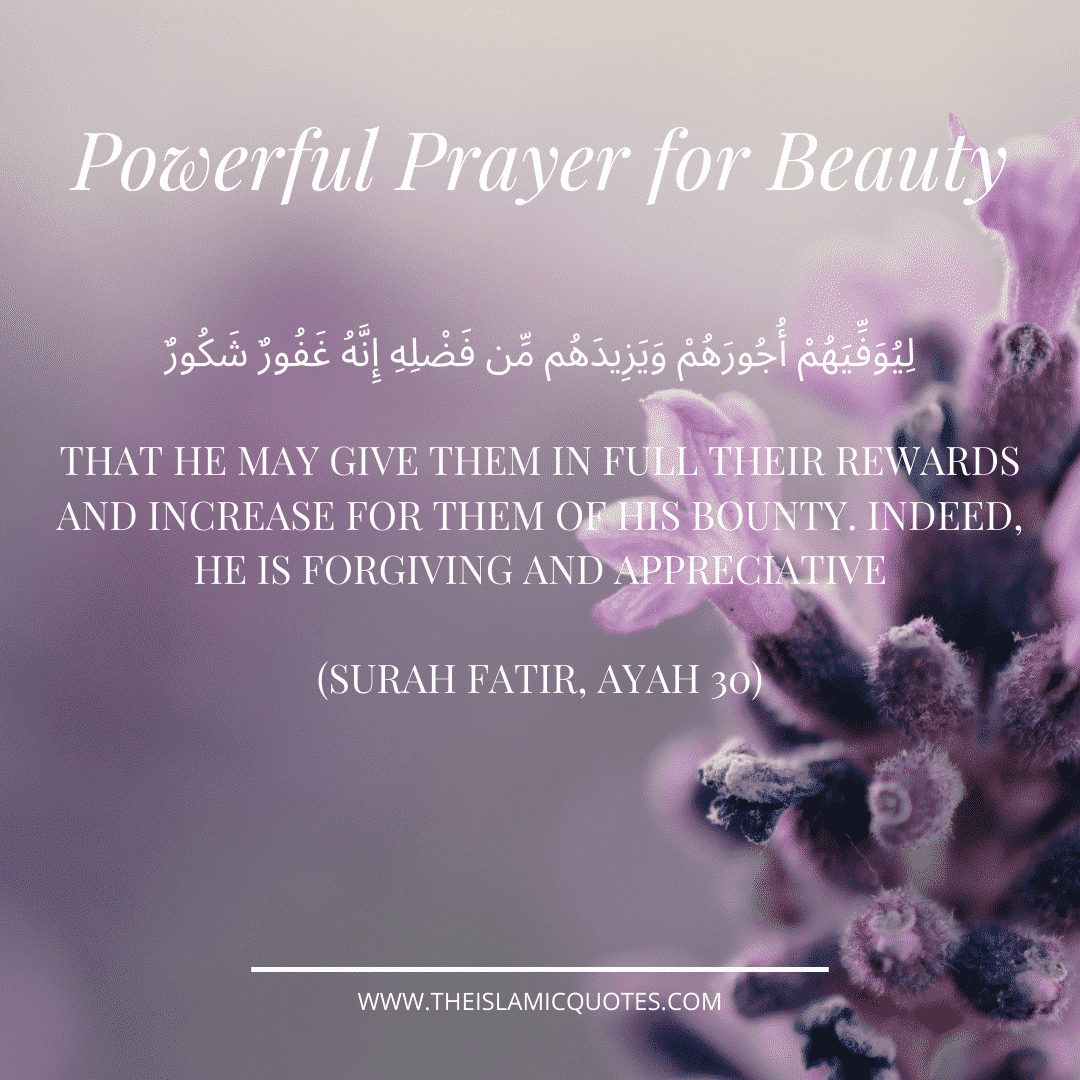
Allah (SWT) is the Most Beneficient and Generous, and He promises to reward His beings for their service and worship. This service has been compared to a standard trade bargain, where humans are investing their efforts in hopes of profit and rewards. However, the difference here is that our Lord promises to bless with much more from His Bounty. He overlooks and forgives the errors of His servants and appreciates all else. Therefore, we must render our services to Him and patiently wait for Allah (SWT) to reward us for our labor and service.
↓ 5. For Noor
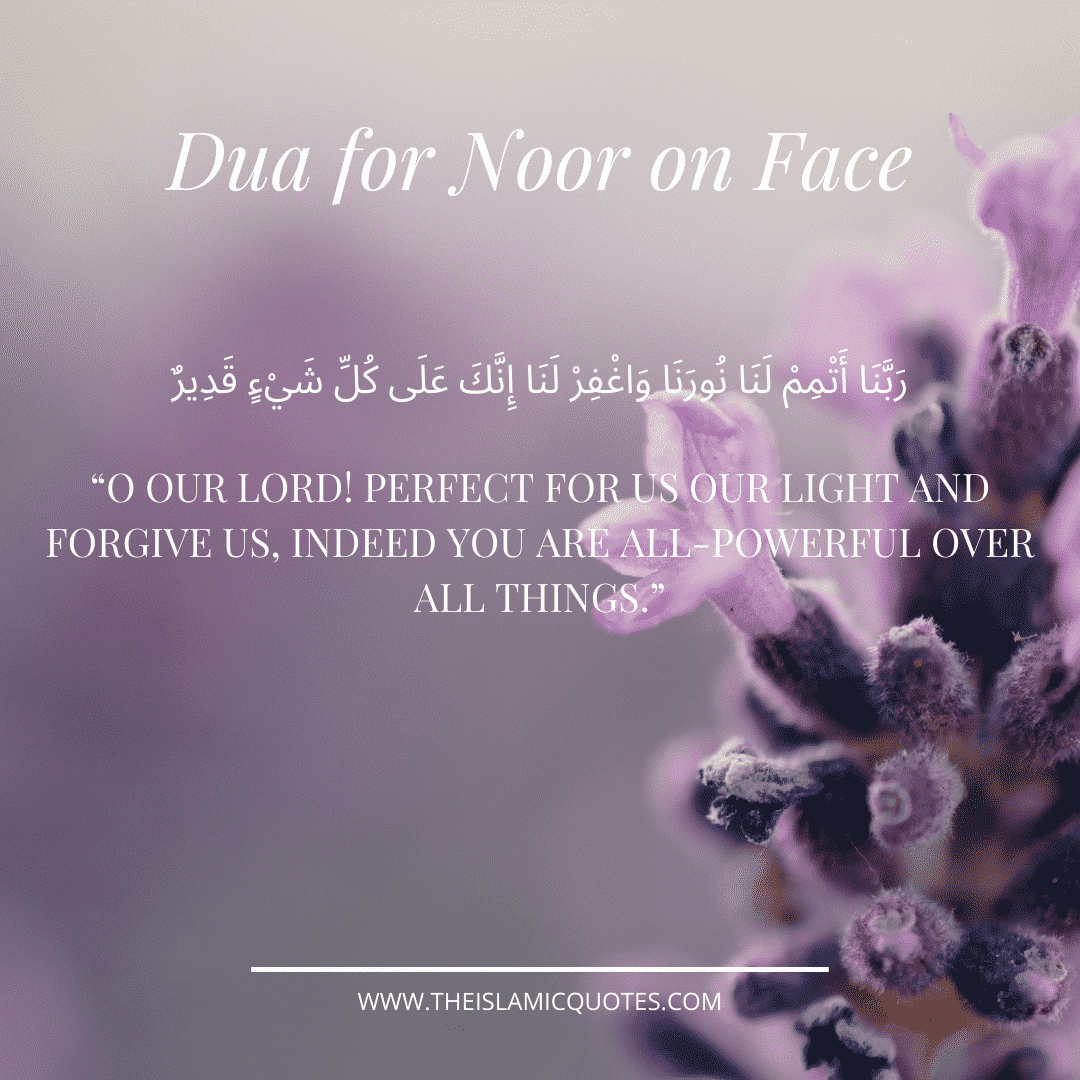
Worldly stressors can do a lot to reduce the attractiveness of the face. However, reciting this dua for beauty and noor will surely promote a youthful and healthy glow! This supplication is a way of showing regret in one’s heart for misdeeds, seeking forgiveness with the tongue, and repenting with a sincere conscience, with the intent to never return to the particular sin. By purifying one’s heart and mind, there’s no doubt that Allah (SWT) will reward us with light and shine.
↓ 4. Al-Jameel
Among Allah’s (SWT) 99 names is Al-Jameel, which means The Most Beautiful. In linguistic terms, the word “Jameel” indicates someone who possesses attributes of beauty. Islamically, Allah (SWT) isn’t only beautiful in actions but is also seen as the source of all beauty, which can be seen in His creation. While the word “Jameel” may be used to describe humans and other beings, only our Lord is Al-Jameel, most beautiful.
Allah’s Messenger (SAW) said, “Allah is beautiful, and He loves beauty.” (Muslim)
The Almighty has blessed us with ample resources. As Allah (SWT) likes to see the external beauty, we must look after our appearances, although in moderation. Some ways of beautifying ourselves for the sake of our Lord include dressing well for prayers, observing cleanliness, and observing modesty in dress (see Islamic quotes about hijab).
In this way, beautifying oneself can be seen as an act of worship if done for Allah’s sake (SWT). If you’re wondering which name of Allah to recite for beauty? Remembering Allah by this beautiful name, and asking Him to beautify your character, is encouraged. Note that there is no authentic hadith promising increased physical attractiveness from reciting a particular name a set number of times.
↓ 3. For Inner Beauty
Beauty is not only limited to physical features and characteristics. Rather, it also encompasses one’s righteousness and moral traits. There is nothing wrong with wearing the finest clothes and paying attention to one’s facial features. However, we must also not forget to beautify our character. Some actions that can play a huge role in enhancing your inner beauty include building a close relationship with Allah (SWT) and maintaining good moral conduct.
Additionally, one must strive to fulfill all daily obligations and pray Salat Al-Layl, one of the highly recommended Night Prayers. Regular night prayer is a means of drawing closer to Allah and refining one’s character, and many scholars speak of a spiritual radiance that comes from it. There is no authentic hadith that promises physical changes such as stronger eyesight.
In Surah Al-Hujurat, Ayah 7, Allah (SWT) talks about faith as beautification and adornment of the hearts. Moreover, in one Hadith, the Holy Prophet (PBUH) talks about patience, humility, eloquence, and justice as some of the virtues of inner beauty. The Holy Quran instructs people to strive to maintain a balance. While having a neat appearance is necessary, we must avoid indulging in extravagance.
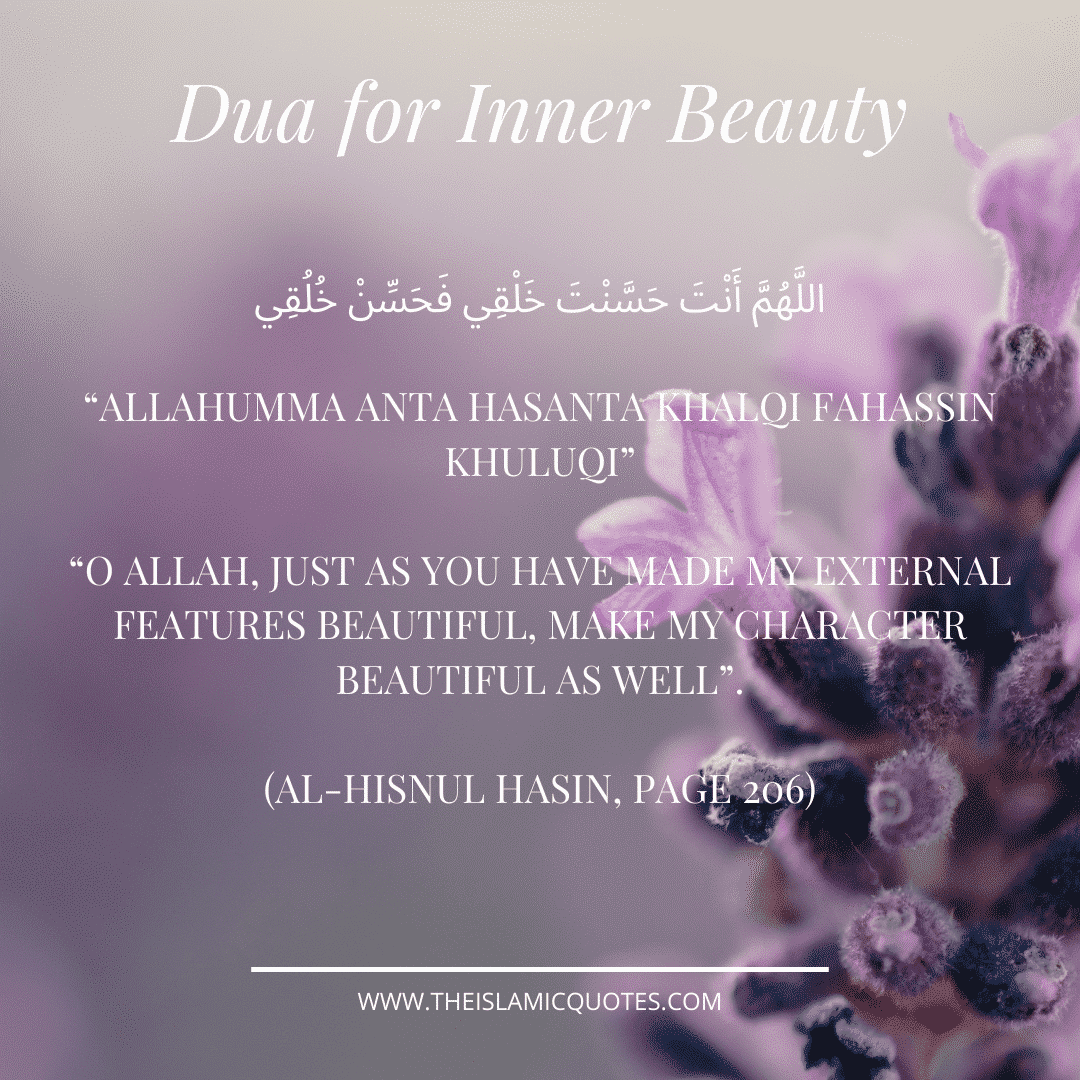
Prophet Muhammad (SAW) is known as one of Allah’s (SWT) most beautiful Creations. Not only was he good looking, but he also possessed beauty in his character and manners. While making supplication to Allah (SWT), he praised the Lord for what he already had and asked Allah to beautify his character, as well.
↓ 2. For the Soul
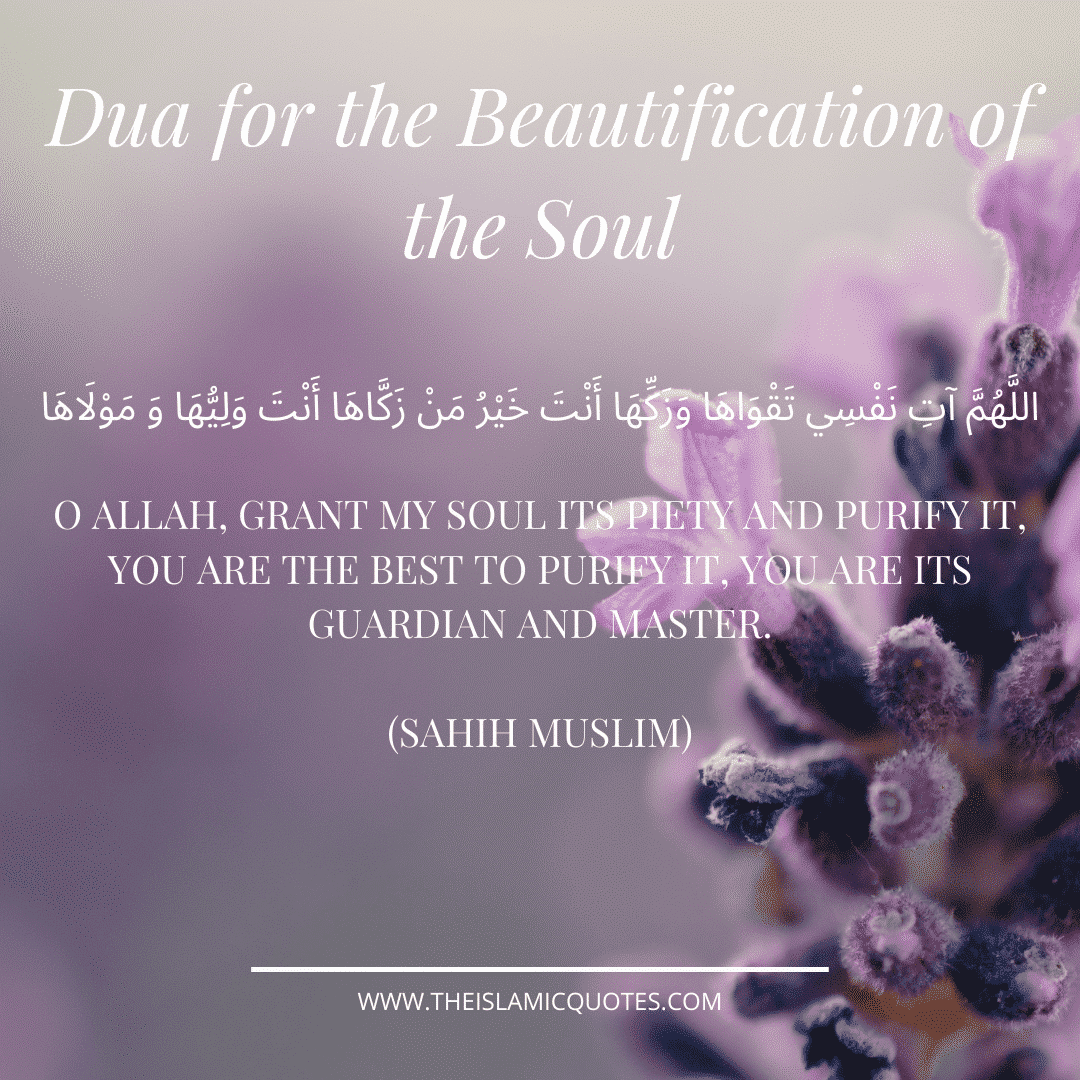
An additional way of beautifying one’s self is through the remembrance of Allah (SWT). Taqwa is the consciousness, or shield, that protects one from Allah’s wrath. Therefore, we must avoid engaging in sins. The reward for the purification of souls is Jannah and is one way to achieve beauty.
↓ 1. Surah Yusuf for beauty
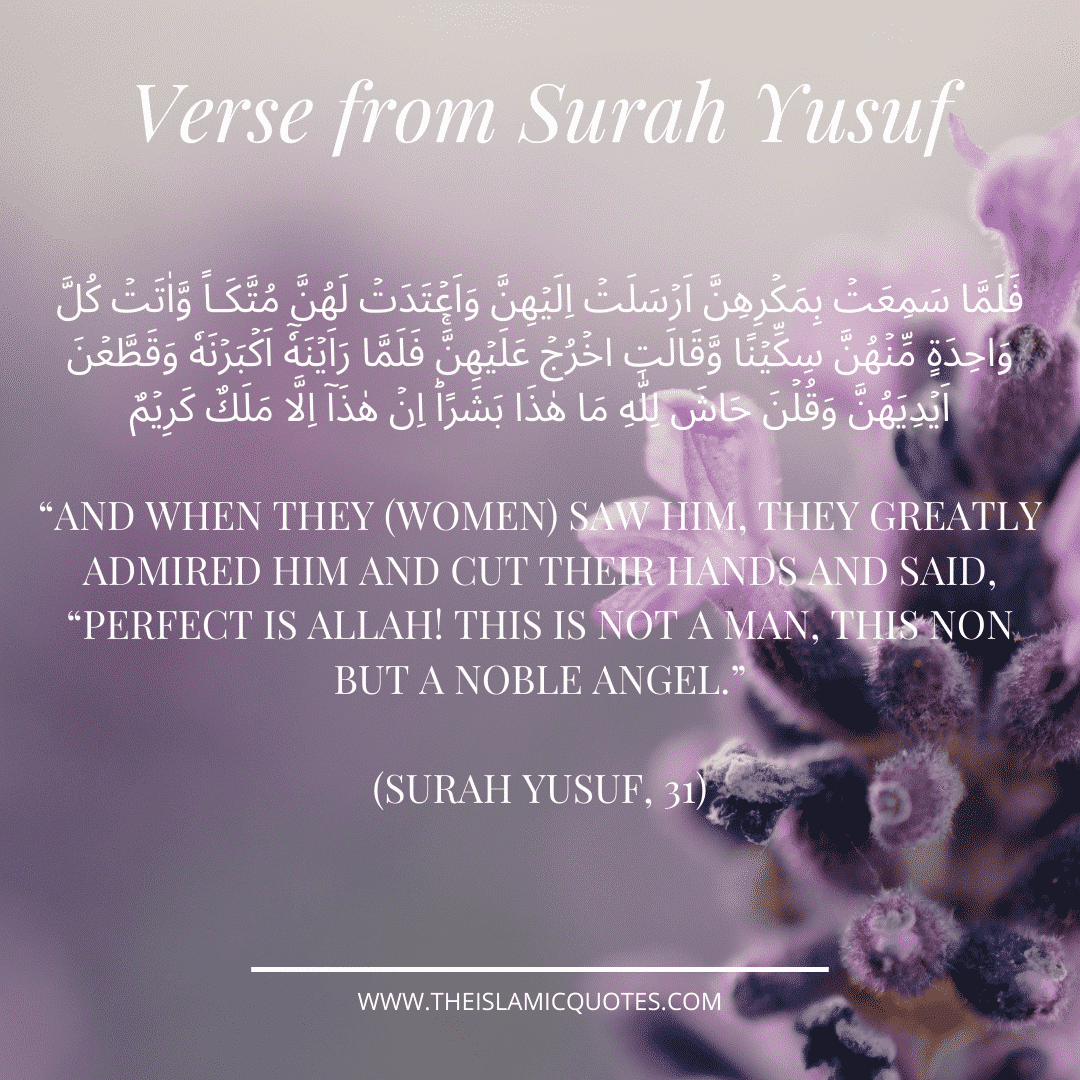
One of the unique tales in Islam is the story of Prophet Yusuf’s beauty, which is mentioned in the Holy Quran in Chapter 12. In addition to his noble character, Prophet Yusuf (AS) is widely known for his beauty. The Prophet (SAW) said of meeting Yusuf (AS) during the Night Journey that he had been given half of all beauty (Sahih Muslim).
The Quran recounts the moment when Aziz’s wife organized an elaborate feast and invited the women over. She handed out each person a knife to slice the fruits that they were served. She then ordered Prophet Yusuf (AS) to enter the hall. When the Egyptian women saw him, they were captivated by his beauty to the extent that they fell head over heels in love with him. Looking at his shining face and modesty, the group of women exclaimed him to be a heavenly angel.
Therefore, when it comes to beautifying the appearance, this is the surah to listen for beauty!
Frequently Asked Questions
Is there an authentic dua specifically for beauty?
The Prophet (SAW) taught a dua for good character: “O Allah, You have made my physical form good, so make my character good as well” (reported in Musnad Ahmad). Many other “beauty duas” circulating online have no strong source, so treat them as general supplication rather than a guaranteed result.
Is it permissible to take care of my appearance?
Yes. Allah is beautiful and loves beauty, and the Prophet (SAW) encouraged cleanliness and neatness, provided it is done in moderation and without arrogance or extravagance.
Does reciting Ya Jameel make a person more attractive?
There is no authentic hadith that promises this. Calling upon Allah by His beautiful names is recommended, but the real benefit is nearness to Him and refinement of character.
What is true beauty in Islam?
Scholars stress that beauty of faith, character and conduct matters most. See Islamic quotes on kindness for reminders on this.
Are there rulings on cosmetics and adornment?
Rulings on specific items (for example dyes, kohl or cosmetic procedures) can differ between schools and scholars, so please ask a qualified scholar about your personal situation.
Assalamm Alaikum, I have started recited dua for noor Ya Jameel 313 times a day for 21 days wazifa. Can I shorten and read for less days and if I start my menses can I stop reading and continue when clean? Also are there any side effects. Jzk khair
Hi sadia hope you’re good,
noor on face maybe there is wazifa but the 3 dua in this pics when you see your self in the mirror recite it cuz its sunnah and the 4 one is for purification of soul it is also mention in hadeeth sahi muslim so the noor on the face comes when you get closer to Allah swt and also lomg prostrations/sajdah can gives you rosy cheeks pink lips and also luminosity/noor on face because when you do sajdah your face get lower than the heart and it increases blood flow to your face and brain and do prostration and maybe this wazifa you said about it maybe it works I dont knos and there is no side effects of wazifa etc.
Heyyy, can we not recite any of these during menstruation
And one more doubt-my mom told me not look in the mirror at night , it can make your face dull
Is this true❤️
Any surah can be read during menstruation, as per most scholars. As for not looking in the mirror at night, it is a superstition which are not a part of Islam.
I would also request that you check out our new forum for Islamic discussions.
Best regards,
Team TheIslamicQuotes