
Hadiths on Health and Hygiene. Islam emphasizes on each and every aspect of life. Whether it is marriage, daily life activities or health and hygiene, Prophet (P.B.U.H) has elaborated the Muslim lifestyle clearly. The main focus of our Prophet (P.B.U.H) was on personal hygiene and health.
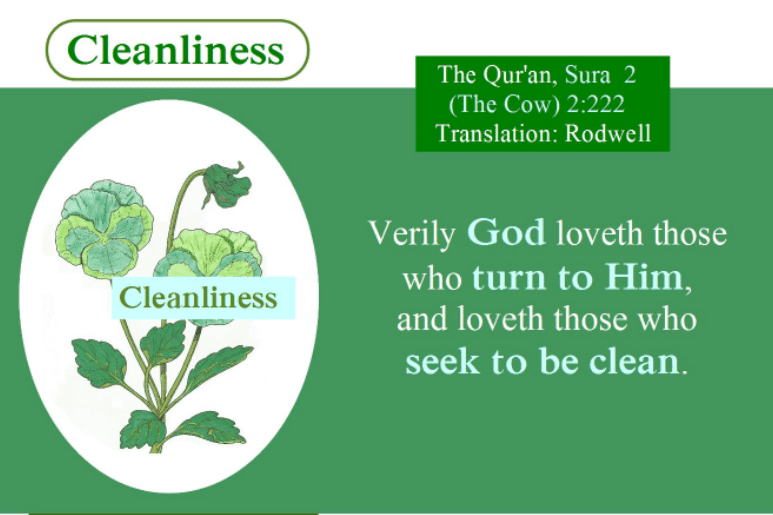
Allah (S.W.T) also speaks of purity in the Quran, where He says that He loves those who keep themselves clean (2:222). Cleanliness and maintenance of hygiene are really important in Islam. Here are the hadiths on health and hygiene which will give you a broader perspective on cleanliness, hygiene, health and their importance.
The Prophet’s Sayings On Cleanliness and Health
Here are a few reasons why maintaining our hygiene is so important. Have a look.
- Keeping yourself and your environment clean keeps you fit and healthy.
- You’ll stay safe from diseases and infections.
- Allah (S.W.T) loves those who purify themselves (Quran 2:222).
- Cleanliness is part of worship, since purification is a condition for prayer.
- A clean home environment increases the aesthetics of your living place.
We have already discussed some of the many benefits of cleanliness. Now let’s move on to the hadith on cleanliness and hygiene.
↓ 15 – Benefits of Using Miswak Daily:
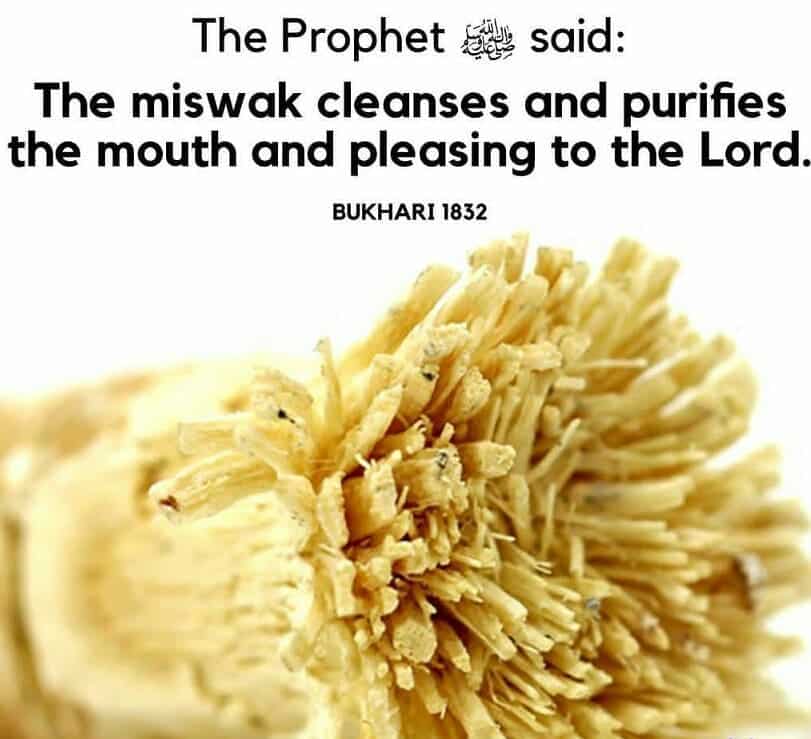
Using miswak every now and then is highly recommended in both, Sunnah and Hadith. Prophet’s wife Aisha (may Allah be pleased with her) reported that the Prophet (PBUH) said, “The siwak (miswak) purifies the mouth and pleases the Lord” (an-Nasa’i, Ahmad; Bukhari records it in a chain-less form).
Moreover, according to Abu Huraira; “Were it not that I might overburden my followers, I would have commanded them to use the miswak before every prayer.” This hadith is reported in Sahih al-Bukhari and Sahih Muslim, the two most authentic hadith collections.
Via
↓ 14 – Cutting Nails
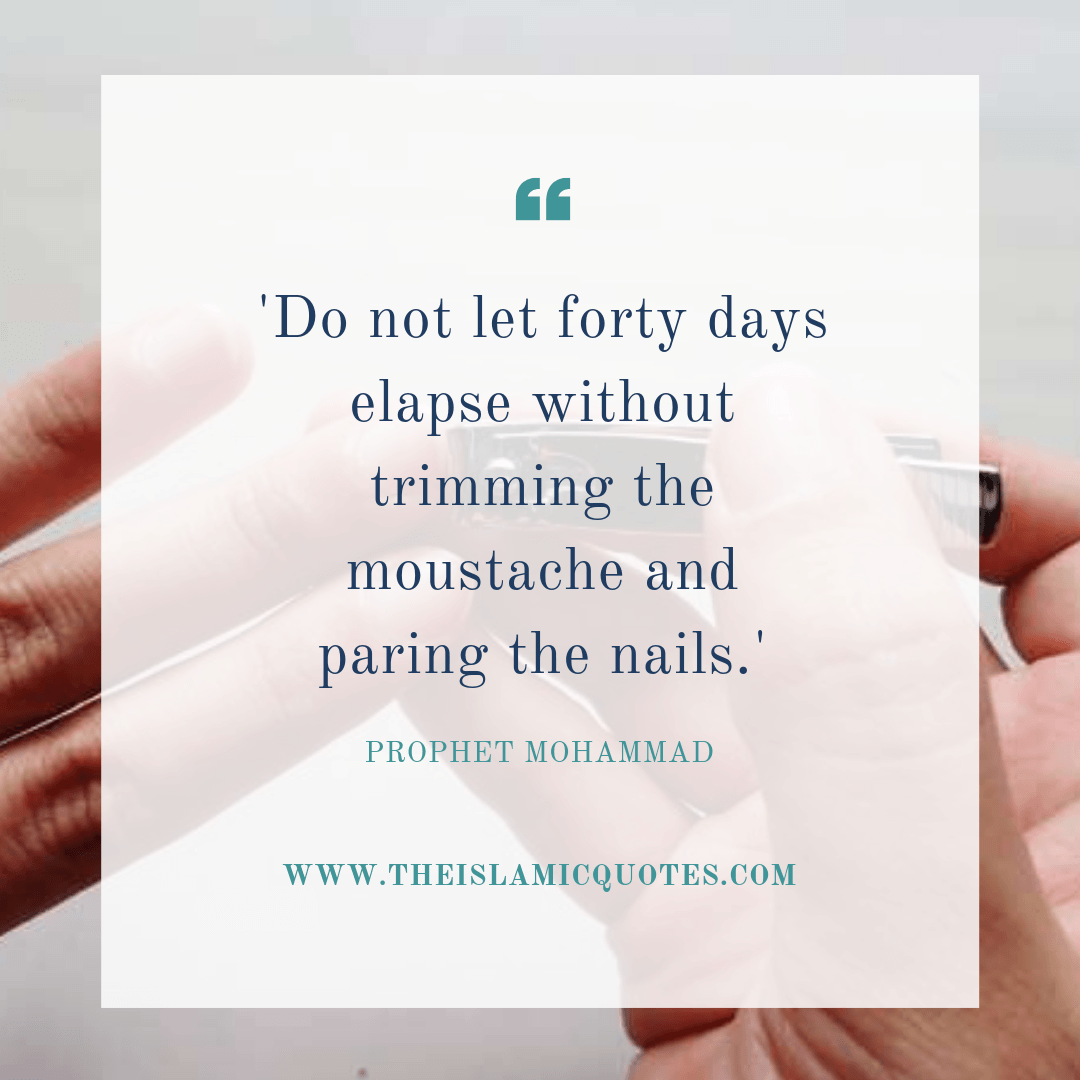
Clipping the nails is one of the practices of fitrah. Anas (may Allah be pleased with him) reported that a limit was set for us not to leave the nails, moustache and body hair unattended for more than forty days (Sahih Muslim). Some scholars also regard trimming them on Fridays as recommended, though the reports specifically about the Prophet’s Friday routine are not strong.
↓ 13 – Exercise & Sports
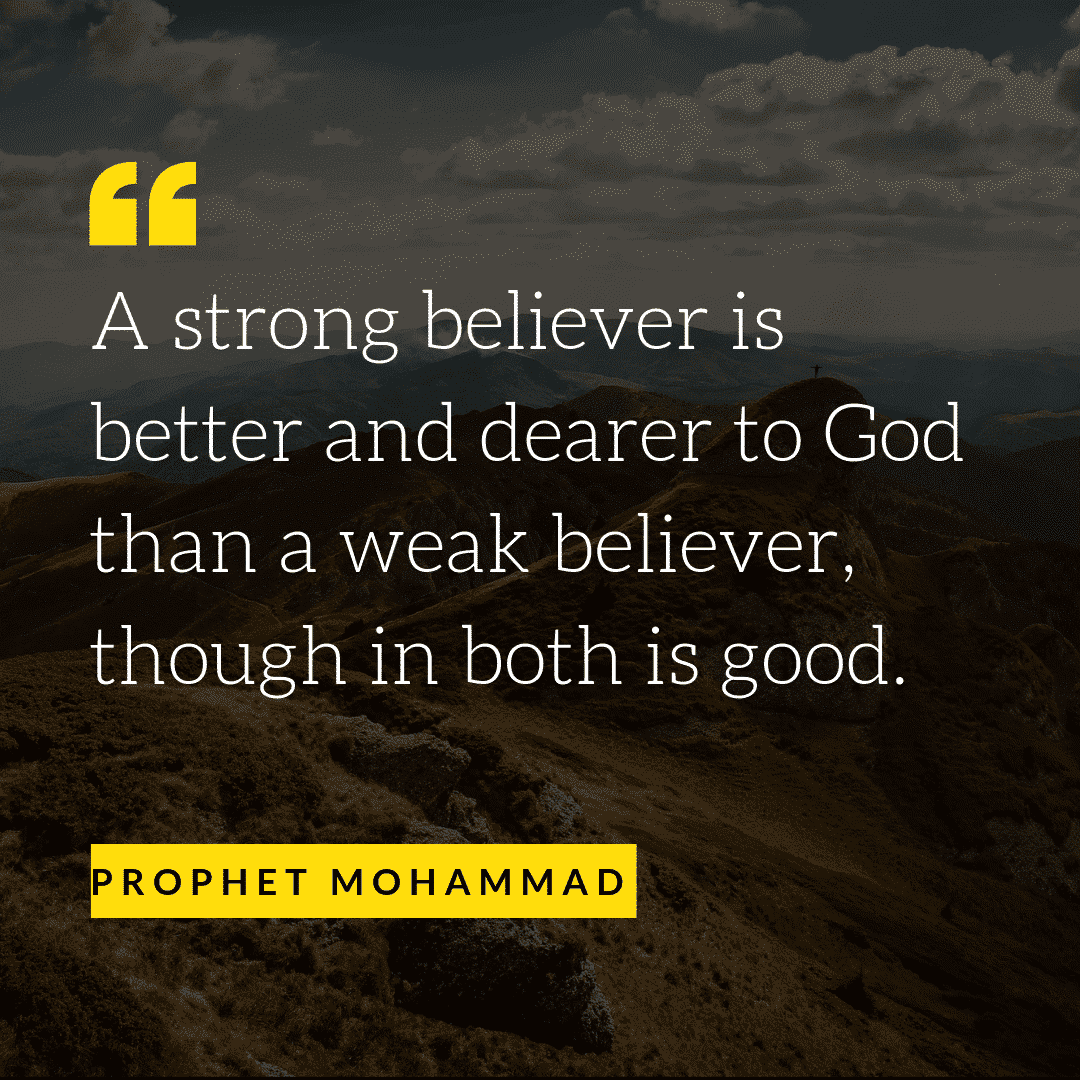
Many sports like archery and horse riding are encouraged in Islam. The Companions described the Prophet’s (PBUH) walk as brisk, as if he were descending a slope. According to the hadith in Sahih Muslim, the strong believer is better and more beloved to Allah than the weak believer, while there is good in both. When a Muslim is active and energetic, he/she will be able to perform all his religious and worldly responsibilities in a much better way.
↓ 12 – Fasting To maintain Health
Voluntary fasting is a Sunnah, and some research suggests intermittent fasting may help certain people, though the evidence is still developing and it is not suitable for everyone. The Prophet (PBUH) used to fast on Mondays and Thursdays and encouraged fasting three days each month (the 13th, 14th and 15th of the lunar month). His diet was simple and included foods such as dates, milk, barley, olive oil and watermelon or other fruit. See also our guide on hadith on fasting. Anyone with a medical condition should consult a doctor before fasting.
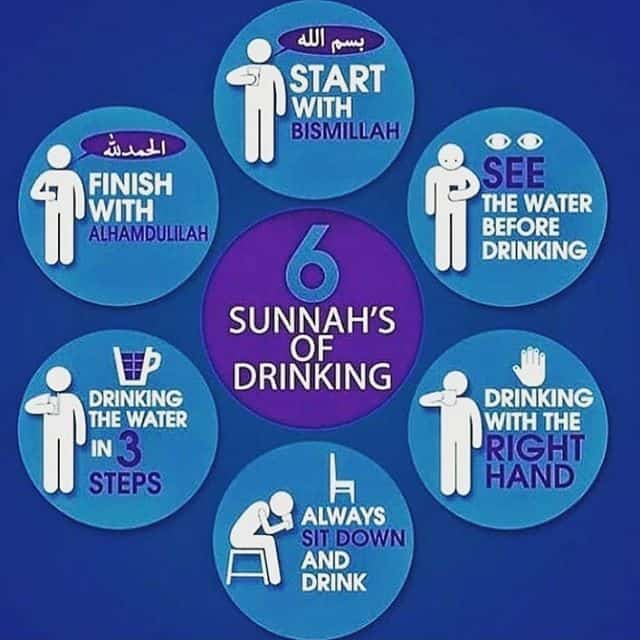
↓ 11 – Drinking Water The Right Way
The infographic shared below shows the right way of drinking water for Muslims, based on the ahadith and Sunnah of our beloved Prophet Mohammad. The Prophet (PBUH) advised drinking in three sips, sitting, and not breathing into the vessel. Drinking at a calm pace is also generally considered sensible by health professionals. For more etiquettes, read Sunnahs of eating and drinking.
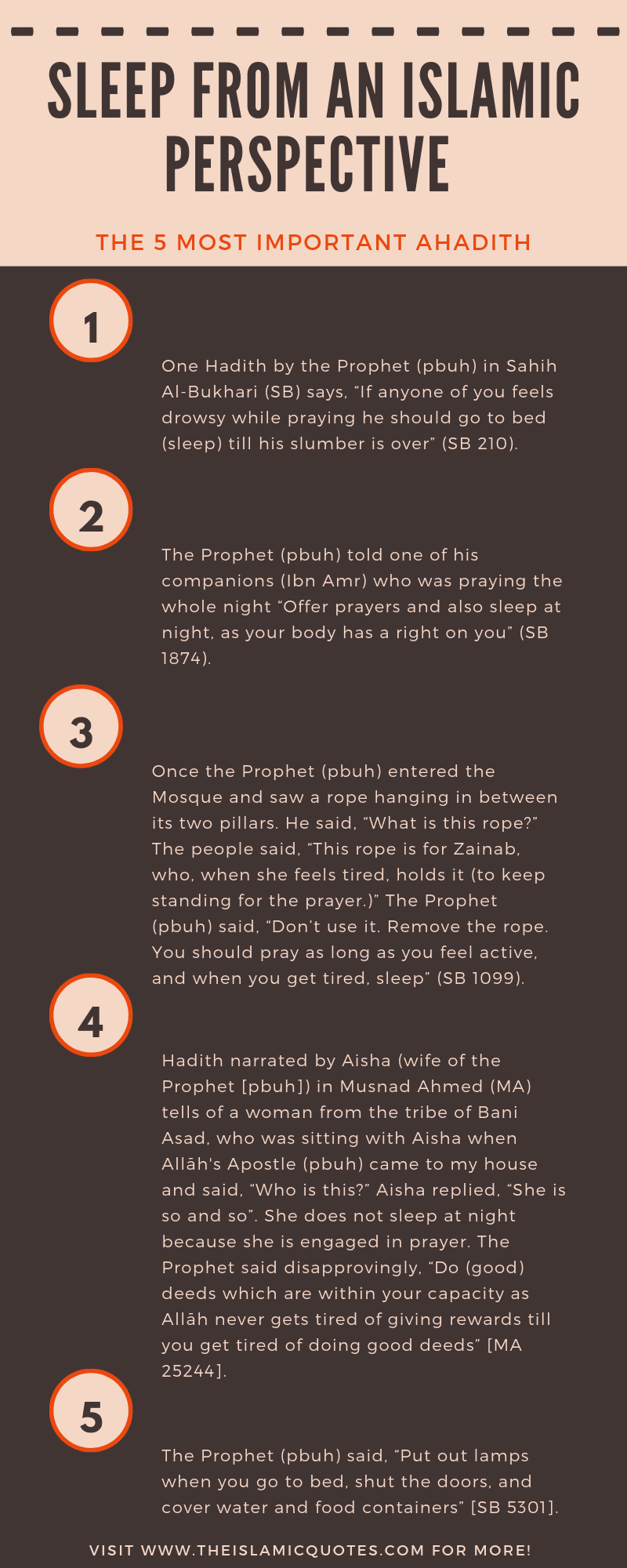
↓ 10 – Get Enough Sleep
The Prophet never advocated that Muslims should forget their sleep in their efforts to please Allah. He has given several guidelines on good sleeping practices. For example, he advised extinguishing lamps before sleeping (Sahih al-Bukhari and Sahih Muslim), mainly as a fire-safety precaution; many people also find a dark room helps them sleep better. We share below some of the most beautiful hadith on the importance of sleep below:
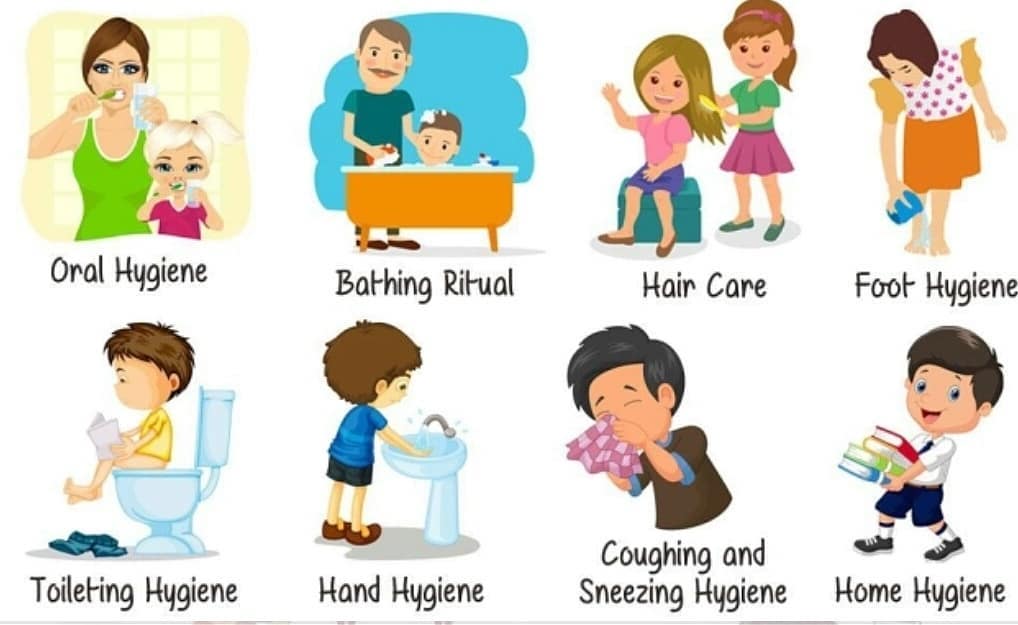
↓ 9 – Maintaining Personal Hygiene:
Prophet (PBUH) suggested maintaining personal hygiene in numerous Hadith. The Quran also praises those who purify themselves (9:108).
According to a Hadith narrated by Abu Huraira (mentioned in Sahih Muslim and Sahih Bukhari);
“Five practices are of the fitrah (natural disposition): circumcision, shaving the pubic region, plucking the armpit hair, clipping the nails and trimming the moustache.”
Via
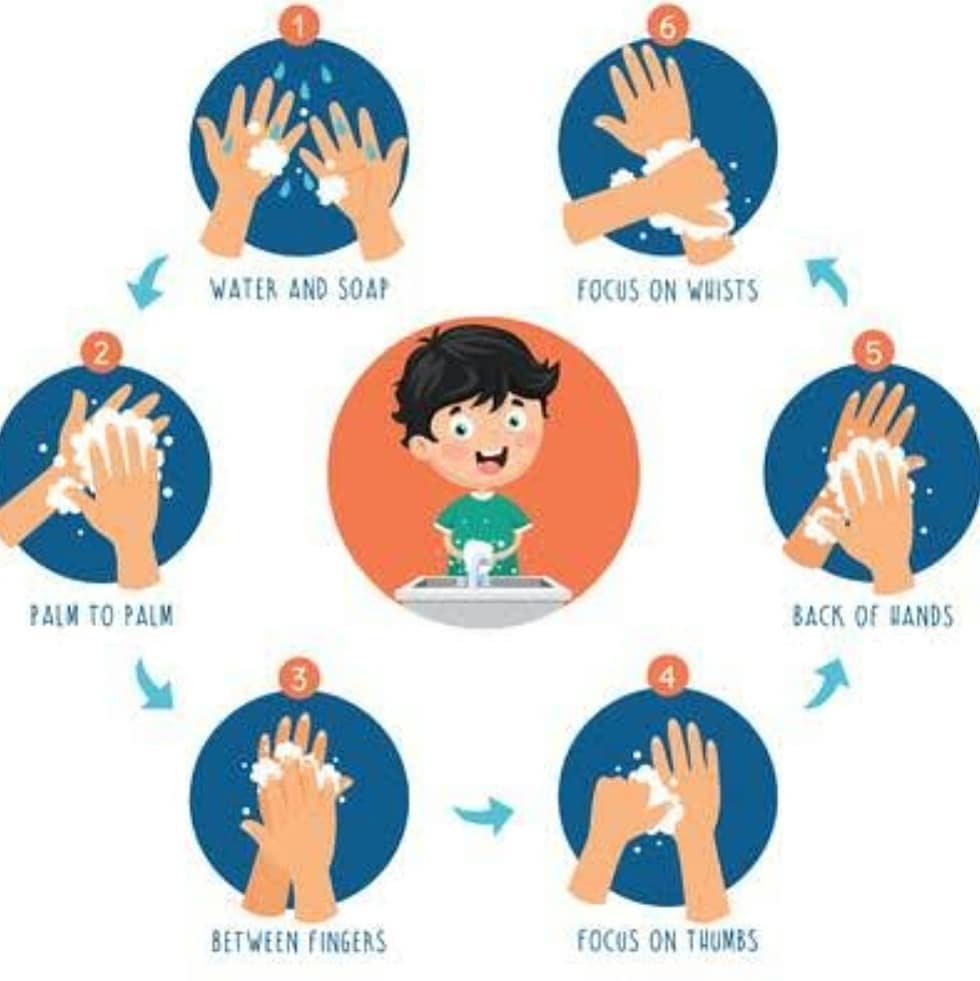
↓ 8 – Wash your Hands:
Prophet (PBUH) emphasized on washing hands a lot. Hadith mention washing the hands after waking up, before and after meals, and before wudu, so regular hand washing is firmly rooted in the Sunnah.
Abu Huraira narrated;
When one of you awakens from sleep, do not let him dip his hands into the vessel until he washes them three times. Verily, he does not know where his hand spent the night.”
This shows how much importance the Prophet (PBUH) gave to clean hands (Sahih al-Bukhari and Sahih Muslim).
Via
↓ 7 – Keep your Environment Clean:
Prophet Muhammad (PBUH) not only advised to keep our body clean but also recommended us to keep our surroundings and environment clean.
Mu’adh (may Allah be pleased with him) reported that the Prophet (PBUH) said (Sunan Abu Dawud, Ibn Majah);
“Beware of the three acts that cause you to be cursed: relieving yourselves in shaded places (that people utilize), in a walkway or in a watering place.”
Moreover, he also focused that cleaning the path for others and keeping your roads clean is an act of charity.
Abu Dharr Al-Ghafari narrated that;
“Removing harmful things from the road is an act of charity (sadaqah).”

↓ 6 – Washing After Defecation
The Prophet had strongly advised Muslims to wash after urination or defecation, also known as istinja. Washing with water is widely regarded as good hygiene. Scholars differ on whether water is obligatory or whether stones or tissue suffice when they clean properly; most allow both, and prefer using water after tissue. See Islamic toilet etiquette.
The evidence for that is the hadeeth of Anas (may Allaah be pleased with him) who said: “The Prophet (peace and blessings of Allaah be upon him) used to relieve himself, then another boy and I would bring a vessel of water and a short spear [to use as a sutrah for the prayer he was going to do after doing wudoo’] and he would cleanse himself with the water.”
(Narrated by al-Bukhari, 149; Muslim, 271)
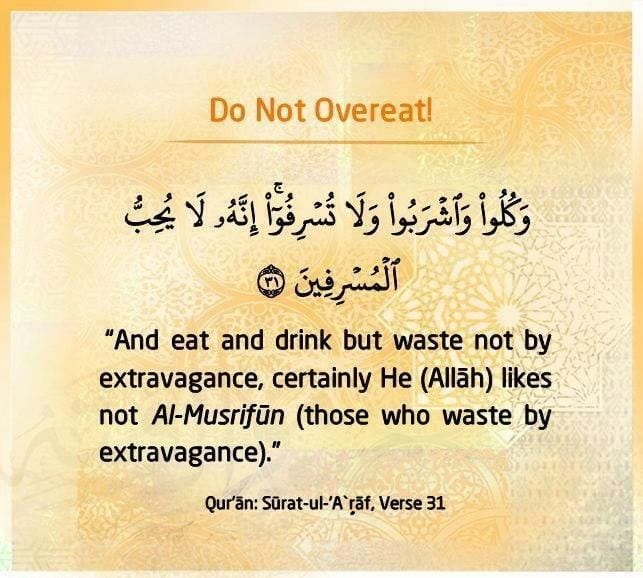
↓ 5 – Avoid Over-eating
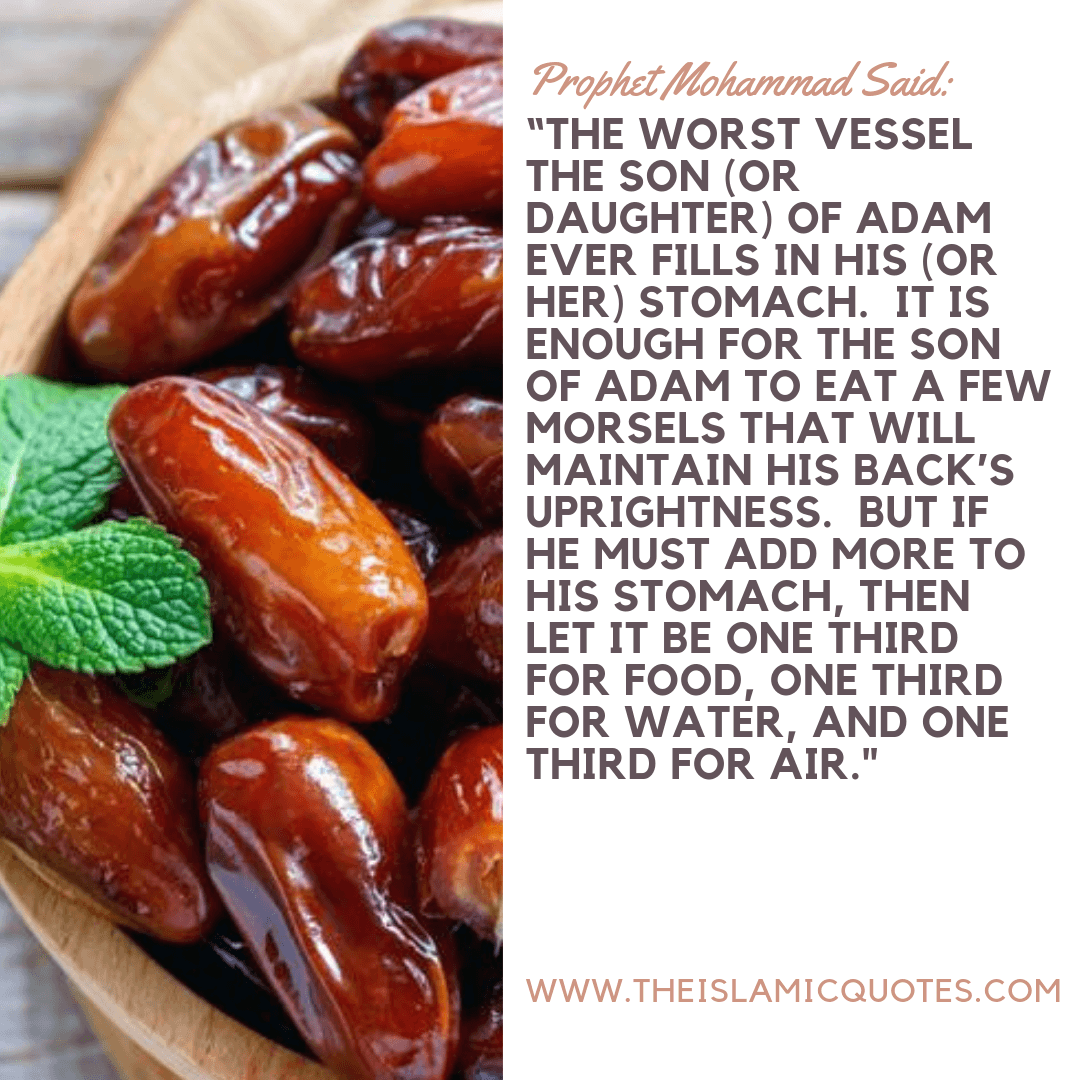
Our Prophet (PBUH) greatly encouraged moderation in eating. According to the hadith, “No human has ever filled a vessel worse than his stomach” (Tirmidhi, Ibn Majah; graded sahih by al-Albani).
The same narration continues;
A few morsels that keep his back upright are sufficient for him. If he has to, then he should keep one-third for food, one-third for drink and one-third for his breathing”.
This guidance on moderation fits with modern advice that regular overeating raises the risk of obesity and related conditions. Following the Sunnah of moderation supports a healthier life.
↓ 4 – Take Medicine when Needed
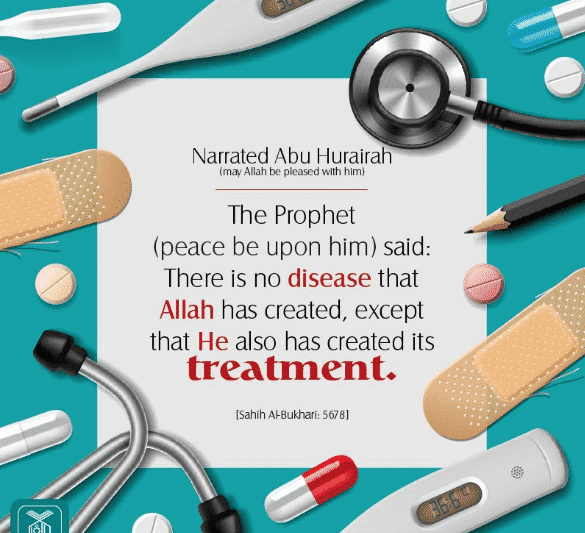
Muhammad (SAW) also encouraged the use of medical treatment and medicines. As narrated by Usamah ibn Sharik (may Allah be pleased with him);
I came to Muhammad (SAW), he and his companions were sitting when a few Arab from a nearby village came and asked; O Messengerr of Allah, should we use the medicines and make use of the medical treatment?
To this question, our Prophet (SAW) replied;
“Make use of medical treatment, for Allah has not made a disease without appointing a remedy for it, with the exception of one disease, namely old age.”
This hadith (Abu Dawud, Tirmidhi; graded sahih by al-Albani) shows that seeking medical treatment is encouraged in Islam, alongside trust in Allah.
↓ 3 – Maintain Cleanliness
Prophet (PBUH) said, “cleanliness is half of faith (Imaan)”. This hadith is reported in Sahih Muslim from Abu Malik al-Ash’ari (may Allah be pleased with him). Scholars explain it as showing that purification is a major part of faith. See also our guide to ghusl in Islam.
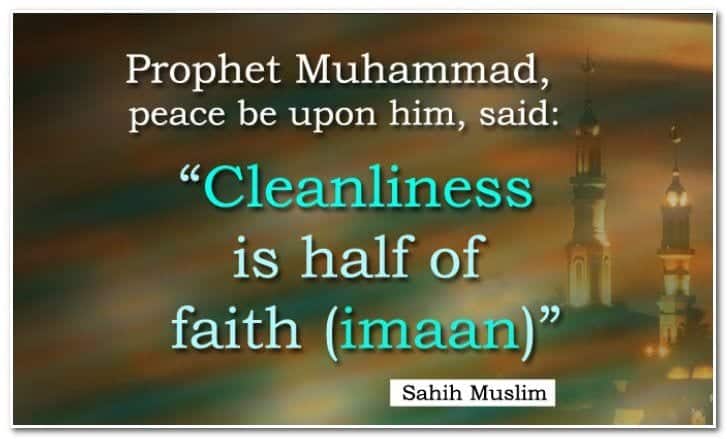
Allah (SWT) and His Prophet Muhammad (PBUH) have guided us to keep clean in body, clothes and surroundings. Note: a saying often quoted online, “Islam is clean, so keep yourselves clean; only the clean will enter Paradise,” is reported with a weak chain, so it is not relied on here.
Via
↓ 2 – Focus on Mental Health
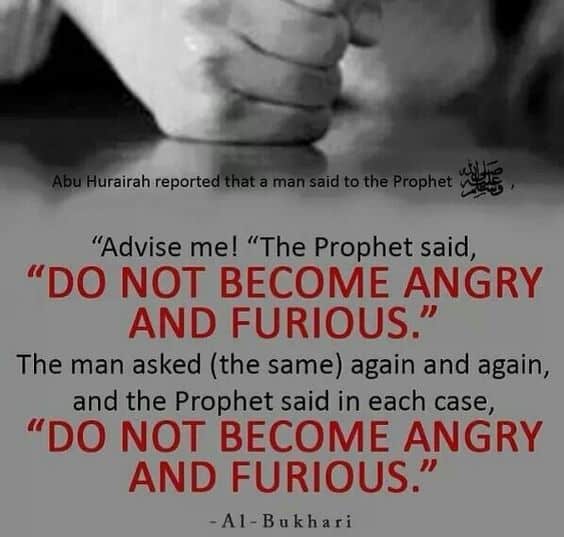
Islam teaches patience, remembrance of Allah and self-control, which many find supportive of emotional well-being. These teachings are not a substitute for professional help when someone is struggling.
A man once asked Prophet (PBUH), “give me advise”, upon which the Prophet (PBUH) said, “do not become angry and furious”. The man repeatedly asked the same question and the Prophet (PBUH) repeated the same answer. (Sahih al-Bukhari). For more, see Islamic quotes about anger and anger management.
According to an authentic narration, “The strong man is not the one who can wrestle, but the strong man is the one who controls himself at the time of anger.” (Sahih al-Bukhari and Sahih Muslim). Managing anger is also widely considered good for health.
↓ 1 – Bathing and Purification
Salman al-Farsi (may Allah be pleased with him) narrated that the Prophet (PBUH) said (Sahih al-Bukhari);
“Whoever takes a bath on a Friday and does it well, and purifies himself and does it well, and puts on his best clothes, and puts on whatever Allah decrees for him of the perfume of his family, then comes to the mosque and does not engage in idle talk or separate (pushing between) two people;he will be forgiven for (his sins) between that day and the previous Friday.”
Therefore, our Prophet focused greatly on cleanliness and encouraged Muslims to stay healthy by following the teachings of Islam. Ghusal is also a part of Muslim purification which should be performed by the Muslims to keep themselves clean.

Frequently Asked Questions
Is “cleanliness is half of faith” an authentic hadith?
Yes. It is reported in Sahih Muslim. Scholars understand “half” as a statement about the great importance of purification in faith and worship.
How many things are included in the practices of fitrah?
The hadith in Bukhari and Muslim lists five: circumcision, shaving the pubic hair, trimming the moustache, clipping the nails and plucking the armpit hair. Another report in Sahih Muslim lists ten, including rinsing the mouth and nose and using the siwak.
Is it obligatory to use water for istinja?
Scholars differ. Many hold that stones or tissue are enough if they clean properly, while using water is better. See Islamic toilet etiquette. For a personal ruling, ask a qualified scholar.
Does Islam encourage seeking medical treatment?
Yes. The Prophet (PBUH) encouraged treatment and said Allah has sent down a cure for every illness. Seeking treatment is not against trust in Allah.
Is intermittent fasting the same as the Sunnah fasts?
No. Sunnah fasts such as Mondays and Thursdays are acts of worship done with the intention of pleasing Allah. People with medical conditions should speak to a doctor first. See hadith on fasting.