
Prophet Muhammad (SAW) is deemed as the last messenger and the Prophet of Islam. As a result, his teachings and conduct of life serve as an example for generations until the day of judgment. Prophet Muhammad was a man of great dignity, purity, and humbleness, who laid out characteristics of a perfect role model in all spheres of life and the afterlife.
The characteristics and actions of Prophet Muhammad (SAW) are coined as Sunnah, and they serve as a complete guide for a successful, peaceful, and productive life. In addition, following the Sunnah’s also increases the bonds between Muslim individuals and their creator- Allah. As Muslims follow the footsteps of Allah’s beloved final prophet.
What are the Sunnah of Eating and Drinking?
The conduct of eating and drinking tells a lot about a person. Their way of eating describes their level of cleanliness and organization, while what they eat elaborates on their health and well-being. Whilst following in line with Prophet Muhammad’s Sunnah on eating drinking, Muslims can present themselves as clean, organized, and healthy.
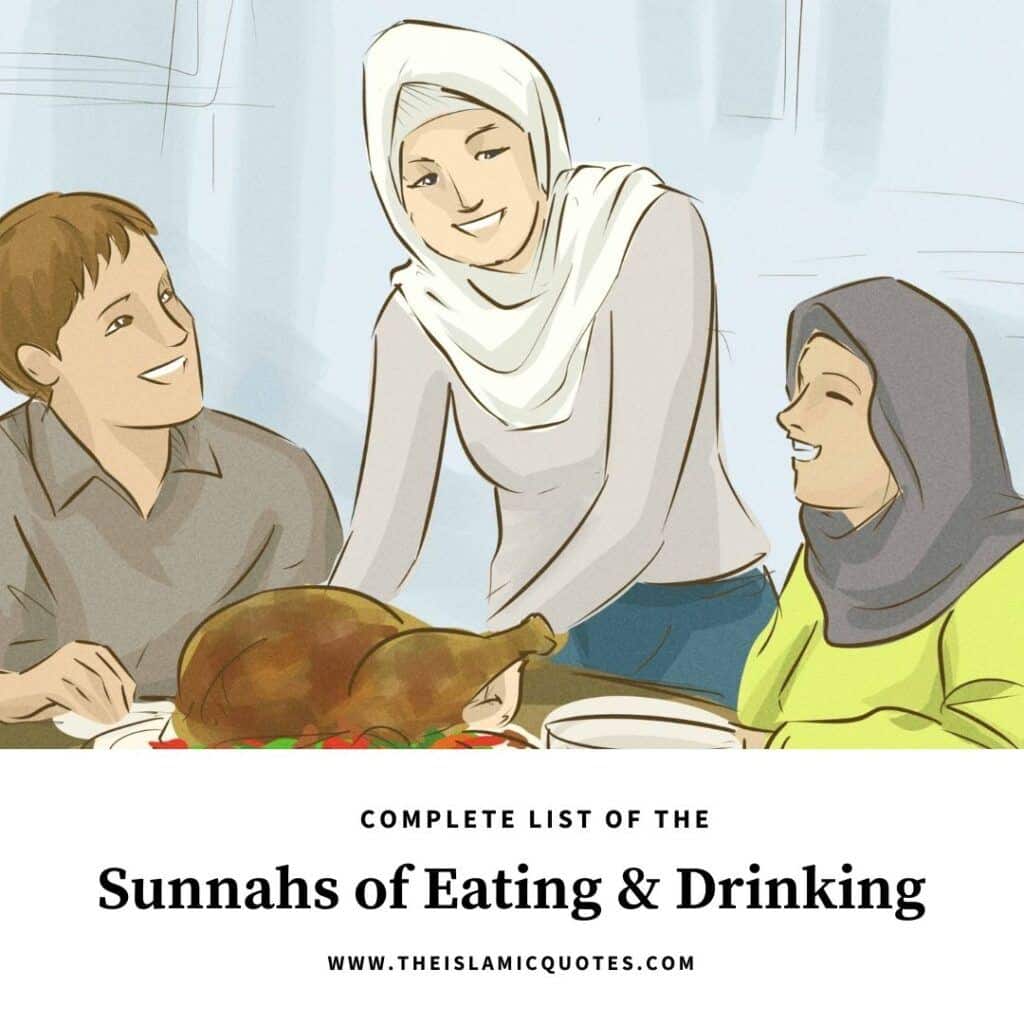
20 – Say the name of Allah before eating and drinking
Prophet Muhammad always recalled the name of his creator before eating or drinking, and his followers should follow along the same lines. This is because, if an individual does not undertake this conduct, his/her food will lose the barakah of their food because Satan will become a part of the meal. Hence, saying the name of Allah is critical before eating and drinking according to Sunnah. I would also suggest that you go through these Most Beautiful Sunnah To Follow In Daily Life.
19 – Eat and drink with right hand
Prophet Muhammad (SAW) always ate and drank with his right hand. The Prophet (PBUH) said: “When one of you eats, let him eat with his right hand, and when he drinks, let him drink with his right hand, for Satan eats and drinks with his left” (Sahih Muslim). Scholars say this is the default, and someone who cannot use the right hand for a valid reason is excused.
18 – Drink while sitting and in three gulps
The Prophet (PBUH) forbade drinking while standing in a narration in Sahih Muslim, though other authentic narrations show him drinking standing at times (such as Zamzam), so many scholars treat sitting as the recommended manner rather than standing being strictly forbidden. He also used to breathe three times while drinking, outside the vessel, pausing between sips (Sahih al-Bukhari and Sahih Muslim), and he forbade breathing into the drinking vessel.
17 – Cover the glass of drinking water
The Prophet (PBUH) instructed us to cover food and drink vessels and to mention the name of Allah while doing so (Sahih al-Bukhari and Sahih Muslim). Covering them also keeps out dust and insects.
16 – Pass the dish to individuals sitting on the right
This was a practice adopted by the Prophet Muhammad (SAW), and it ensures table etiquette. During large gatherings with family members and friends, rotating between the dishes can become a confusing and difficult task. Hence, Prophet Muhammad (SAW) passed the precedent that, people should hand over dishes to the person towards their right in order to smoothly rotate the dishes.
15 – Drink the water of ZamZam
It is reported in Sahih al-Bukhari that the Prophet (PBUH) drank Zamzam water while standing. Some scholars regard this as permission for drinking Zamzam standing in particular, and others as showing that drinking standing is permissible in general. Read more in our post on Zamzam water benefits.
14 – Eating on the floor
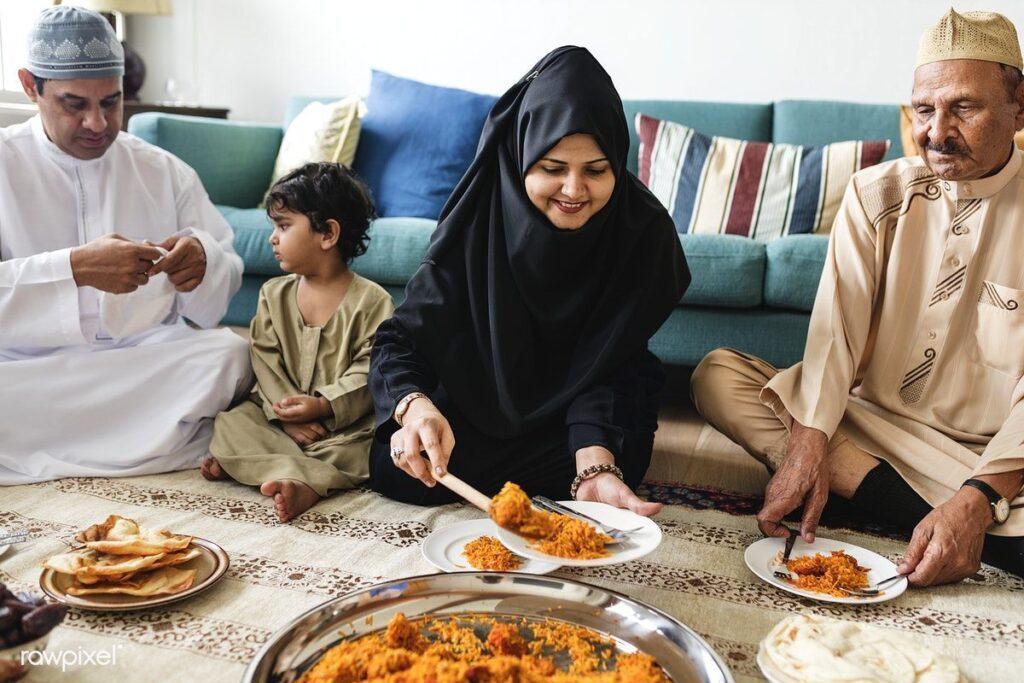
It is narrated that Prophet Muhammad (SAW) used to eat on the floor. This reflects his humility and simplicity, and it is a recommended manner of eating, though eating at a table is also permissible.
13 – Avoiding overeating
The Prophet Muhammad (SAW) avoided overeating and encouraged his followers to do the same. Overeating increases health issues, leads to laziness, and decreases the amount of food consumed by poor individuals. Hence, this Sunnah should be employed by Muslim individuals across the world.
12 – Avoid wasting food
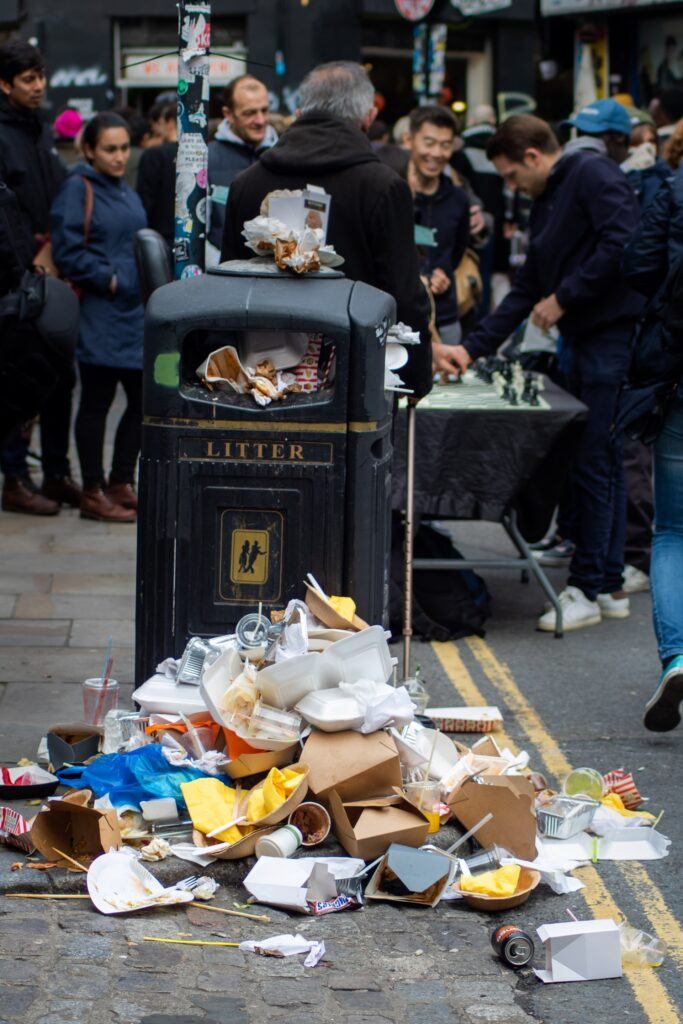
The Prophet Muhammad (SAW) did not waste or discard food. He taught that food should be valued and not thrown away: a morsel that falls should be cleaned and eaten (Sahih Muslim), and extravagance is discouraged (Quran 7:31). Wasting food not only discredits Allah’s blessings but also decreases the amount of food available for poor people.
11 – Licking your fingers
The Prophet (PBUH) taught licking the fingers (and wiping the plate) after eating, saying: “You do not know in which portion of your food the blessing lies” (Sahih Muslim). Wash your hands afterwards as usual.

10 – Wiping of dishes
The Prophet (PBUH) instructed us to wipe the dish clean and eat what remains in it (Sahih Muslim), so that no blessing in the food is wasted.
9 – Praise Allah after eating
Prophet Muhammad (SAW) always praised Allah after eating his food. In this manner, the provider of the food was thanked, and his followers were advised to follow in his footsteps.
8 – Don’t criticize food
The Prophet Muhammad (SAW) never criticizes the food. If he did not like it, he would just leave it. Since criticism challenged the creator or was hurtful for the individuals bringing the food.
7 – Compliment tasty food
The last messenger of Allah would always compliment tasty food. In this manner, the creator was praised, and the individuals that brought it would become happy too.
6 – Accept meal invitations
The Prophet Muhammad (SAW) would never reject meal invitations, as they increase harmony and strengthen relationships. Similarly, his followers were devised to do the same. Inarguably, sharing meals strengthens relationships and friendships.
5 – Eating from the front
The last messenger of Allah would always eat from his front, in order to illustrate table manners and prevent creating a mess. Eating from the front allows for eating with manners, hence, Muslims should follow along the footsteps of Prophet Muhammad (SAW).
4 – Sharing food
Prophet Muhammad (SAW) always shared his food with his companions and urged his Ummah to do the same. For more on how he lived, see his manners. This concept increases harmony between people.
3 – Prohibition of drinking water in gold of silver vessel
The Prophet (PBUH) forbade eating and drinking from vessels of gold and silver, saying they are for the disbelievers in this world and for the believers in the Hereafter (Sahih al-Bukhari and Sahih Muslim). The majority of scholars apply this prohibition to both men and women.
2 – Eating dates
Dates were actively consumed by Prophet Muhammad (SAW) due to their health benefits. Hence, his followers should consume dates as well.
1 – Eating simple, wholesome food
Some popular narrations praising lentils are weak and should not be presented as Sunnah. What is authentically reported is that he ate simple, wholesome foods such as barley, honey, vinegar as a condiment, and pumpkin (Sahih al-Bukhari and Sahih Muslim). Eating plain, healthy food in moderation follows his example.
Frequently Asked Questions
What do I say before and after eating?
Say “Bismillah” before eating. If you forget at the start, say “Bismillahi awwalahu wa akhirahu” when you remember (Sunan Abi Dawud and Tirmidhi). After eating, praise Allah, for example with “Alhamdulillahilladhi at’amana wa saqana wa ja’alana muslimin” (Abu Dawud, Tirmidhi).
Is it haram to eat or drink with the left hand?
The Prophet (PBUH) told us to use the right hand, and many scholars consider this a strongly emphasised Sunnah, while some consider it obligatory unless there is an excuse. Ask a qualified scholar for your situation.
Is drinking while standing forbidden?
There are narrations both discouraging and permitting it. Most scholars say sitting is preferable and standing is permissible, particularly when needed.
Do I have to eat on the floor?
No. Eating on the floor is a way of following his humble example, but eating at a table is permissible as long as you follow the etiquette of eating.
What other etiquettes are related to daily life?
See our posts on Islamic toilet etiquette and quotes of Prophet Muhammad.