
BEST ISLAMIC VERSES ON WEALTH. Quran is a complete code of life for Muslims and Allah has commanded to live our lives according to it. In Islam the issue of wealth has been taken seriously and many verses and hadith talk about it and how one should spend it.
Wealth in Quran has been considered as a blessing and a trial too. The Holy book emphasises on giving charity from one’s wealth which has been granted by Allah to him.
What does Islam say about wealth?
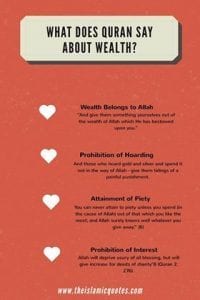
30- Concept of wealth In Islam
Islam is the religion for the whole of mankind. In Islam, wealth has two elements; material and spiritual. The material element refers to worldly possessions and the spiritual element refers to having faith in Allah (SWT). Islam emphasizes having a balanced relationship between the two elements. It doesn’t deny the desire of having worldly possessions but it forbids to transgress. It encourages to spend money on poor and needy and earn through fair means and prohibits to unlawfully confiscate other people’s wealth. Here are 20+ Islamic Quotes on Charity, Aayahs and hadiths on Sadqah.
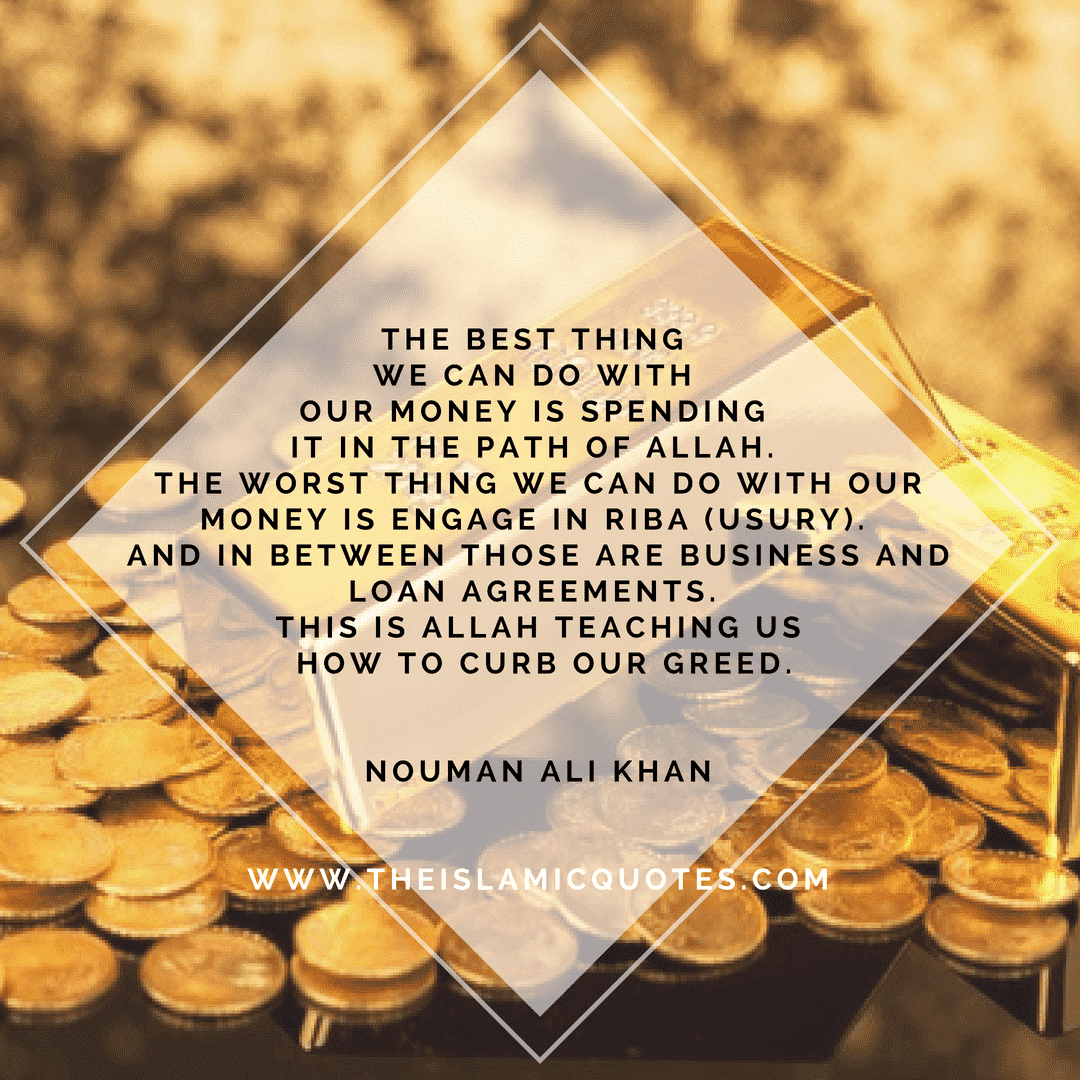

29- Islamic perspective of wealth
In Islam, worldly possessions are considered as blessing and trial. Quran states that everything in the heavens and the earth belongs to Almighty Allah alone so any kind of wealth belongs to Him alone. According to Islam, wealth has been entrusted to mankind by Allah to help people in need. And it is considered as their right.

28- Importance of wealth In Islam
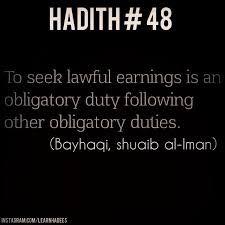
In Islam, wealth has been given so much importance and Muslims are strongly encouraged to earn a lawful living through hard work and fair means, and to provide for themselves and their dependants. Allah in the Quran discourages people who only pray for having wealth without doing anything to earn.
Via
27- How to increase wealth In Islam
Wealth in Islam is increased in barakah (blessing) by giving Sadaqah and charity to the needy and poor, as the Prophet (peace be upon him) said that charity does not decrease wealth (Sahih Muslim). See also how to increase rizq. Charity is said to wash our wealth and increase it more.

Via
26- Wealth through fair means
Wealth, as stated in the Quran, should only be attained through fair means. Muslims should never try to earn unlawfully.

25- Zakat on wealth
Zakat is the third pillar of Islam. It comes from the word cleanse or purification. It is given to the people who are not financially stable and it’s obligatory on those who are able to pay it. Zakat is due on savings and trade assets that reach the nisab and are held for a lunar year, at a rate of 2.5%. Different rates and rules apply to crops, livestock and minerals, and scholars differ on some details (for example, zakat on jewellery), so ask a qualified scholar about your own case. Read more in our guide to zakat in Islam. Zakat saves Muslims from greediness.

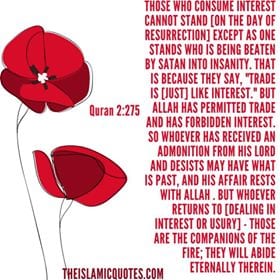
24- Prohibition of Riba (interest) on wealth
Interest is strictly forbidden In Islam and is considered as a great sin. Interest is the amount above the loan received by the person who lends money.
23 – Saving money In Islam
Saving money in Islam isn’t forbidden. In fact, one should save for his future or children to spend. Money or assets on which Zakat isn’t paid, or those who don’t spend in the way of Allah and hoard their money, are disliked by Allah swt. The Quran (9:34-35) gives a severe warning to those who hoard gold and silver and do not spend it in the way of Allah; scholars understand this to refer mainly to wealth on which zakat is not paid.

22- Dua for wealth In Islam
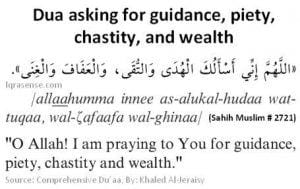
21 Distribution of wealth
After a person’s death, their estate is distributed among the heirs in the fixed shares set out in the Quran (4:11-12), after debts and any bequest of up to one third are settled.

20- Attainment of piety
Islam refers to wealth as an attainment of piety. Quran tells us to spend on poor and needy from what we love to help them in order to become pious in His eyes. Here are 35 Islamic Quotes About Greed.
19- Hadith about spending
Prophet Muhammad encouraged spending as much as one can in the way of Allah so that Allah in return will reward him.
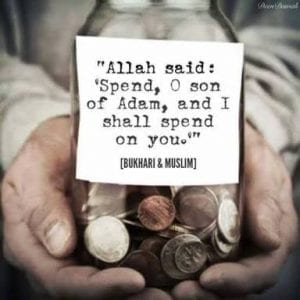
18- Guarding wealth
Charity that is given from our wealth to the needy people guards our wealth. Therefore In Islam, it is prescribed to give charity as much as one can

17- Unjustly earned wealth
Muslims shouldn’t earn wealth unlawfully or unjustly as it’s a great sin and decreases one’s wealth. Allah has warned of a grave account for those who consume wealth unjustly (Quran 4:29).
16-Allah isn’t against wealth
Allah isn’t against any kind of wealth. He only commands us not to transgress.

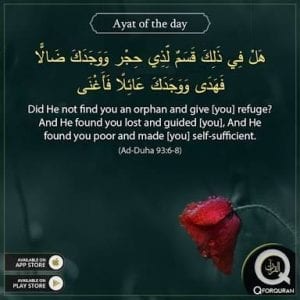
15- Wealth as a blessing
Wealth in the Quran has considered al Khair means a blessing from Allah alone. According to or ayah
Via
14- Wealth as a trial
Wealth in the Quran has also been considered a trial for Muslims and they should not love wealth more than Allah and His Prophet

13- Spending in the path of Allah
Spending in the path of Allah is loved by Him. As everything including our wealth belongs to Allah alone so we should spend it in His path. Allah also rewards for spending money in His cause.
12- Wealth according to Qur’an
Allah in the Quran says that he blesses people with wealth but this wealth shouldn’t come in between Allah and his beings. Money shouldn’t make men forget Allah.

Via
11- What does Quran say about money?
Allah in the Quran mentions that wealth belongs to Him only. But whoever is blessed he should spend in the way of Allah and on his family and the ones who are in need.
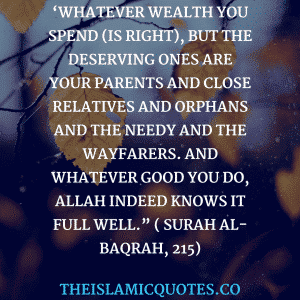
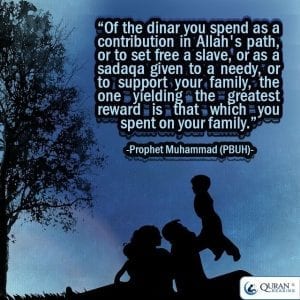
10- Hadith on spending money on the family
Spending money on ones family is also considered as ibadah. It is highly encouraged In Islam to spend on one’s family. Prophet Muhammad said
9- Hadith on Haram money

Via
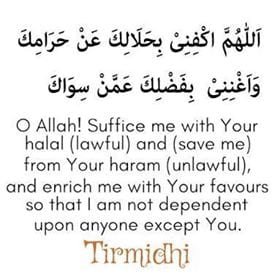
8- Dua for halal money and wealth
Prophet Mohammad PBUH has taught us a dua for halal wealth/money
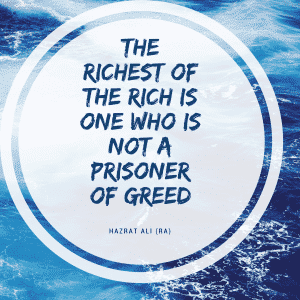
7- Greediness of wealth
In Islam, greediness of wealth is discouraged. Prophet Muhammad says that when a person attains wealth with greed it will never satisfy him or being him good. Greediness and selfishness are the traits disliked by the almighty Allah.
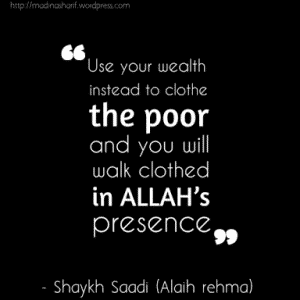
6- Wealth to cloth the poor
When we give wealth, Allah help and reward us more. It was said by a Sufi saint that when we clothe a poor from our wealth, Allah will clothe us in His presence.
5- Question about wealth
One the day of judgment, Muslims will be asked about his wealth that how did he acquire wealth, from where did he acquire it and where did he spend it
4- Allah the provider of wealth
Allah swt is Ar-Razzaq, the Provider of provisions and wealth, and Al-Mannan, the Bestower of favours. He provides to those who are ungrateful and grateful to him. He’s the only provider of sustenance.
3- Don’t be an extravagant
Quran discourages spending wealth extravagantly. Allah doesn’t like those who spend foolishly or stingily. There should always be a balance between the two extremes for spending money.
2- Wealth as a means to attain purity
wealth in the Quran has been considered as a means to attain purity. When we give charity from our wealth, it purifies our heart and our wealth.
1- Wealth according to one’s needs
Quran encourages to spend only according to one’s needs.
According to this ayah
spend) whatever is in surplus to your needs.”, thus does Allah make His commandments clear to you so that you may meditate.”
Qur’an (2:219).
Frequently Asked Questions
Is wealth good or bad in Islam?
Islam treats wealth as both a blessing and a trial. Earning lawfully and spending it properly is praised, while pursuing it at the expense of faith or justice is warned against.
What is the zakat rate on savings?
The commonly stated rate on cash savings and trade goods that reach the nisab and are held for a lunar year is 2.5%. Rules for crops, livestock and jewellery differ between schools, so ask a qualified scholar. See our zakat guide.
Is it permissible to save money in Islam?
Yes. Saving for your family’s needs and your own future is permissible, provided the required zakat is paid and the wealth was earned lawfully.
Why is riba (interest) forbidden?
The Quran (2:275-279) forbids riba as an unjust gain. Scholars differ on the details of what counts as riba in modern financial products, so seek guidance from a qualified scholar for your situation.
How can I increase blessing in my income?
Earn through lawful means, give sadaqah, thank Allah, and make dua. For practical guidance read how to increase rizq.
Kids are very active and sharp in memorization of anything, including the Quran, as compared to adults. Therefore it is suggested that the kids should be enrolled in the online Quran courses, especially if they wish to memorize the Holy Quran so that they will get the maximum possible benefits from the facility of the learning Quran online.