
Duas to increase rizq, wealth & sustenance: One of Allah’s (SWT) many beautiful names is Al-Razaaq (The Provider/The Bestower of Sustenance. He is the sole Creator of all nourishment. In Surah Al-Anaam, Ayah 151, He says:
“We provide for you.”
Through these words, Allah Almighty mentions that “Rizq” or provisions are ascribed to Him alone, and He bestows whom He wills.
When seeking provisions from our Lord, we must remember the Tawakkul of birds. Every morning they fly out on empty stomachs, searching for food, and each evening they come back with their stomachs filled, simply because Allah promises to provide necessities for all His beings. When in search for Rizq, we must remember to practice that which is lawful. Earning wealth through unlawful means removes barakah and risks Allah’s displeasure; the Quran gives an especially severe warning about riba (interest) in 2:278-279.
How to Increase Halal Rizq?
Musa (AS) did not know that Allah (SWT) would split the Red Sea for him. What he did know was that Allah Almighty was not going to abandon him. In Chapter Talaq of the Holy Quran, Ayah 3, our Lord promises to provide us with that we cannot imagine. In short, we must place our utmost trust in His miraculous nature of help to receive beyond our imaginations. He also talks about the reward of contentment and peace in return for placing our faith in Him.
“….and Allah is sufficient for him.”
Here, it means that there is nothing more to seek when you are satisfied with what Allah (SWT) has blessed you with. We must remember that Allah’s doors of blessings are always open for us. The right way to ask Allah (SWT) to increase our provisions is through the power of dua while maintaining a sense of trust and remembering that Allah is sufficient for us.
I also recommend that you go through these Islamic Quotes On Wealth to learn what the Quran says on Money Matters.

Example from Rabia Basri’s story
Rabia Basri had a few guests visiting her when the maid came and informed her of a knock on the door. A man had come in with some bread loaves. Rabia asked the maid to count the loaves, after which the maid informed that there were nine loaves. Rabia told the maid, “no, this is not my share. Return it to the man and tell him to leave.” Then there was a second knock, the maid again came and informed of 9 bread loaves. Rabia Basri again repeated that it wasn’t her share. Shortly after, there was a third knock with the same count of bread loaves, after which Rabia Basri again repeated what she had said earlier: it wasn’t her share. When the maid inquired why she wasn’t taking the bread loaves, Rabia explained that she had a bread loaf in the morning, but when a beggar came, she gave her share of bread to the beggar for the sake of Allah (SWT). And, as Allah promises:
“Man jaa’aa bil hasanati fa lahu asharu amthaaliha”
That whoever brings forth a good deed, he will be rewarded ten times like it.
The nine loaves did not belong to her. After hearing this, Rabia Basri’s maid apologized and confessed that she had been keeping the 10th loaf for herself as she was hungry too, and in reality, there had been ten loaves each time. This story is widely told about the early ascetic Rabia al-Adawiyya, but it has no reliable chain of narration, so take it as an illustration of tawakkul rather than as established history. For practical steps, see our guide on how to increase rizq.
↓ 8. Dua for increase in rizq & protection from poverty
The Holy Prophet (PBUH) once said, “a man is deprived of provisions because of the sins that he commits” (Ibn Maajah, 4022). Therefore, when seeking Allah’s help in increasing your Rizq, you must also pray to Him to seek refuge from engaging in sins.

↓ 7. Istighfar
Allah (SWT) places immense importance on the idea of repentance. Holy Prophet (PBUH) used to make Istighfar frequently. In Surah Al-Zaariyaat, Ayah 17-18, our Lord says,
“They (puritans) will receive their Lord’s gifts because of the good they did before: sleeping only a little at night, praying st dawn for Allah’s forgiveness.”
Hazrat Nuh (AS) advised his people to seek Allah’s (SWT) forgiveness so that He sends down abundant rain from the sky, gives them wealth and sons, and provides gardens and rivers.
Therefore, all believers must seek forgiveness for their sins and recite Istighfar to benefit from Allah’s limitless blessings.

↓ 6. Dua for Barkat in Rizq
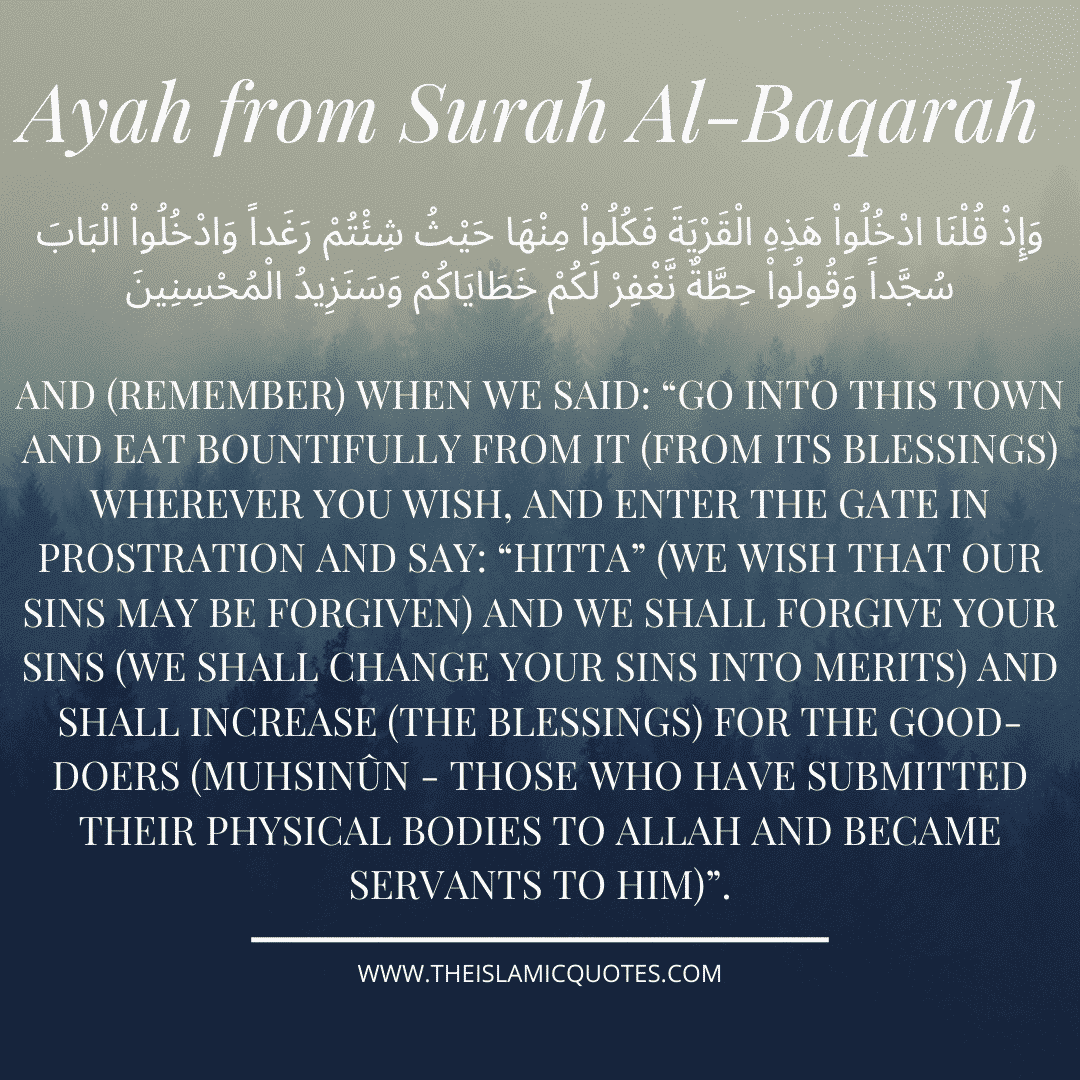
This Quranic verse refers to people with good intent, entering or visiting new cities to find Rizq. Allah Almighty advises them to enter the area with the utmost humility and seek forgiveness from Allah (SWT) to receive His rewards.
Remember that doing charity and giving your share of Zakat are also extremely important and they help greatly in multiplying your wealth which is why you should read these Islamic Quotes on Charity & Sadqah.
↓ 5. Tasbeeh for Wealth
Some people recite “Ya Ghaniyyu” (O Rich One) a set number of times between Maghrib and Isha, but no specific number or time is established in the Quran or authentic Sunnah, and this practice is not an authoritative wazifa; no result is guaranteed. It is always valid to call upon Allah by His beautiful names (7:180) in your own dua.
↓ 4. Prayer for sustenance
Even if you have a debt as large as a mountain, Allah will surely help you repay it. How? You must pray to Allah (SWT), with firm belief, that He will grant you what you make lawful.
Allah’s Messenger (SAW) told his wife Umm Habiba that Rizq and the share of that sustenance are all fixed.
However, in Surah Ar-Ra’d, Allah (SWT) also mentions that Allah increases His provisions for whom He wills. Therefore, to maximize wealth and Rizq, we must continue to make supplications so that Allah, The Bestower of Sustenance, provides us with sufficient provisions.

↓ 3. Powerful dua for wealth from the Sunnah (Bukhari)
Anas narrated the following Hadith: “My mother said, O Allah’s Apostle! Please invoke Allah on behalf of your servant. He said, O Allah! Increase his wealth and children, and bestow Your Blessing on whatever You give him.”

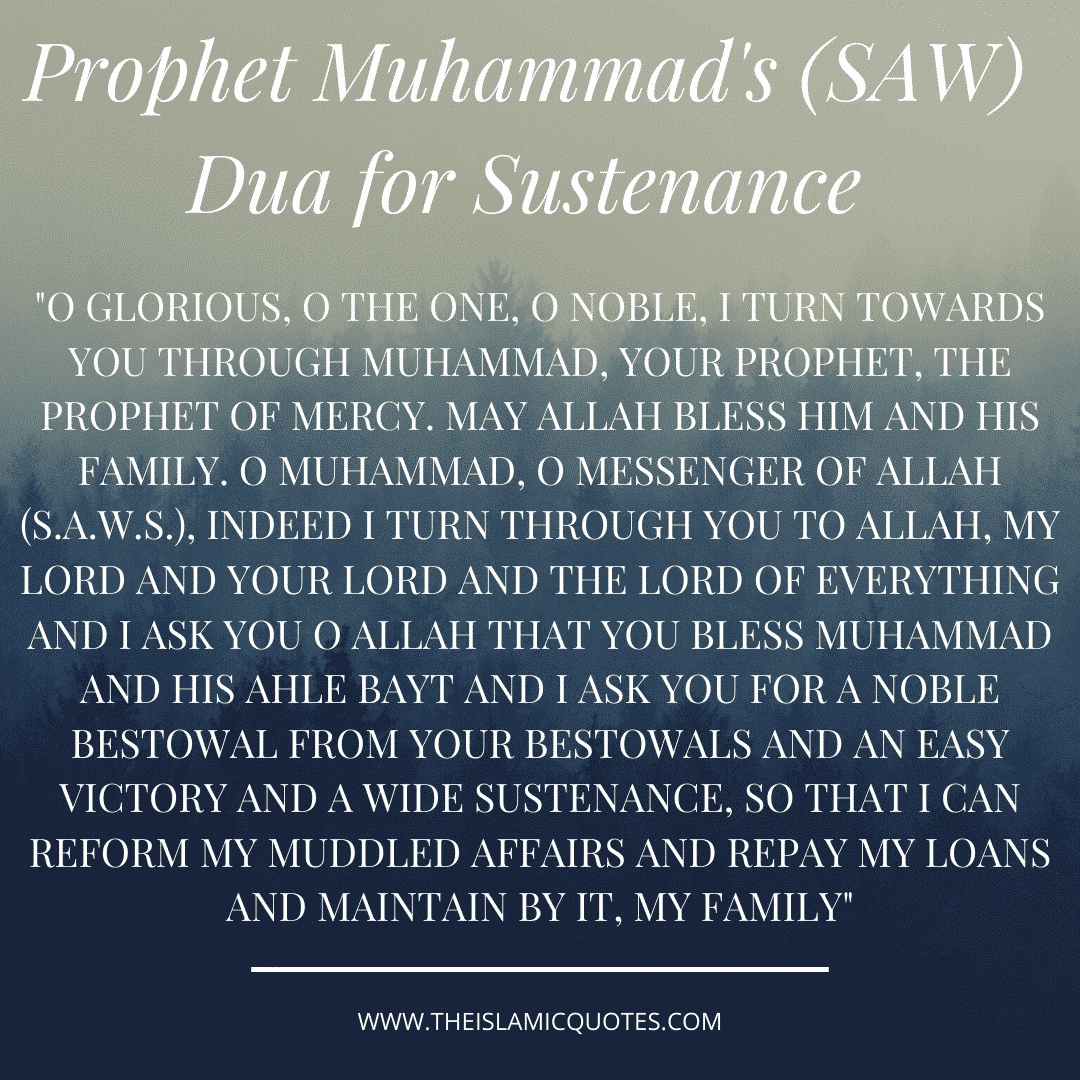
↓ 2. Prophet Muhammad’s (SAW) dua for an increase in rizq
One man came to the Holy Prophet (PBUH) to seek help as he owed people money, and his condition had become quite severe. He asked Prophet Muhammad (SAW) to teach him a supplication to seek Allah’s (SWT) help in repaying the loans. The dua shown below is often attributed to the Prophet (SAW) for this purpose; please verify its source with a qualified scholar before treating the details of any accompanying prayer as Sunnah.
↓ 1. Powerful dua for protection from debts
Outstanding debts are taken seriously in Islam, and they are aligned with an individual’s outcome in the afterlife. The Holy Prophet (PBUH) said that martyrdom expiates every sin except debt (Muslim 1886), and that a believer’s soul remains held back by his debt until it is paid (Tirmidhi, Ibn Majah). Therefore, Muslims are highly discouraged from taking debts. Besides seeking Allah’s (SWT) protection from poverty and His help in increasing our wealth, we must also seek safekeeping from loans.
This particular dua was narrated by Allah’s Messenger (SAW) to a sahabi who owed people money. The dua is reported in Abu Dawud from Abu Said al-Khudri (RA), who said Allah removed his worries and settled his debt; some scholars consider the chain of this report weak, so treat it as a beneficial supplication rather than a guaranteed formula. You can also read our duas of the Prophets.

Frequently Asked Questions
Does dua alone increase rizq?
Dua, istighfar and taqwa are all mentioned in the Quran and Sunnah as means of barakah in provision (see 65:2-3 and 71:10-12), alongside lawful effort. Rizq is decreed, but we are still commanded to ask and to strive.
Is there a fixed wazifa that guarantees wealth?
No. Counted recitations tied to guaranteed results are not established in authentic sources. Rely on the well-documented duas and sincere effort, and ask a qualified scholar about specific practices. More guidance is in our post on wealth in Islam.
What is the dua for relief from debt?
The Prophet taught “Allahumma-kfini bi-halalika an haramika wa aghnini bi-fadlika amman siwaka” (O Allah, suffice me with Your lawful against Your unlawful and enrich me by Your bounty from all besides You), reported in Tirmidhi and graded hasan by many scholars.
Can unlawful income block my dua?
The hadith in Sahih Muslim about the man whose food, drink and clothing are haram says that his dua is unlikely to be answered, so seeking halal income is part of the etiquette of dua.
Does charity increase wealth?
The Prophet ﷺ said that charity does not decrease wealth (Muslim). Read about giving in charity, and ask a scholar how zakat applies to your own situation.
Jazakumllahu hayran,may Allah accept it as an act of ibaadah